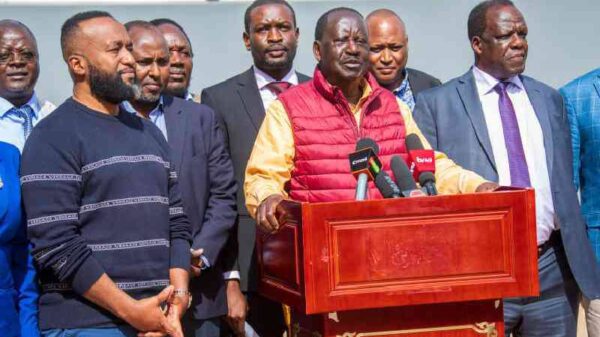









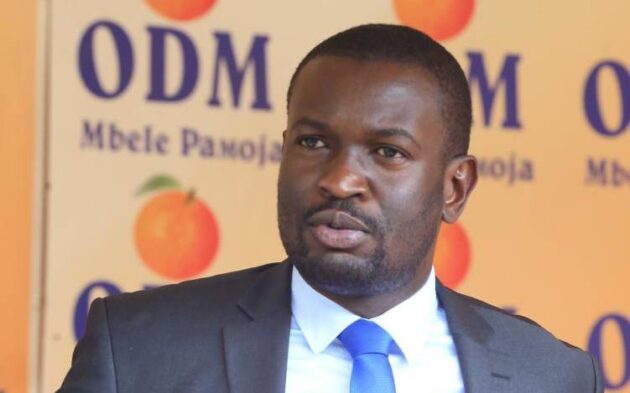

NAIROBI, Kenya, Jan 4 — Nairobi Senator Edwin Sifuna has dismissed growing calls for his removal as ODM Secretary General, insisting that no individual or faction has the authority to kick him out as internal divisions widen following the death of party leader Raila Odinga.
Sifuna’s defiant stance comes amid rising tensions within ODM, with a section of party leaders accusing him of undermining unity over his opposition to the broad-based government arrangement between President William Ruto and the late Raila.
Critics argue that Sifuna’s outspoken criticism of the deal has put him at odds with senior ODM figures who favour continued cooperation with the Kenya Kwanza administration.
Dismissing what he termed intimidation attempts, Sifuna maintained that his critics lacked the mandate to discipline or expel him from the party.
“You do not scare me. I want to assure Gachagua that no one has the power to kick me out of the ODM party. You can relax,” Sifuna said while attending the burial ceremony of the late Alice Wangari Gakuya, mother of Embakasi North MP James Gakuya, at Makomboki Primary School in Kigumo, Murang’a County.
2022 campaign funds
Addressing the controversy, Sifuna launched a blistering attack on his detractors, reviving debate over the management of campaign funds during the 2022 General Election and ODM’s post-election direction.
“The funds that we in ODM used for our campaigns largely came from former President Uhuru Kenyatta. He supported us in every possible way,” Sifuna said, accusing National Assembly Minority Leader and Suna East MP Junet Mohamed of mismanaging resources that could have bolstered Raila Odinga’s presidential bid.
Junet says Uhuru, Muhoho mismanaged hiring of Raila agents
Junet says Raila struggled to access Muhoho for campaign funds
“There is now someone foolish enough to claim there is something wrong with Uhuru Kenyatta’s money. I would like to ask Junet: when exactly did Uhuru’s money become bad? When you were receiving it, which portion did you fail to remit to the party and instead spend with your wives?” he said.
Sifuna argued that renewed scrutiny of the 2022 campaign finances was overdue and said the ongoing debate should pave the way for a full audit of the election.
“As we begin the audit of the 2022 elections, it is a good thing that this debate has been revived. Everyone should openly state what they did in 2022,” he said.
He accused Junet of failing to pay election agents, claiming the lapse cost ODM victory at the polls.
“You spent Uhuru’s money instead of paying agents, allowing Rigathi Gachagua’s side to defeat us. Today, we regret that if it were not for you, Junet, we would be leading this country,” Sifuna said.
Sifuna also reaffirmed ODM’s long-held opposition stance, insisting that Raila never instructed party members to support President Ruto in the 2027 General Election.
“There has never been a day when Baba told us to support President William Ruto in 2027,” he said.
“Raila told me clearly that Ruto must go home in 2027.”
His remarks mirror sentiments expressed by Siaya Governor James Orengo, who on November 15 dismissed as “idiotic” proposals by ODM leaders serving in Ruto’s Cabinet to formalise a political alliance with the President.
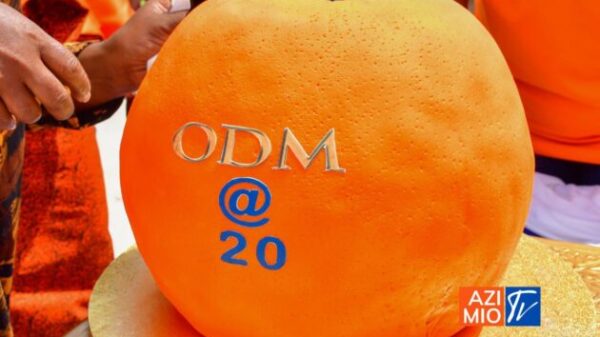
Speaking during ODM anniversary celebrations in Mombasa, Orengo warned that such efforts risk erasing the party’s identity and betraying its founding values.
“Ruto needs ODM, not the other way round,” Orengo said, urging the party to field its own presidential candidate in 2027.
In contrast, ODM Party Leader Oburu Odinga has vowed to lead the party into government in 2027, saying ODM will either contest alone or enter coalitions that guarantee power-sharing.
“There is nothing like forming a party to be in the opposition,” Oburu said after his ratification by the National Governing Council on November 13.
Raila’s daughter, EALA MP Winnie Odinga, has also called for a National Delegates Convention to chart the party’s future, describing ODM’s role in the broad-based government as “complicated” and in need of a fresh mandate from members.
The divisions are reflected in public opinion.
A TIFA Research survey released on December 23 showed ODM grappling with weakened internal cohesion, despite remaining Kenya’s most popular party at 20 per cent, ahead of the United Democratic Alliance (UDA) at 16 per cent.
The poll revealed sharp splits among ODM supporters over whether the party should return fully to opposition or remain aligned with the government, alongside strong resistance to backing President Ruto in 2027.