











NAIROBI, Kenya, Dec 31 — The government will deploy a newly expanded 700-member Anti-Narcotics Unit within the Directorate of Criminal Investigations (DCI) to spearhead a nationwide crackdown on drug trafficking and illicit alcohol in 2026.
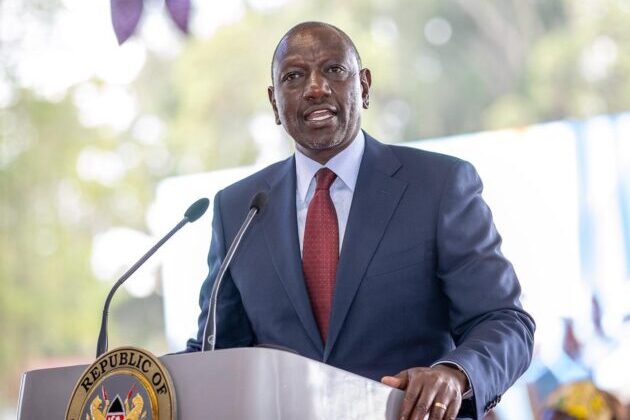
President William Ruto announced the radical shift in his New Year Address on Wednesday, declaring substance abuse a national development and security emergency.
Speaking from State Lodge, Eldoret, President Ruto said the retooled unit will have operational capacity comparable to the Anti-Terrorism Police Unit, with modern surveillance, intelligence, forensic and financial-investigation capabilities to dismantle trafficking networks and their financiers.
“The fight against drugs and illicit alcohol will no longer be treated as a peripheral issue. It is a clear and present danger to our health, security and economic future, and it will be confronted with the full force of the State,” Ruto said.
The President directed that the Anti-Narcotics Unit’s strength be increased from the current 200 officers to 700 through fresh recruitment and redeployment, enabling nationwide operations against high-level traffickers, organised criminal networks and corrupt enablers within the system.
Central to the strategy, Ruto said, will be aggressive asset tracing, seizure and forfeiture.
Asset seizures
All assets used in or acquired through narcotics and illicit alcohol trade — including cash, vehicles, land, buildings and businesses — will be treated as proceeds of crime, frozen at the point of seizure and forfeited to the State upon prosecution.
Recovered assets will be redirected to rehabilitation, prevention and treatment programmes.
The President revealed that the Assets Recovery Agency will be embedded into investigations from the outset, while the government will consult the Judiciary on the possible establishment of specialised courts to fast-track drug-related cases, while respecting judicial independence.
Citing alarming statistics, Ruto said one in every six Kenyans aged between 15 and 65 — about 4.7 million people — is currently using at least one drug or substance of abuse, with alcohol remaining the most prevalent.
Among young adults aged 25 to 35, one in five is affected, threatening productivity and national competitiveness.
Beyond enforcement, the President said border security will be tightened through enhanced capacity for the Border Patrol Unit and the National Police Service, including modern surveillance technologies to curb cross-border trafficking.
He also warned that any public official or security officer found colluding with traffickers will be prosecuted and dismissed from service.
The anti-drug campaign forms part of what Ruto described as a “watershed year” in 2026, as the government shifts from stabilisation to execution at scale, alongside broader economic and institutional reforms.
“This is a struggle for our children, our communities and the future of our Republic,” he said.
“We will pursue the traffickers relentlessly, take away the profits that fuel their crimes, and restore hope to families and young people trapped by addiction.”