


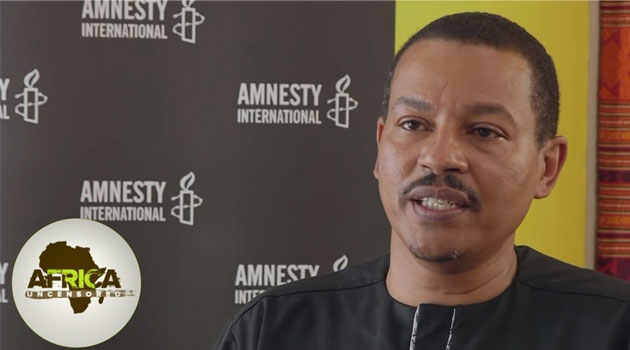

NAIROBI, Kenya, Jan 9 — Amnesty International Kenya Executive Director Irungu Houghton has resigned from the Panel of Experts on Compensation of Victims of Demonstrations and Public Protests, disowning an appeal filed against a High Court decision that annulled the body and declared it unconstitutional.
In a hard-hitting resignation letter addressed to Panel Chairperson Prof Makau Mutua, Houghton said his decision takes immediate effect and follows President William Ruto’s January 5 extension of the panel’s mandate by 180 days, despite a December 4, 2025 ruling by the Kerugoya High Court that invalidated its existence.
“The 4 December 2025 ruling declared the Panel unconstitutional and affirmed that the statutory and constitutional responsibility properly rests with the Kenya National Commission on Human Rights (KNCHR),” Houghton wrote, saying the judgment had fundamentally destroyed both the legal basis and institutional legitimacy of the panel.
The High Court had ruled that the KNCHR — and not the presidency-appointed panel — is the constitutionally mandated body to advise on and process compensation for victims of police brutality and protest-related violence.
Houghton said continuing to serve on the panel after the ruling would amount to “normalising an arrangement that the Court has expressly found to be unconstitutional” and would undermine the independence and authority of KNCHR.
In a further escalation of the internal rift, the Amnesty Kenya chief disclosed that he had been irregularly listed as one of the appellants in a December 15 application seeking to suspend the High Court ruling — without his knowledge or consent.
“I was neither consulted nor do I support the 15 December application to stay the court ruling,” Houghton said, adding that he only learned of the appeal on January 8, more than three weeks after it had been filed.
Makau Mutua: Appeal won’t stop compliance with protest ruling
‘Erroneous’
He described the inclusion of his name as “erroneous, not in good faith and contrary to the National Values and Principles of Governance under Article 10 of the Constitution.”
Houghton said he had already suspended his participation in the panel on September 11, 2025, pending the court’s determination, and did not enter appearance in the case despite being listed as an interested party, choosing instead to await judicial guidance.
He also pointed out that the appeal directly contradicts his publicly stated position, including a December 6 opinion article in the Saturday Standard, in which he argued that the panel should fully comply with the High Court ruling and hand over the compensation process to KNCHR.
“I therefore formally disassociate myself from the decision to challenge the 4 December 2025 Kerugoya High Court ruling,” he wrote, stressing that his resignation should not be interpreted as support for the panel’s legal strategy.
While expressing gratitude for the opportunity to serve victims of state violence, Houghton said constitutional fidelity and the rule of law must take precedence over political expediency.
“The victims’ families’ cry for accountability, justice and reparations has anchored my personal conscience throughout this journey,” he said. “However, persistent pre-emptive litigation places more obstacles before the victims, their families and the Presidency than it removes.”
He urged the government to use the KNCHR framework endorsed by the court to deliver compensation and restore institutional credibility.
The resignation now publicly exposes a deep fracture within the government-backed panel, coming even as Panel Chairperson defended the decision to both comply with the court order and pursue an appeal, arguing the two processes were not mutually exclusive.
Houghton’s exit leaves the panel facing renewed legal, moral and political pressure over its continued existence in defiance of a binding High Court ruling.