











NAIROBI, Kenya Dec 10 – Nandi Governor Stephen Sang has issued a fresh explanation after his earlier declaration that the Kipchoge Keino Stadium in Kapsabet would adopt President William Ruto’s name sparked public criticism.
In a statement, Sang shifted attention to the broader transformation of Kenya’s sports sector, pointing to the rapid upgrades being rolled out nationwide.
He said discussions around the project come at a time when the country is undergoing major improvements in athletic infrastructure.
“I am pleased that our discussions today are centered on the significant changes taking place in our county, region and nation’s sporting and athletics infrastructure,”
“As we reflect on these developments, it is important to recognize the unprecedented investment and transformation driven by the ambitious vision of His Excellency President Dr. William Ruto across the country,” the statement read.
According to the governor, Nandi is among the counties benefiting directly from these national efforts. He added that the redevelopment of the Kipchoge Keino Stadium aligns with the wider mission of expanding and modernising sports facilities.
He explained that the project has already taken a new shape, with the stadium relocated from its initial 8-acre site to a larger 15-acre portion of the Showground.
“In Nandi County, we are proud beneficiaries of this progress. The Kipchoge Keino Stadium, initially located on an 8-acre parcel, has now been relocated to a more expansive 15-acre section carved out of the Showground,”
“This move provides the space required for a modern, state-of-the-art facility that will support a wide range of sporting disciplines far beyond athletics and football, which the current facility accommodates,” he added.
Sang maintained that the new facility will uphold the legacy of track icon Kipchoge Keino while acknowledging President Ruto’s contribution to sports development.
“The new Kipchoge Keino Stadium will not only honour the extraordinary legacy of our athletic hero, Kipchoge Keino, but also reflect our rich heritage as the birthplace of global athletic icons,”
“It will further cement the President’s legacy as a transformative leader in the sporting sector.
As we advance this project, we remain committed to working closely with all stakeholders in the sporting fraternity to ensure that the identities of the two Kipchoge Keino stadia in Eldoret and Kapsabet are preserved and clearly distinguished,” he noted.
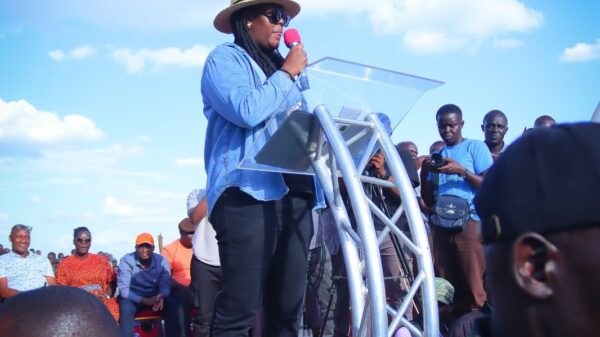
His clarification follows remarks he made on Monday, December 8, where he announced that the stadium would eventually bear President Ruto’s name.
“We are building a stadium here, but because we already have Kipchoge Keino Stadium in Eldoret, and this one is also named Kipchoge Keino. We will rename it William Ruto Stadium,” he said.
He further argued that the name change reflects appreciation for government support.
“What’s wrong with that? Don’t we have Moi Stadium and Raila Odinga Stadium? Now that he has brought us millions, we will rename this stadium William Ruto Stadium because he has already supported us by funding its construction,” he added.
The project launched on December 5 by Defence Cabinet Secretary Soipan Tuya is envisioned as an ultra-modern sports complex. Once complete, it will feature a World Athletics-certified 400-metre track, seating for 10,000 spectators (expandable to 15,000), and a FIFA-standard football pitch with updated drainage.
Designs also include LED floodlighting with planned solar integration, VIP and VVIP sections, hospitality boxes, and a fully equipped media centre. Infrastructure around the stadium will be upgraded as well, with improved roads, parking, a transport hub, drainage systems, and CCTV-supported security.
Sang described the investment as a long-term boost for local athletes and the county’s identity.
“This is not just an investment in infrastructure, it is an investment in our youth, our economy and our identity as a county known for producing world-class athletes,” he said after the launch.