

















NAIROBI, Kenya, May 16 – Chief Justice Martha Koome has promised to deploy alternatives to pretrial detention such as diversion, alternative justice systems, and plea-bargaining to address challenges posed by incarceration pending trial.
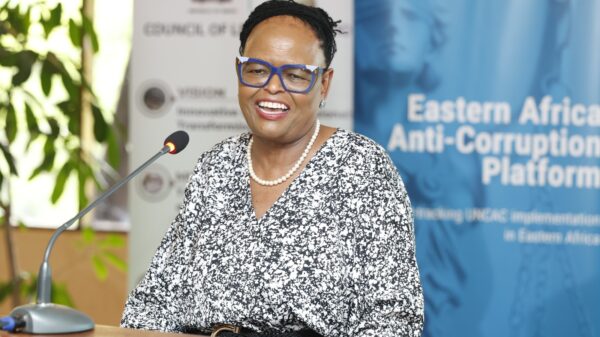
Speaking during the start of the Africa Regional Colloquium themed ‘Enhancing The Delivery of Justice by Addressing Pretrial Detention Challenges’ on Tuesday, Koome said the principle of “innocent until proven guilty” remains sacrosanct in the pursuit of justice.
“According to the United Nations Office on Drugs and Crime, over 600 people are held in pretrial detention in Africa and the average pretrial period is over a year. This means that hundreds of thousands of people are languishing in very crowded and unsanitary prison conditions without being convicted of any crime,” she said.
“This prevailing state of affairs strains our justice systems, undermines public confidence in our institutions, and worst of all, infringes on the fundamental rights of our citizens and moreover, it also wastes scarce public resources that could be better invested in crime prevention and social development.”
Koome added that Kenya is also promoting non-custodial sentences like probation and community service in deserving cases.
She noted that pretrial detention is a crisis which poses a danger to the foundation of judicial institutions, and that it needs to be resolved as soon as possible.
“It is indeed sad that that number of people languish in pretrial detention for a period longer than even the sentence that would have meted against them if convicted. This is not justice it is a silence crisis that threatens to undermine the very fabric of our legal system and it is a crisis that we can and must resolve.”
Review legal frameworks
“We must enhance our legal frameworks to ensure that pretrial detention is used judiciously and as a last resort, as intended by international standards and best practice. We must also provide alternatives to pretrial detention, such as bail and bond, community service, and other forms of diversion.”
The Assistant Attorney General, Criminal Division in the US Department of Justice Kenneth Polite said it was essential to balance safety, rights, and fairness in trials.
He added that pretrials lead to overcrowding of the prisons and overburdening of the justice personnel and lead to the depletion of the government resources.
Polite noted the overcrowding due to the pretrial detention, the environments with which the convicts are held might not be healthy for them and this leads to violation of individuals rights.
“Over reliance on pretrial detention not only rise the violation of individual rights on a large scale but can result in prison overcrowding and overburden justice personnel, depletion of government resources and exposure of dependence to criminal and violent extremist ideologies while detained,” he said.
In her remarks, CJ Koome also called on judges and prosecutors to review the necessity and legality of detention at the earliest opportunity, and throughout the pretrial process and to consider the alternatives to detention whenever possible.
She urged them to set reasonable and proportionate bail conditions or non-custodial measures; and expedite the trial process and avoid unnecessary adjournments or delays.
“We as judges and prosecutors, we have the duty and the power to uphold the rights of accused persons and principles on presumption of innocence in our daily work,” she said.
“We can do so by referring cases to alternative dispute resolution mechanisms where appropriate, such as mediation, plea bargaining, or alternative (traditional) justice systems (AJS) mechanism.”