












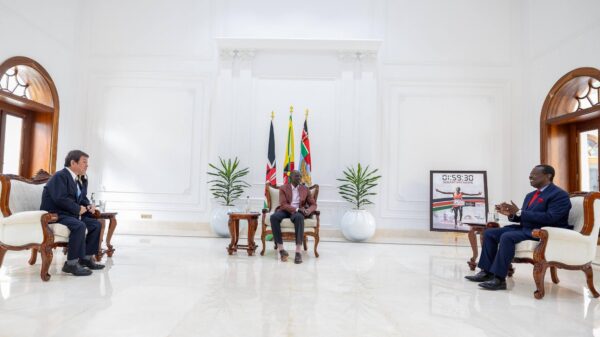

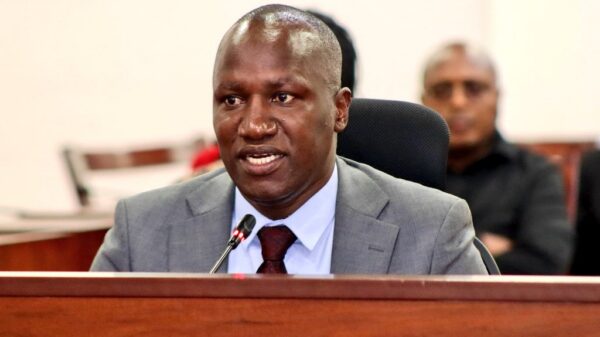


The President said Kenya will work with governments in the region to counter the vice warning those who travel to regional countries to seek refuge from the law will be prosecuted/FILE – PSCU
NAIROBI, Kenya, Nov 8 – President Uhuru Kenyatta has reiterated his government’s commitment to eradicate Female Genital Mutilation (FGM), an outlawed practice that is still being practiced in parts of the country.
A recent study by United Nations Population Fund (UNFPA) suggests an estimated 9.3 million Kenyan girls and women have undergone the cut, accounting for over 6 per of an estimated 140 million girls and women who have undergone FGM globally.
President Kenyatta was speaking at State House on Friday where he received a letter of commitment from both Religious and Cultural Elders to lead dialogues within their communities that will promote eradication of FGM.
The President said Kenya will work with governments in the region to counter the vice warning those who travel to regional countries to seek refuge from the law will be prosecuted.
The Head of State’s commitment came in the build up to the International Conference on Population and Development (ICPD25) summit that is due next week.
The conference will seek to mobilize commitments to end FGM and child marriages.
Speaking at Anti-Female Genital Mutilation Board and UNFPA on Thursday, Safina Kwekwe, the Principal Secretary in State Department of Gender Affairs said there is no justification for denying girls human dignity through practice of FGM, which is constitutes a violation of the constitution.
“I know many people have challenged the constitution on prevention of female genital mutilation saying that it contravened the rights of people to practice their culture in the way they see fit but again, rights and obligations have limitations and even the constitution is aware of that, and that is why, it’s very specific that harmful practices that deny people dignity are not constitutional rights,” Kwekwe said.
She said there is urgent need to involve both religious and cultural leaders to participate in conversation to eradicate FGM.
Elders drawn from twenty-two hotspot counties in Kenya where FGM practice is rampant, spearheaded campaigns to denounce the practice of FGM in their respective communities and pledged to partner with the national government to end the vice in Kenya.
Speaking during the opening session of the forum, Ministry of Public Service, Youth and Gender Chief Administrative Secretary Rachel Shebesh, said FGM goes hand in hand with early, child and forced marriages.
Shebesh emphasized the need for collective efforts especially from leaders coming from affected communities to use their authority to help in eradicating the practice.
“Use your authority and power to fight FGM as our experiences manifest that FGM has no social, health, economic, spiritual or any other value other than impeding on the equal opportunity of girls and women to fully enjoy their inherent and God given rights,” she added.
UNFPA Kenya Country Representative Dr Ademola Olajide said that a studied carried out by the joint programme with the Anti-FGM Board indicated males acknowledge risks associated with FGM but many don’t verbalize their views, something he said is important for the participation of men in the anti-FGM conversation.
“It is clear that although FGM is deeply associated with gender discrimination, it is evident that majority of men and boys are actually against the practice, but this unfortunately is not verbalized as the desire to end FGM by individuals is often hidden.’’
Dr Olajide promised to work with cultural and religious leaders in Kenya towards the eradication of FGM.