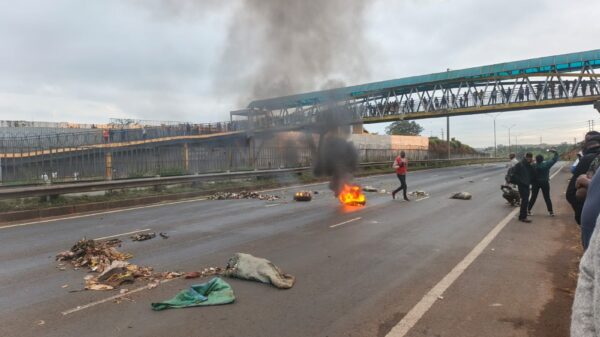

























NAIROBI, Kenya, May 20 — Thousands of Kenyans trekked long distances to work for a second consecutive day on Tuesday as a nationwide public transport paralysis triggered by soaring fuel prices continued to cripple movement across major towns.
From Nairobi’s Central Business District to Nakuru, Kisumu, Eldoret, and Mombasa, stranded commuters were forced to walk for kilometres after matatu operators kept vehicles off the roads following the collapse of talks with the government over diesel prices.
Roads that are usually packed with morning traffic instead filled with streams of pedestrians carrying backpacks, handbags, and shopping bags as workers, students, and traders struggled to reach their destinations.
“We hoped for a solution yesterday but under the circumtances and with no clear roadmap on what happens next, we have to do what we can,” Aggrey, a worker at a car delearship in Ruaka told Capital News.
A spotcheck showed streams of workers and pupils alike walking as boda boda, most of which switched off ride-hailing apps on Monday, charge a premium.
The transport crisis deepened after Monday night’s negotiations between government officials and public service vehicle operators ended without an agreement, despite Energy Cabinet Secretary Opiyo Wandayi publicly suggesting progress had been made.
“We have come to an understanding that for prudence purposes… we are going to bridge the gap between the prices of diesel and kerosene,” Wandayi said after the talks at Transcom House in Nairobi.
But matatu operators immediately rejected the government’s position, insisting no deal had been reached on diesel prices.
“With all due respect… we did not agree on anything,” one operators’ representative told reporters after the meeting.
Sh10 reduction
Operators said the government had only proposed a Sh10 reduction in diesel prices, far below their demand for a cut of between Sh30 and Sh46 per litre.
Association of Matatu Transport Owners chairperson Kushian Muchiri later confirmed that discussions on diesel prices had collapsed.
“On the issue of diesel prices, that one we have not agreed,” Muchiri said.
The continued strike left many commuters scrambling for alternatives Tuesday morning.
Some workers said they had left home before dawn in attempts to reach their workplaces after failing to secure transport on Monday.
Others described spending hours walking after waiting unsuccessfully for buses and matatus at major stages.
The Kenya Association of Manufacturers (KAM) warned Monday that the transport disruptions were already affecting productivity, supply chains, and business operations nationwide.
“This has made daily commuting increasingly unaffordable for many Kenyans, particularly employees who depend on public transport to access their livelihoods,” KAM said in a statement.
The manufacturers’ lobby further warned that work stoppages and transport disruptions were interrupting factory operations and delaying movement of goods.
“For manufacturers, these disruptions result in interrupted operations, delayed production schedules, supply chain inefficiencies, and reduced productivity, ultimately affecting overall economic performance,” the association stated.
The strike follows last week’s sharp fuel price increases announced by the Energy and Petroleum Regulatory Authority (EPRA), which pushed diesel prices to a record Sh242.92 per litre.
Petrol now retails at Sh214.25 while kerosene costs Sh152.78.
Matatu operators argue the current diesel prices have made operations financially unsustainable, warning that many transport businesses risk collapse if the government fails to intervene.
The crisis has intensified pressure on President William Ruto’s administration amid growing public frustration over the rising cost of living, transport fares, and fuel prices.