















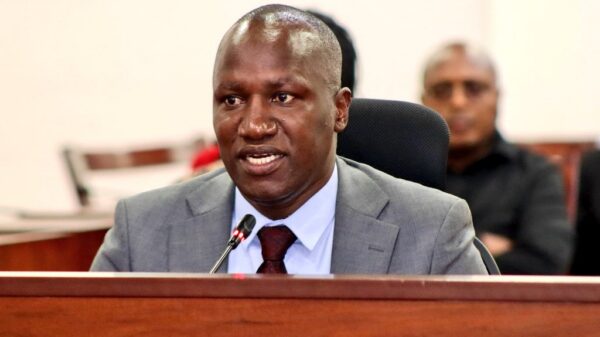


NAIROBI, Kenya May 12 – Treasury Cabinet Secretary John Mbadi now says controversial tax proposals targeting imported second-hand clothes were requested by mitumba traders themselves as part of efforts to simplify taxation in the sector.
Speaking amid mounting criticism over the Finance Bill 2026, Mbadi said leaders from Gikomba Market approached the Treasury seeking a simpler and more predictable tax structure for mitumba imports.
“This proposal actually came from people within that industry themselves. Leaders from Gikomba market came here and sat down with me together with my team,” Mbadi said.
According to the Treasury CS, the discussions involved officials from the Budget, Fiscal and Economic Affairs department and focused on reducing multiple tax obligations imposed on second-hand clothes traders.
“We discussed the matter and agreed that my team would continue engaging them to see what kind of changes we could include in the Finance Bill to help simplify the taxes they pay,” he said.
The Finance Bill proposes a deemed profit taxation model under which five per cent of the customs value of imported mitumba goods would automatically be treated as taxable income payable at the point of importation.
The proposal has triggered backlash from sections of traders and consumers who fear it could drive up the cost of second-hand clothing, which remains the main source of affordable apparel for millions of Kenyans.
However, Mbadi defended the proposal, arguing that it seeks to replace multiple customs-related taxes with a single payment at entry point.
“The idea was that instead of having many different taxes, there should be one single tax paid at the point of entry,” he said.
“When goods are imported, tax is paid there once, and traders are done with customs-related tax issues.”
Mbadi said the system would reduce compliance burdens for traders by eliminating repeated tax procedures and lowering reliance on accountants and clearing processes.
The Treasury CS also used the opportunity to dismiss concerns that the Finance Bill would increase smartphone prices through the proposed 25 per cent excise duty on mobile phones.
He argued that the government had removed several existing levies and consolidated them into a single tax, reducing the overall tax burden on imported devices.
“Phone prices will not go up because we have removed all the other taxes and replaced them with one single tax,” he said.
Mbadi further rejected fears that the Bill would allow the government to access personal mobile money transaction data, insisting that Mpesa transfers are not treated as taxable income.
“Mpesa transactions are not income. They are transfers of funds. KRA will not go after people sending money through Mpesa,” he said.
He urged the public to rely on the officially published Finance Bill rather than what he termed misinformation circulating online.
“Please get the actual Finance Bill. Stop circulating fake Finance Bills,” Mbadi said.
The Finance Bill 2026 is currently set to undergo public participation before the National Assembly, with debate over the proposed tax measures expected to intensify in the coming weeks.