










Mar 4 – The joint American-Israeli attack on Iran on 28 February 2026, which reportedly killed Supreme Leader Ayatollah Ali Khamenei along with members of his family, has triggered intense debate over the evolving nature of the international order and the boundaries of international law.
The strike, which Iranian authorities say also hit a girls’ elementary school and caused the deaths of more than 100 children, has drawn sharp criticism from several analysts who argue that the operation signals a troubling willingness by powerful states to employ targeted killings at the highest political level. Critics say the attack raises questions about Washington’s professed commitment to international norms and humanitarian principles.
The incident comes less than two months after the United States was accused of orchestrating the detention of a Venezuelan head of state abroad, a move that further fuelled claims of growing unilateralism in global politics.
These developments have prompted two key questions in strategic circles: whether such actions signal a potential risk for other major powers such as India, and how Europe — often vocal about international norms — intends to respond.
Concerns over Unilateral Power
Observers say the events surrounding the Iran strikes illustrate how unchecked military power can destabilise regions far beyond the immediate theatre of conflict.
From a national security perspective, analysts argue that countries like India may increasingly need to anticipate both overt and covert foreign interference in domestic affairs. Some governments have already begun expanding counter-intelligence monitoring of foreign actors, including diplomatic missions, media organisations and non-governmental groups.
The roots of such tensions, however, extend beyond any single administration in Washington. During the presidency of Joe Biden, for instance, India faced sustained criticism from Western governments and media over issues linked to the Khalistan separatist movement abroad.
Indian officials maintained that individuals portrayed in Western discourse as dissidents were, in fact, individuals linked to extremist activities.
Analysts say such narratives mirror earlier campaigns seen in other geopolitical contexts. During the recent Iran crisis, Western media outlets prominently highlighted Iranian expatriates celebrating Khamenei’s death — coverage critics argue echoed past patterns in which exiled political figures were used to shape international perceptions of domestic legitimacy.
Historical precedents also loom large in this debate. In 1953, a coup backed by British and American intelligence agencies overthrew Iran’s democratically elected Prime Minister Mohammad Mossadegh, replacing him with a monarchy that remained aligned with Western interests for decades.
Civilisational and Strategic Dimensions
Some strategic commentators frame the tensions between Washington and countries such as Iran and India within a broader civilisational and geopolitical context.
Both nations possess deep cultural and historical identities that long predate modern geopolitical alignments. Advocates of this view argue that such civilisational foundations shape their pursuit of strategic autonomy and resistance to external pressure.
India’s steady economic rise and its nuclear status outside the framework of the Nuclear Non-Proliferation Treaty once generated significant friction with Western powers. Iran, though not a nuclear weapons state, has similarly resisted sustained sanctions over the past four decades.
For some policymakers in Washington, analysts say, such independence can appear as strategic defiance rather than legitimate sovereignty.
Europe’s Position Under Scrutiny
Europe’s response to the crisis has also drawn scrutiny.
Since the escalation of hostilities, many European governments have urged restraint and called on Iran to de-escalate. Critics argue that these appeals have not been matched by equivalent condemnation of the initial military strikes.
This perceived asymmetry has revived long-standing questions about Europe’s strategic autonomy, particularly under the second administration of US President Donald Trump.
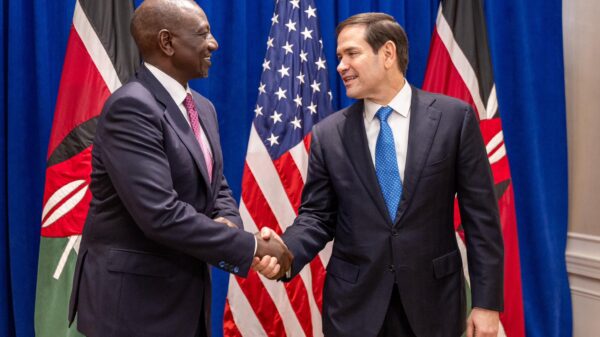
At the Munich Security Conference in February 2026, US Secretary of State Marco Rubio delivered a speech emphasising the deep historical and cultural ties between the United States and Europe. Some analysts interpreted the remarks as a call for renewed Western unity in maintaining global influence.
Yet Europe’s current economic and energy dependencies complicate its room for manoeuvre. Following the collapse of energy ties with Russia, many European states have increased imports of American liquefied natural gas, strengthening transatlantic economic interdependence.
As a result, critics say, European governments may find it increasingly difficult to challenge Washington’s strategic decisions.
Implications for India
For India, the crisis underscores the importance of maintaining strategic autonomy in a rapidly shifting global landscape.
While New Delhi has expanded economic partnerships across regions, analysts caution that geopolitical pressures from major powers could intensify as competition over influence grows.
The Iran conflict therefore serves as a reminder that alliances and partnerships often operate within complex hierarchies of power — and that countries seeking independent foreign policies must be prepared to navigate those pressures carefully.