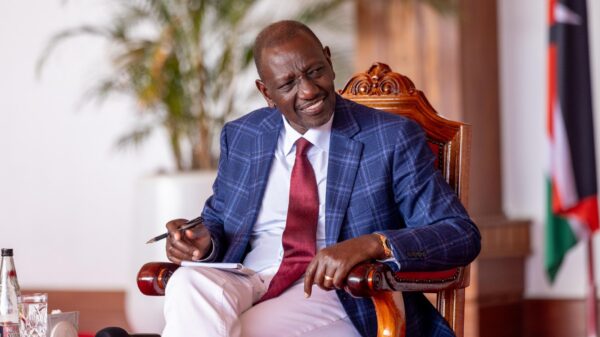










NAIROBI, Kenya, Mar 10 — President William Ruto on Tuesday urged lawmakers from the ruling United Democratic Alliance (UDA) and the opposition Orange Democratic Movement (ODM) to formulate legislation establishing a contributory pension scheme for Governors and Members of County Assemblies (MCAs).
Ruto proposed a contributory scheme similar to the newly enacted Judges’ Retirement Benefits law saying elected county leaders deserve retirement benefits comparable to those enjoyed by national officials.
Speaking during a joint parliamentary group meeting at the Kenyatta International Convention Centre in Nairobi, Ruto argued that the proposal should replace an earlier pension bill currently before Parliament, which he described as having “serious challenges.”
“You know governors and members of the county assembly are elected leaders like us,” he said.
“The same way we have pension, it is only fair that they too have a pension. We all agree on the principle of contribution, the same way we contribute to pension.”
Ruto urged lawmakers to amend the bill to make the retirement scheme contributory, meaning county officials would pay into the fund during their time in office.
He expressed confidence that governors and MCAs would support contributing toward their own pensions.
The president framed the proposal as part of a broader push to strengthen Kenya’s devolved governance system.
He cited reforms aimed at enhancing county assemblies’ independence, including legislation granting autonomous budgets starting in the next fiscal year.
“County assemblies will no longer need to make friends with county governments or governors for them to receive resources,” he said.
“They can now exercise their oversight mandate much more robustly.”
Ruto also called for swift passage of legislation establishing a legal framework for ward development funds, noting that such a framework would enable county assemblies to manage ward-level projects in line with recent court rulings affecting the Constituencies Development Fund.
Beyond devolution, he highlighted progress in the government’s anti-corruption campaign, including the enactment of a conflict-of-interest law and efforts to digitize government services via the eCitizen portal.
“Today, if you pay on eCitizen, you don’t need a receipt because it is traceable from who paid for what service to what account,” Ruto said.
The president also cited new financial management reforms, including zero-based budgeting and an electronic government procurement system designed to make public tenders more transparent.
On the economy, Ruto noted that Kenya avoided a potential sovereign debt crisis upon his administration’s assumption of office in 2022, crediting spending cuts, subsidy reductions, and debt restructuring with stabilizing the country’s fiscal outlook.
“At one point, Kenya was among the countries many believed could default on foreign obligations. We had to make very difficult decisions to ensure that did not happen,” he said.
He added that the government had reorganized its debt portfolio to ease repayment pressures in coming years while exploring alternative financing for development projects, including securitization of public revenues.
The joint parliamentary group meeting underscored ongoing cooperation between UDA and ODM under a political framework aimed at advancing governance reforms.