














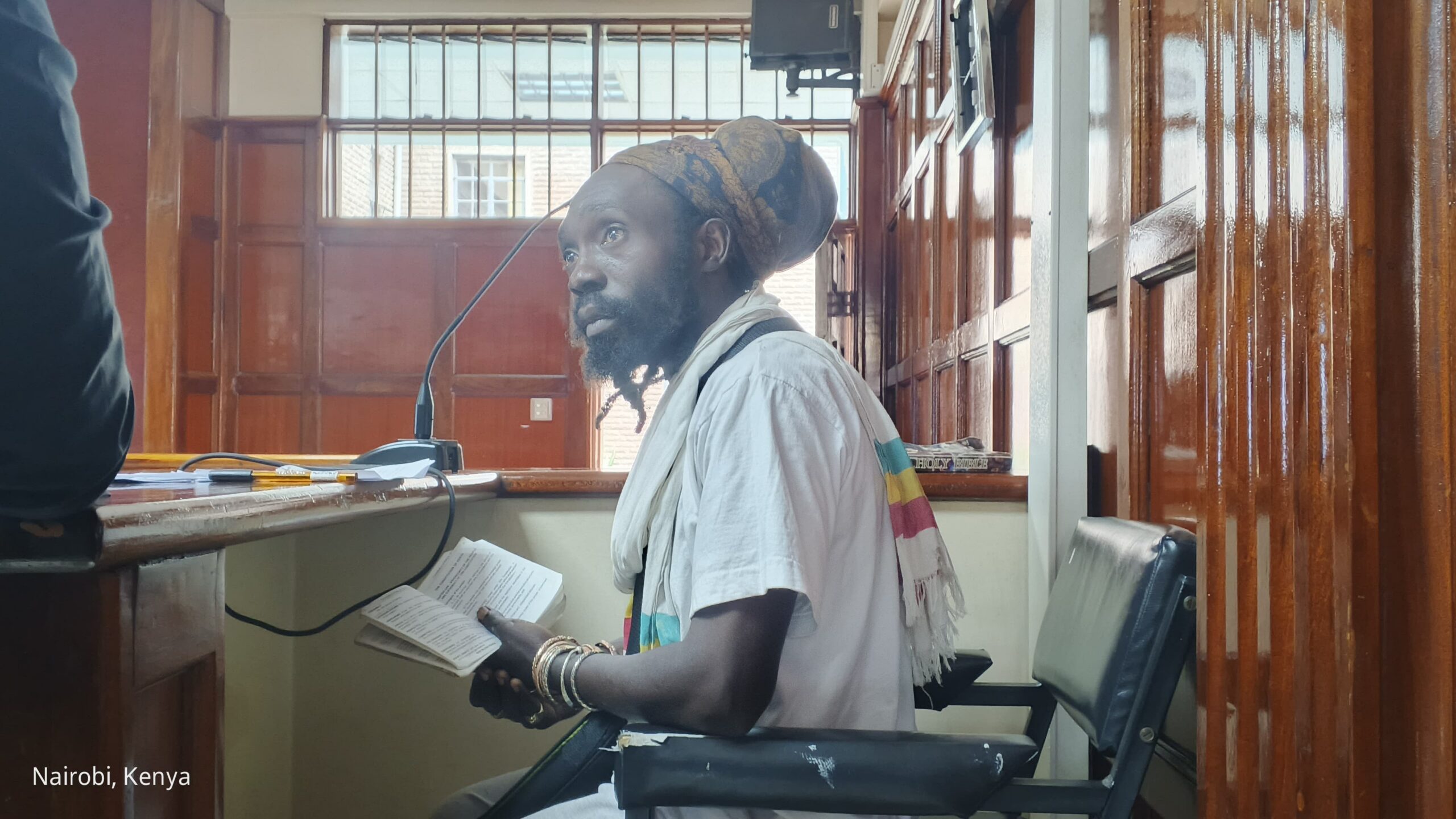

NAIROBI, Kenya Mar 13 – Members of the Rastafarian community have defended the religious use of cannabis in a petition before the High Court, arguing that the plant is sacred and forms an integral part of their spiritual worship and meditation practices.
In the case, the community says laws prohibiting the private use of cannabis violate their constitutional rights, particularly the freedom of religion.
They maintain that the herb is central to their faith and is used during worship and meditation to seek spiritual guidance and solutions to societal challenges.
A member of the Rastafarian community told the court that the plant, commonly referred to as the holy herb, has many names and has long been used within their place of worship as part of spiritual rituals.
“This plant has so many names. I have used it personally and in our place of worship. It is used among women, men and youth, but children are not allowed,” the court heard.

According to the witness, reasoning is a key spiritual practice within the faith, where members gather to meditate and discuss issues affecting society.
The court heard that the herb may be used during group worship but can also be used privately at home as part of prayer and meditation.
“Personally, I use it at home. Not all the time we meet. Sometimes we decide to stay at home and use it to pray as Rastafarians,” she said.
The member emphasized that the Rastafarian community has strict guidelines governing the practice. Only adults aged 18 years and above who possess national identification and understand the purpose of the practice are allowed to participate.
“As Rastafarians you must be above 18 years, have an ID and know what you want to achieve in life,” the witness stated.
She further told the court that the Rastafarian society operates under a constitution that guides members in their daily lives and safeguards their welfare.
However, members say they have faced discrimination and legal challenges because of their beliefs.
“We have been affected by being isolated by our relatives and being arrested and taken to court where you are not charged with the use of the plant but with drug trafficking,” the court heard.
The community insists the herb is not used for recreational purposes but strictly for spiritual meditation.
“We are spiritual people. We have the holy herb for meditation, not for procreation,” the witness added.
The court was also told that there is no prescribed quantity for its use, as the amount depends on the individual.
The petitioners argue that within their faith the plant is regarded as holy and a gift from God.
“We recognize the plant as holy and as a gift from God,” she said.
Through their lawyers, Shadrack Wambui and Danstan Omari, the Rastafarian community contends that several countries around the world have moved to legalize or regulate the use of cannabis, particularly in recognition of religious or cultural practices.
The case now places before the court the question of whether existing laws restricting cannabis use infringe on the constitutional right to freedom of religion for members of the Rastafarian faith.
Bahati Mwamuye is expected to deliver the judgment on May 27.