













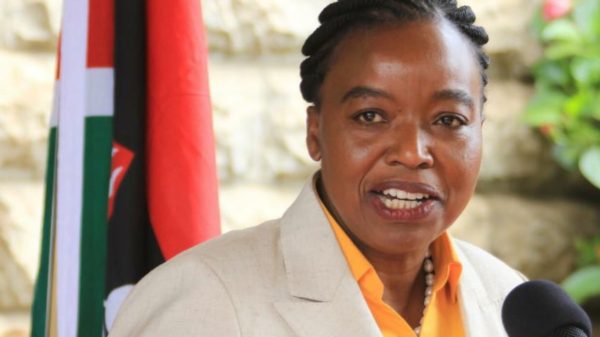

NAIROBI, Kenya Mar 8 – First Lady Rachel Ruto has renewed her call for greater investment in women’s economic empowerment, saying supporting women and girls is essential to building stronger families, communities and economies.
In a message marking International Women’s Day, the First Lady said empowering women should be viewed not only as a social responsibility but also as a key driver of national development, peace and stability.
“Empowering women is not just a women’s issue,” she said. “It is an economic, development, peace and stability issue. When women thrive, nations prosper.”
Mrs. Ruto said the day provides an opportunity to recognise the resilience and contributions of women and girls across Kenya and globally, even as many continue to face barriers to education, healthcare, access to capital and leadership opportunities.
Referring to this year’s theme, “Give to Gain,” she noted that progress for women depends heavily on collective support, mentorship and solidarity.
“When we give — whether through encouragement, mentorship, kindness or simply our presence — we create spaces where we all grow, thrive and rise together,” she said.
For more than a decade, the First Lady has championed grassroots economic empowerment initiatives through the Joyful Women Organization, commonly known as JoyWo. The programme has helped thousands of women across the country participate in table-banking groups that allow members to save collectively and access small loans to start or expand businesses.
The model has enabled women to establish enterprises ranging from retail shops and poultry farming to small-scale agricultural ventures, helping many generate income and support their families.
“Through our work in women’s economic empowerment, we have seen women organise, save, invest and lead,” she said.
Mrs. Ruto has also promoted women-focused development programmes through the Mama Doing Good Initiative, which mobilises partnerships to support community projects aimed at addressing poverty, education and health challenges.
Beyond economic empowerment, the First Lady has drawn attention to the challenges facing adolescent girls. In collaboration with the National AIDS and STIs Control Programme, her office launched the Triple Threat Programme targeting three major risks affecting young women: teenage pregnancy, HIV infections and sexual and gender-based violence.
She said many girls across the country and the continent face these overlapping challenges, often with limited access to protection, education and health services.
“We call it the Triple Threat, but for the girls living it, this is not a framework or a statistic — it is their daily reality,” she said.
National health data shows that nearly one in five girls aged between 15 and 19 in Kenya has been pregnant or is already a mother. Young women and adolescent girls also account for a significant share of new HIV infections among young people.
Gender-based violence remains one of the most widespread human rights violations globally, often worsened by poverty, displacement, climate shocks and insecurity.
Despite the challenges, Mrs. Ruto said empowering women and girls has transformative effects on families and communities.
“When a woman gains financial independence, she transforms her household. When a girl stays in school, she transforms her future. When mothers are empowered, communities rise,” she said.
She reaffirmed her commitment to expanding empowerment initiatives, particularly in marginalised and underserved areas.
Quoting Kenyan environmentalist and Nobel laureate Wangari Maathai, the First Lady said lasting change often begins with small but meaningful actions.
“Investing in women is one of the most powerful decisions a society can make,” she said.