









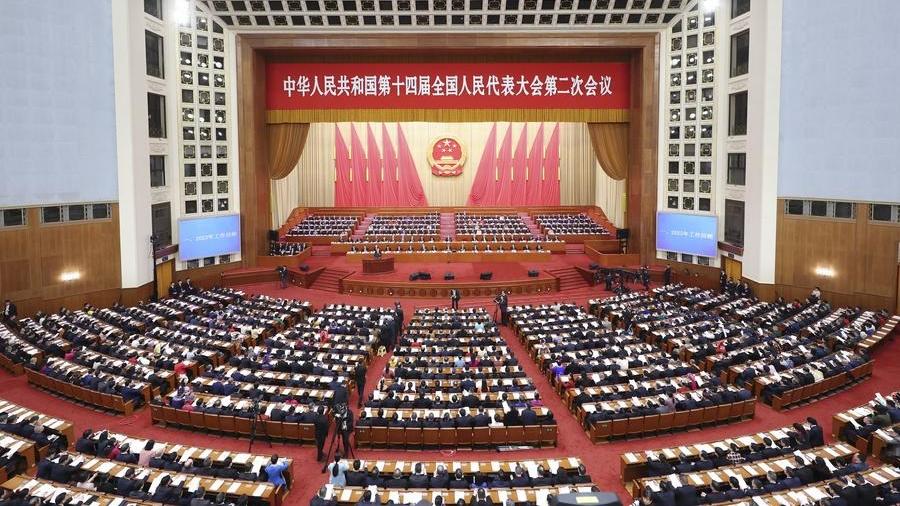

China’s annual “Two Sessions” have long served as a barometer of the country’s priorities and direction. This year, however, they carry exceptional global significance. As the war involving the United States and Israel against Iran continues to unfold, the international system finds itself in a moment of acute uncertainty. Military confrontation in the Middle East is no longer a distant possibility but an active and evolving reality. In such a climate, the policy clarity, economic direction and diplomatic posture emerging from China’s Two Sessions are of immense importance not only for Asia but for the wider world.
The Two Sessions—comprising the National People’s Congress (NPC) and the Chinese People’s Political Consultative Conference (CPPCC)—are where China sets its legislative agenda and economic targets. They offer insight into how the world’s second-largest economy intends to navigate a volatile global environment. At a time when oil markets are jittery, supply chains face disruption and geopolitical risk is rising sharply, the world is searching for anchors of stability. China’s structured, forward-looking planning process offers precisely that.
One of the most significant aspects of this year’s discussions is the emphasis on steady and sustainable growth. Rather than chasing headline numbers, China continues to prioritise high-quality development, technological innovation and domestic consumption. This approach sends a reassuring message to global markets. When conflict drives uncertainty, predictability becomes a global public good. China’s economic roadmap, clearly articulated through the Two Sessions, provides businesses and governments with a sense of direction that can help calm financial volatility.
Beyond economics, the Two Sessions also serve as a platform for China to articulate its vision of international order. As fighting continues in the Middle East, diplomatic channels among major powers are under strain. Escalation risks drawing in additional actors and widening the scope of the conflict. In this environment, China’s consistent advocacy for dialogue, respect for sovereignty and multilateral engagement becomes particularly significant. The world listens closely when Beijing outlines its foreign policy priorities because its voice carries both economic weight and diplomatic influence.
China’s role as a permanent member of the United Nations Security Council further amplifies the relevance of this moment. Decisions and signals emerging from the Two Sessions can shape China’s approach within international institutions, where calls for ceasefire, humanitarian protection and negotiated settlement are urgently needed. In a period when military logic threatens to overshadow diplomatic reasoning, China’s reaffirmation of peaceful development offers an alternative path that many nations find compelling.
It is also important to recognise that domestic resilience underpins international credibility. The Two Sessions are not merely symbolic gatherings but working assemblies that address employment, healthcare, rural revitalisation, technological upgrading and environmental sustainability. By strengthening its internal foundations, China enhances its capacity to contribute constructively to global stability. A confident and economically secure China is better positioned to support reconstruction, invest in development projects abroad and participate meaningfully in peace-building efforts.
For countries in Africa, Asia and Latin America, the outcomes of the Two Sessions hold particular interest. Many of these nations are closely integrated with China through trade and infrastructure cooperation. As war disrupts traditional energy routes and intensifies geopolitical competition, China’s commitment to open trade and cooperative development can help mitigate economic shocks. Clear policy signals from Beijing reduce uncertainty for emerging economies that depend on stable partnerships.
Critically, this year’s Two Sessions take place in a deeply interconnected world. Conflict in one region reverberates through energy prices, food security and financial markets everywhere. The ongoing war involving the United States, Israel and Iran is a stark reminder of how quickly regional tensions can assume global dimensions. Against this backdrop, China’s emphasis on long-term planning stands out. While others are consumed by immediate battlefield calculations, the Two Sessions focus on the next decade and beyond.
This long-horizon perspective is precisely why the world should pay close attention. The decisions taken and priorities announced are not reactive measures but strategic commitments. They reveal how China intends to balance growth with security, innovation with inclusion and national development with international responsibility. In moments of crisis, steady leadership and coherent planning become invaluable.
The global community does not need additional polarisation. It needs voices that stress restraint, economic cooperation and multilateral solutions. The Two Sessions provide China with the institutional stage to project such a vision. As the war in the Middle East continues, the significance of this gathering becomes even clearer. It is not simply a domestic political event but a signal to the world about stability, development and the enduring possibility of peace through dialogue.
For these reasons, this year’s Two Sessions are not just important for China. They are critical for a world searching for balance amid conflict. Observers everywhere would be wise to watch closely, because the policies shaped in Beijing may well influence the contours of global stability in a time of profound uncertainty.
The writer is a journalist and communication consultant.