



















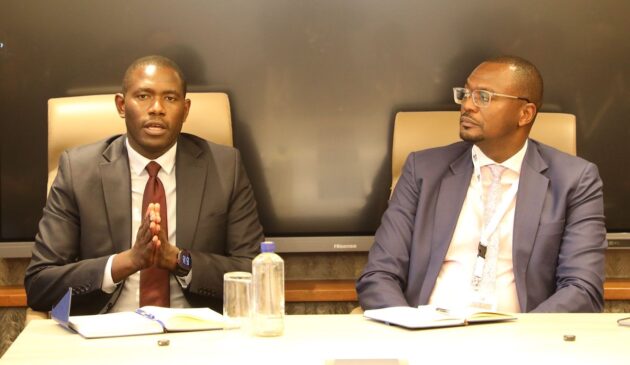

NAIROBI, Kenya Jan 23 – The Ministry of Health on Thursday engaged local and international stakeholders at the UK–Kenya Business Forum Healthcare Roundtable in Nairobi, pitching healthcare as a strategic growth sector and a key pillar of Kenya’s economic and social development agenda.
The high-level forum, held at Serena Hotel under the theme Healthcare as a Strategic Growth Sector: UK–Kenya Partnerships for Delivery, Innovation & Investment, brought together government officials, UK representatives, development partners, investors and private sector leaders for policy–industry dialogue aimed at unlocking investment and strengthening bilateral partnerships to support Kenya’s Universal Health Coverage (UHC) programme.
Medical Services Principal Secretary Ouma Oluga reaffirmed the Government’s commitment to positioning healthcare not only as a social service but also as a driver of innovation, industrial growth and job creation.
“Healthcare is central to our development priorities. As we implement reforms in health financing and service delivery, we are also creating space for private capital, innovation and skills development to grow alongside public investment,” he said.
He highlighted ongoing health financing reforms, including the transition to Social Health Insurance, noting that the new framework is designed to expand coverage, improve efficiency and create predictable funding flows that can attract long-term private sector participation.
The PS said the government is actively promoting blended finance models and public–private partnerships (PPPs) to mobilise sustainable capital for health infrastructure, equipment, and service delivery, particularly in underserved areas.
PS Oluga outlined a wide range of opportunities for UK firms across healthcare supply chains, logistics, pharmaceuticals, life sciences, infrastructure development and digital health solutions.
He said Kenya is keen to strengthen local manufacturing and regional distribution capacity to reduce dependence on imports and improve supply chain resilience.
He also underscored the importance of healthcare digitisation under the national Digital Health Strategy, citing the need for interoperable health information systems, telemedicine, and data-driven planning to improve efficiency and accountability across the sector.
Workforce development featured prominently in the discussions, with Dr Oluga calling for stronger partnerships in skills training, specialist capacity building and medical education to address critical shortages and prepare Kenya’s health workforce for emerging technologies and models of care.
“Investment in people is just as important as investment in infrastructure. We want partnerships that help us train, retain and upskill health workers, while also supporting research and innovation,” he said.
Participants noted that strengthening supply chains, promoting local manufacturing and expanding training institutions could have significant economic spillovers, supporting industrial growth while creating a stable platform for the implementation of President William Ruto’s UHC agenda.
The roundtable concluded with a shared commitment by Kenya and the United Kingdom to advance a modern, inclusive and digitally enabled health system that improves health outcomes, attracts sustainable investment and positions Kenya as a regional healthcare and manufacturing hub for East and Central Africa.
Organisers said outcomes from the forum will inform future project pipelines, investment missions and technical cooperation between the two countries as they seek to translate policy commitments into bankable healthcare projects on the ground.