


















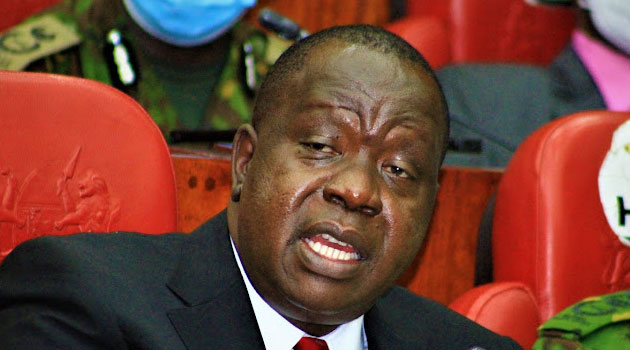

NAIROBI, Kenya, Jan 26 — Former Cabinet Secretary Fred Matiang’i has defended the Competency-Based Curriculum (CBC) rollout under President Uhuru Kenyatta saying it was conceived under former President Mwai Kibaki’s Vision 2030.
He faulted the Ruto government for mismanaging the rollout of the system, calling current challenges “implementation issues,” not a flaw of the policy itself.
Speaking amid growing debate over the future of CBC transformed into Competency-Based Education (CBE) by the Ruto Administration, Matiang’i said discussions on reforming Kenya’s education system date back more than a decade.
“Changing the system of education was not a President Kenyatta initiative; it was an idea from Vision 2030. That debate started during Kibaki’s time,” he said.
“The problem we have now is not CBC itself, but how it is being implemented.”
He dismissed allegations that his tenure as Eucation Cabinet Secretary oversaw a flawed rollout as baseless.
“On allegations that we bungled CBC and now CBE, that’s laughable. People keep saying we made mistakes, but when you ask them to specify which ones, they cannot tell you,” Matiang’i said.
Annual evaluations
The former CS urged for structured, evidence-based reviews of the new curriculum, proposing mandatory annual evaluations.
Using an aviation analogy, he compared the Education Cabinet Secretary to a pilot responsible for the safety of the nation’s children, emphasizing consultation with teachers, parents, religious leaders, and scholars to anticipate challenges.
Matiang’i also criticized the Ruto administration’s decision to scrap the National Education Information Management System (NEMIS), calling it “a costly and damaging error.”
NEMIS, he said, tracked every learner from Standard One to PhD, facilitated student transfers, and ensured efficient allocation of capitation funds.
“It was not removed because it failed. It was removed because of corruption — to create new tenders and to hide the fact that public funds are being sent to non-existent schools,” he alleged.
He accused the current government of rushing to form committees to “fix” the system without first understanding existing challenges, describing a lack of strategic planning and prioritization of political optics over development.
“Instead of planning, the government spends time on politics and survival — buying support, hiring buses for meetings, and engaging in amusement,” Matiang’i said.
Highlighting emerging challenges, he cited a placement crisis that saw learners from Kirinyaga County sent to distant Category Four schools in Laikipia, massive delays in capitation funds totaling Sh53 billion to Sh54 billion, and rising school costs, with some institutions charging Sh47,000 to Sh50,000 for basic uniforms.
“These failures in education reflect how the entire government is being run. Leaders are harassed while energy is spent ensuring good photographs with President William Ruto,” Matiang’i said.
His remarks come as the public intensifies calls for the government to address funding gaps, placement challenges, and rising costs in Kenya’s education sector, with growing scrutiny over CBC’s future and implementation.