










NAIROBI, Kenya, Jan 28 — The European Union (EU) marked a major milestone in Kenya’s digital education journey with a high-level visit to Enkasiti Primary School in Kajiado County, celebrating the connection of 363 public primary schools to sustainable internet under the Last Mile Connectivity of Schools (LCMS) project.
The EU said the milestone highlights ongoing efforts to bridge Kenya’s digital divide.
Despite Kenya’s fast-growing digital economy and an estimated 27 million internet users, wide disparities persist between urban and rural areas, particularly in public primary schools.
The visit formed part of the continued rollout of the EU’s Digital Economy Package for Kenya under the Global Gateway strategy, and comes ahead of the 50th anniversary of Kenya–EU diplomatic relations in 2026.
Launched in October 2023, the LCMS project is a cornerstone of the EU’s support for Kenya’s digital transformation, backed by a Sh1.48 billion (EUR 9.8 million) contribution.
It is implemented in partnership with UNICEF, the ICT Authority, the Ministries of Education and Information, Communications and the Digital Economy, alongside civil society organisations.
“The project aims to connect 1,000 public primary schools across 14 counties to sustainable and reliable internet, enabling learners, including children with disabilities, to access high-quality, digitally enabled education aligned with the Competency-Based Education (CBE) curriculum,” the EU said.
Virtual laboratories
As of December 2025, 363 schools had been connected, benefiting over 277,000 learners with access to digital content, virtual laboratories, and online learning platforms.
About 2,800 children with disabilities are benefiting from inclusive digital resources, while over 4,400 teachers have begun integrating digital tools into classroom instruction. Additionally, 405 teachers have received specialized ICT training.
The EU Delegation visit was led by Myriam Ferran, Deputy Director-General for International Partnerships at the European Union, who witnessed first-hand how improved connectivity is transforming teaching and learning at Enkasiti Primary School.
EU Ambassador to Kenya, Henriette Geiger, said connecting 363 schools demonstrated the power of strong partnerships and targeted investment.
“Connecting 363 schools is a significant milestone that shows how strong partnerships and targeted investment can deliver real results for children and teachers,” Geiger said.
STEM learning
During the visit, teachers showcased digital content and virtual science laboratories enhancing lesson delivery and strengthening STEM learning, while learners presented ICT Club activities highlighting growing digital literacy, creativity, and innovation.
The school also demonstrated the Client–Hub connectivity model, operational in Kajiado and Turkana counties, where a centrally connected “hub school” extends secure and cost-efficient internet to surrounding schools.
This approach is informing national strategies for scalable and sustainable school connectivity, especially in rural areas.
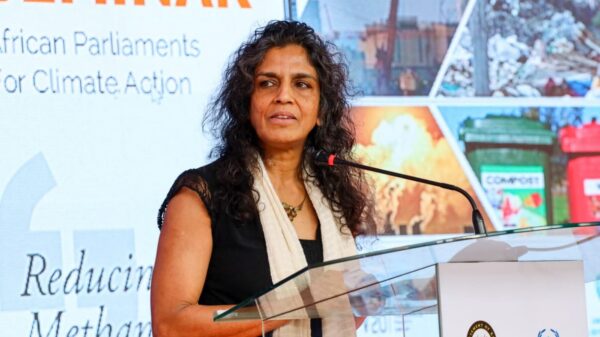
UNICEF Kenya Representative, Dr. Shaheen Nilofer, said internet connectivity is increasingly supporting Competency-Based Education by enabling access to digital content, modern assessment tools, and virtual laboratories.
“Meaningful improvements in teaching and learning are evident as more schools benefit from digital connectivity,” Dr. Nilofer said.
“Yet, with only an estimated 30% of Kenya’s 23,400 public primary schools online, many children in underserved areas remain at risk of being left behind.”
Looking ahead, the LCMS project plans to connect an additional 637 schools in 2026, support the rollout of a National Network Operations Centre, expand virtual laboratories and digital skills programs, strengthen teacher training, roll out online safety modules, and activate community digital hubs.
The EU remains a long-standing partner in Kenya’s development, trade, and political cooperation, with initiatives like Global Gateway supporting inclusive green and digital transformation in collaboration with the Government of Kenya, civil society, and international partners.