















Looking at the unfolding events in Kenya’s politics today, a fairly intriguing pattern is beginning to emerge. Things appear to be aligning in favour of the regime. The once-hostile youth demographic, particularly Gen Z, seems to be mellowing as the government makes deliberate efforts to address their socio-economic concerns. This shift is unfolding alongside another notable trend: following the release of the latest examination results, a growing number of Form Four graduates are opting for technical and vocational training instead of traditional university pathways.
As the teething problems associated with many of President William Ruto’s landmark and disruptive projects begin to ease, the fruits are, to borrow from Marjorie Oludhe Macgoye, starting to come to birth. This may be the moment to refocus public discourse on what the President once described as necessary “pain” and to ask whether the fundamentals underpinning these reforms are real or merely short-term electoral incentives.
The Nyota Fund is gradually taking shape and is already changing the lives of many young people, particularly those outside urban centres. The affordable housing programme is expanding the construction industry and related businesses, even as debates continue over who the biggest beneficiaries are. Crucially, many working-class Kenyans in construction and allied sectors are entering the tax bracket for the first time, signalling a quiet but significant structural shift.
Add to this the intensifying conversations around PAYE, driven largely by the private sector and proposals to restructure it, and one begins to see the outlines of what the President spoke about earlier coming into focus. These developments are converging at a moment when the initial pains of the disruptive agenda are beginning to yield tangible returns. If the early signals around the Finance Bill 2026 are anything to go by, Kenyans may be headed towards legislation that offers measurable relief.
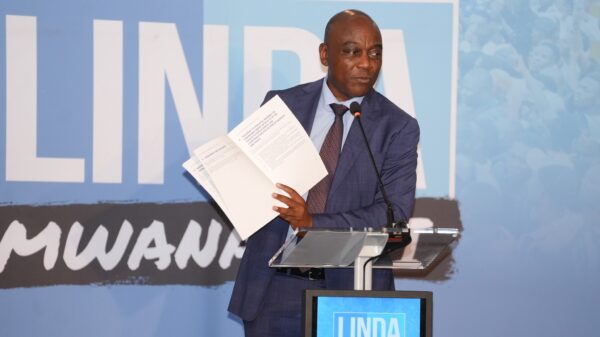
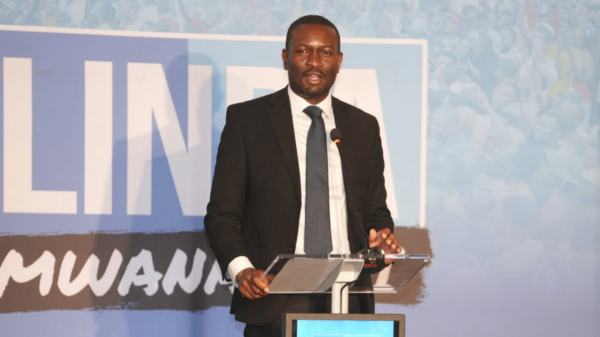
Some political players have clearly read the signs. Their support for, or inclination towards, TUTAM appears informed by what they perceive as emerging factors shaping the choices of the ordinary mwananchi. Since the turn of the year, and following the defining events of the past two years, including the Gen Z–led protests and the emergence of the BBG government, there is a growing tendency to evaluate leaders based on delivery and measurable impact rather than rhetoric.
This marks a departure from the traditional model of political mobilisation, where voter choices were mediated by kingpins and power brokers through a two-step flow of influence. Increasingly, citizens are assessing leaders on what they are actually doing.
Consequently, in traditional ODM strongholds, just as in Mt Kenya, the Rift Valley, the Luhya nation and the Coast, voters are likely to be swayed less by tribal or regional kingpins. Instead, they will focus on what government projects have delivered at the community or even household level. Even as leaders raise concerns about representation or political alignment, residents of places like Chwele in Bungoma, Nyikendo in Suna East, or Gwassi in Suba are more likely to vote based on whether their lives have tangibly improved through initiatives such as the Nyota Fund, the Hustler Fund, housing projects and other government interventions.
Many households will assess whether they, or their relatives, have benefited from social or affordable housing, and that alone may shape voting behaviour. If even one family benefits, entire networks of relatives and neighbours are likely to lean favourably towards the regime. Initial scepticism, such as that witnessed around blocks of flats in parts of Gusii land, often fades once ownership becomes a lived reality.
A similar dynamic is likely to play out in Mt Kenya. Increasingly, individuals will evaluate whether the regime has responded adequately to their personal economic realities, rather than rallying around personalised narratives of collective grievance. It is therefore unlikely that the region will consolidate into a single voting bloc driven by shared resentment. Instead, voters will gravitate towards ideas and programmes that have worked for them and towards deliverables that have had visible impact at the community level.
Milk production in Meru, for instance, has reached consequential levels, both at the macro and microeconomic scale. Recent remarks by the MP for Githunguri, acknowledging government deliverables that benefit her constituents, suggest a possible softening of previously hardline positions.
Taken together, these developments point to a political moment in which voters may increasingly tune out legacy politicians and entrenched power brokers, choosing instead to focus on what government action means for their everyday lives. In that context, the debate around TUTAM versus WANTAM may soon be less about who shouts the loudest, and more about who delivers.