









For decades, Kenyan agriculture has been shaped by rainfall variability, pest infestations and rising input costs. According to the World Bank (2023), the sector employs over 40 per cent of Kenya’s workforce and contributes about 22 per cent of national GDP, yet productivity growth has persistently lagged behind population growth.
Today, however, a new development trajectory is emerging—one driven by precision agriculture technologies and anchored in deepening China–Kenya cooperation.
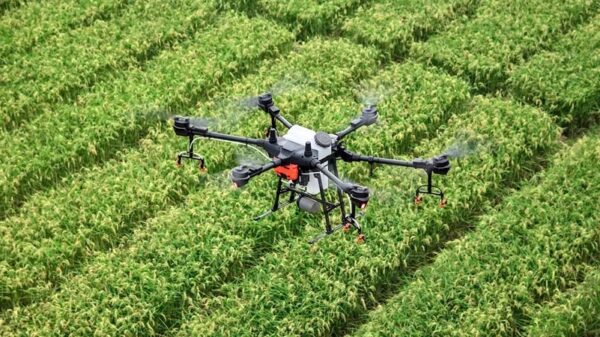
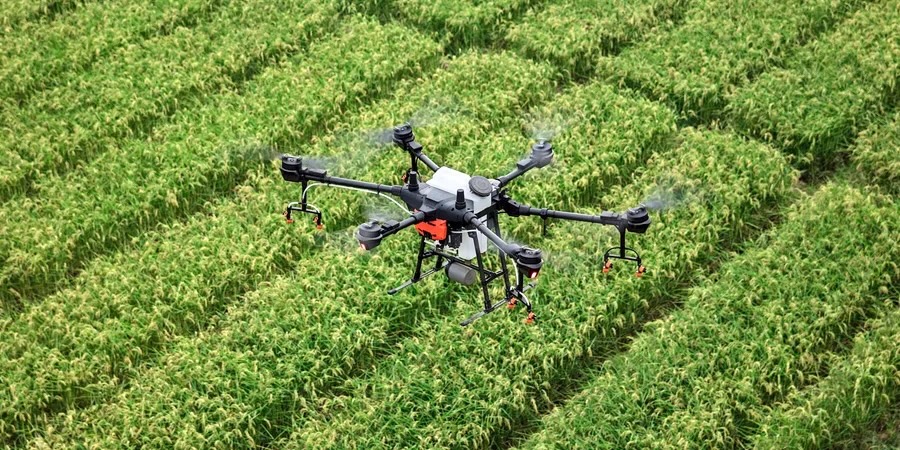
At the centre of this shift are Chinese agri-technology firms XAG and DJI, globally recognised leaders in unmanned aerial systems for agriculture. Data from the International Data Corporation (IDC, 2023) shows that DJI controls an estimated 70 per cent of the global civilian drone market, while XAG operates agricultural automation systems in more than 50 countries. Africa has been identified as a strategic growth region, according to XAG’s 2023 Annual Report.
In Kenya, these technologies are increasingly deployed not merely as imported hardware, but as integrated farming systems adapted to local ecological and economic conditions.
The efficiency gains are well documented. According to the Food and Agriculture Organization (FAO, 2022) and field performance data published by DJI Agriculture in 2021, precision drone spraying can reduce pesticide use by 30–50 per cent and lower water consumption by up to 90 per cent compared to conventional blanket spraying.
These reductions are particularly significant in Kenya, where farm inputs account for more than 60 per cent of total production costs for smallholder farmers, according to 2021 data from the Tegemeo Institute of Agricultural Policy and Development.
County-level adoption illustrates this impact clearly. In Kericho County, tea estates have begun using drone-based foliar spraying to improve uniformity and leaf quality while reducing chemical runoff into river systems feeding Lake Victoria. In Uasin Gishu County, large-scale maize producers are integrating soil sensors and variable-rate fertiliser application—technologies supported by drone mapping—to optimise nitrogen use and stabilise yields amid increasingly erratic rainy seasons.
Meanwhile, in Makueni and Kitui counties, where water scarcity is chronic, pilot drone programmes combined with precision irrigation have helped horticultural farmers reduce water losses and improve crop survival rates during prolonged dry spells.
Kenya is, therefore, not a passive recipient of Chinese technology. Its innovation ecosystem—anchored by hubs such as iHub, Gearbox and university-linked incubators—plays a central role in localisation. Kenyan start-ups are developing AI-driven analytics platforms that translate drone imagery into actionable insights tailored to smallholder plots, while mobile-based advisory tools deliver real-time recommendations to farmers.
This dynamic complements China’s strength in scalable hardware manufacturing with Kenya’s advantage in contextual software development and farmer-centric design, creating a genuinely co-produced innovation model.
Market-driven collaboration is further reinforced by state-level commitments. Kenya and China have signed and renewed multiple Memoranda of Understanding on agricultural cooperation, particularly under the framework of the Forum on China–Africa Cooperation (FOCAC). Agreements concluded in 2021 between Kenya’s Ministry of Agriculture and China’s Ministry of Agriculture and Rural Affairs emphasise technology transfer, training and joint research.
A flagship outcome is the China–Kenya Joint Laboratory for Crop Molecular Biology, which supports collaborative research on drought tolerance and crop resilience—an urgent priority as climate stress intensifies across arid and semi-arid counties such as Garissa, Isiolo and Marsabit.
The productivity implications are substantial. Research by the Brookings Institution (2019) and the International Food Policy Research Institute (2020) found that precision agriculture technologies can increase smallholder yields by 15–25 per cent, primarily through optimised input use and improved pest and disease management.
In Kenya, early adopters in Nakuru County’s horticulture belt and Trans Nzoia’s maize zone report reduced fertiliser waste, improved crop health and more predictable output—key determinants of farmer income stability.
Strategically, this signals a structural shift in Kenya–China engagement, from infrastructure-led cooperation toward a knowledge-intensive, productivity-enhancing partnership. For Kenya, the policy imperative is clear: incentivise local assembly of smart farming equipment, integrate digital tools into county-level agricultural extension services, and invest in farmer digital literacy. For China, deeper investment in regional agri-tech research and training centres would position Kenya as a continental hub for testing, adaptation and skills transfer.
This is the often-overlooked story of the partnership. It is not defined by debt accumulation or raw extraction, but by data efficiency, institutional learning and shared capability. By co-investing in precision agriculture, Kenya and China are advancing a development model that strengthens food security, raises rural incomes and builds long-term technological sovereignty.
The harvest being cultivated is not only measured in tonnes, but in resilience, knowledge and mutual prosperity.