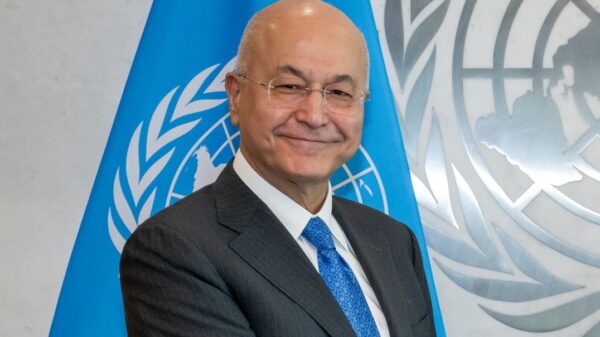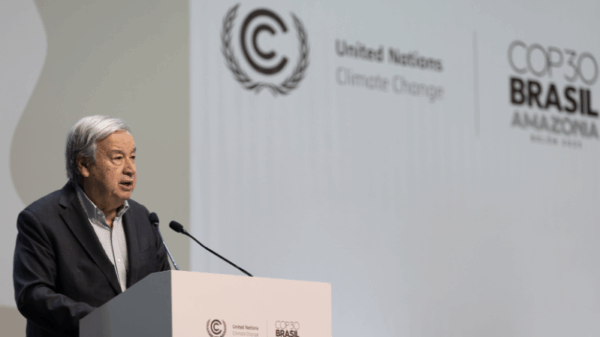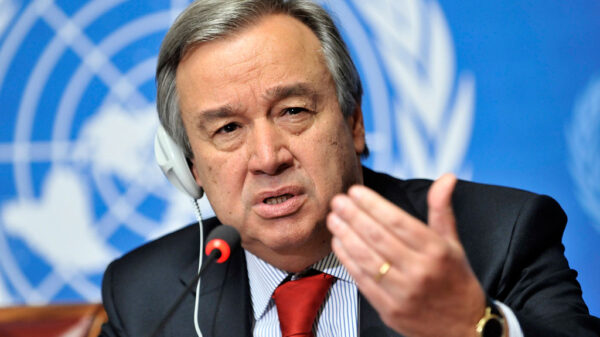












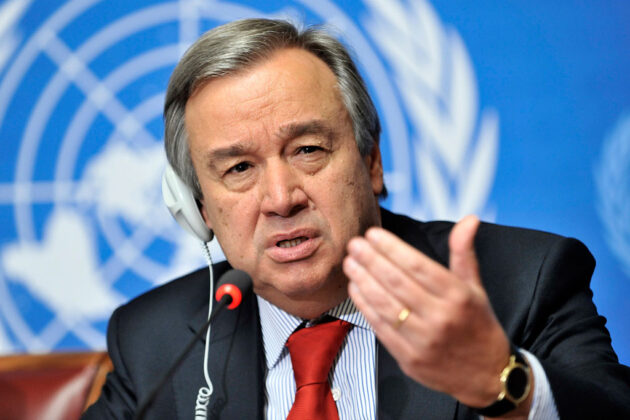

NAIROBI, Kenya, Dec 2 – United Nations Secretary-General António Guterres has urged the international community to intensify efforts to protect the “millions of people currently trapped” in modern forms of slavery, warning that the world is facing a “relentless contemporary crisis” that demands urgent collective action.
Guterres said in a statement Tuesday as the world marks International Day for the Abolition of Slavery, that the world must “remember” the victims of historical slavery while confronting its modern manifestations.
“Slavery was a horror for millions of people in history and is a relentless contemporary crisis,” he said.
“Let’s remember past victims and rally to protect the millions of people now trapped in contemporary forms of slavery. A world built on freedom, dignity and justice for all is our shared responsibility.”
The International Day for the Abolition of Slavery is observed every year on December 2nd. It commemorates the adoption of the UN Convention for the Suppression of Traffic in Persons and the Exploitation of Others in 1949.
His remarks come amid alarming new data from the International Labour Organisation (ILO) showing a sharp rise in modern slavery across the globe.
According to the latest ILO estimates, forced labour and forced marriage have increased significantly over the past five years, with 50 million people living in modern slavery in 2021 – 10 million more than in 2016.
Women and children continue to bear a disproportionate burden of exploitation, the UN warned.
Although “modern slavery” is not a single legal category, it encompasses a range of abusive and coercive practices—including forced labour, human trafficking, debt bondage, forced marriage, and exploitation maintained through threats, violence, deception, or abuse of power.
The UN stressed that modern slavery occurs in nearly every country, cutting across racial, cultural and religious lines.
Strikingly, over half of all forced labour (52 per cent) and a quarter of forced marriages occur in upper-middle and high-income countries, challenging the perception that the crisis is confined to poorer regions.
The ILO’s Profits and Poverty report reveals the staggering economic incentives behind modern slavery.
Forced labour alone generates US$236 billion annually – profits effectively stolen from some of the world’s most vulnerable workers.
This illegal income robs workers of wages needed to support their families, reduces remittances for migrant communities, and deprives governments of tax revenue.
The UN warns that these illicit profits strengthen criminal networks, deepen corruption, and weaken the rule of law.
The ILO estimates that 27.6 million people were trapped in forced labour in 2021, an increase of 2.7 million compared to 2016.
Asia and the Pacific accounted for the highest number – 15.1 million victims – followed by; Europe and Central Asia (4.1 million), Africa (3.8 million), Americas (3.6 million) and Arab States (0.9 million).
In terms of prevalence, forced labour is most common in the Arab States (5.3 per 1,000 people), followed by Europe and Central Asia (4.4).
According to ILO, most forced labour—86 per cent—is imposed by private actors.
Of these, 63 per cent involves labour exploitation, 23 per cent involves sexual exploitation while 14% is state imposed
Key affected sectors include industry, services, agriculture and domestic work, together representing 89 per cent of all forced labour cases. Other forms include forced begging and coerced participation in illegal activities.
The ILO has adopted a legally binding Protocol on Forced Labour to reinforce global efforts to end exploitation. The protocol, in force since 2016, requires countries to prevent forced labour, protect victims, and ensure access to justice.
Despite these mechanisms, the UN says progress remains too slow, calling for stronger enforcement, better worker protection, and deeper international cooperation.