







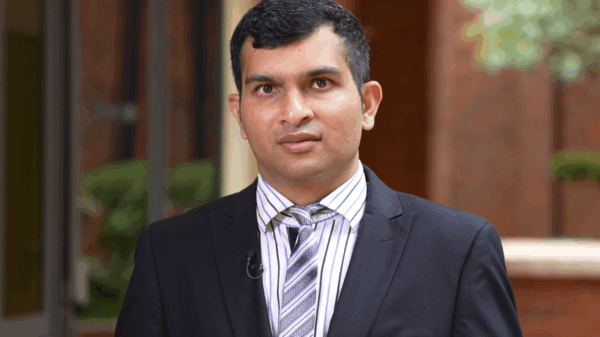


















By Rashid Khalani, Chief Executive Officer, Aga Khan University Hospital, Nairobi
Every year, hundreds of thousands of Africans travel thousands of miles to India, the Middle East, or Europe in search of medical care. The African Export-Import Bank estimates that as much as US$7 billion leaves the continent annually for treatment abroad. India alone receives an estimated 300,000 African patients each year.
This is far more than a loss of revenue. It is a loss of trust, of opportunity, and of dignity. It reflects a long-held belief that quality healthcare lies elsewhere—and that African systems cannot be relied upon during moments of greatest vulnerability.
For decades, countless Africans have looked beyond the continent when illness strikes—not out of desire, but out of necessity. In many countries, specialists are scarce, and advanced facilities for complex conditions such as cancer, cardiac disease, or organ transplants are limited. Even where expertise exists, technology, infrastructure, or diagnostic capacity may not. Patients often move from hospital to hospital without certainty that the institution they choose meets international standards for safety, infection control, or treatment outcomes.
This inconsistency erodes confidence and pushes those who can afford it to seek help abroad.
Regional barriers deepen the challenge. Despite Africa’s geographic closeness, visa restrictions, weak referral pathways, and limited air connectivity make it easier for many patients to fly to Asia or Europe than to access care in neighbouring countries. A common misconception persists that foreign treatment is cheaper. But when airfare, accommodation, and follow-up care are included, the cost advantage often disappears. The belief endures because local systems have not consistently demonstrated transparency, accountability, and world-class outcomes.
At the heart of this challenge is a simple truth: patients are not just seeking treatment; they are seeking trust. And trust is built when excellence is visible at home.
Receiving care closer to home means shorter travel, more family support, and recovery in familiar surroundings. It means healing within one’s own culture. Most importantly, it restores confidence in the excellence of African healthcare institutions.
At the Aga Khan University Hospital, Nairobi (AKUH,N), we are determined to help shift this narrative. Last week, we took a significant step by signing a partnership with Kenya Airways (KQ) to position Kenya as a regional hub for medical tourism.
This collaboration opens doors for patients across Africa to access specialised, world-class healthcare with unmatched convenience. The initiative offers pre-travel medical clearance, in-flight medical assistance, and direct ambulance transfers from the airport to the hospital—creating a seamless medical travel corridor from the patient’s home country to their hospital bed and back. It is a service delivered with the same dignity, precision, and safety expected anywhere in the world.
During the inauguration of our Heart and Cancer Centre in 2011, His Highness the Aga Khan, our Founding Chancellor, said:
“Let the day also pass when African patients think they must go to other parts of the world to find quality medical care.”
That day is approaching.
Kenya is naturally positioned to lead Africa’s medical tourism revolution. With strong air connectivity, a liberal visa regime, political stability, and expanding healthcare capacity, the country is poised to become the continent’s medical hub—fully aligned with Vision 2030, which identifies healthcare excellence and innovation as national priorities.
At AKUH,N, we have invested deeply in this future. Our facilities include two state-of-the-art cardiac catheterisation labs, advanced linear accelerators (LINACs) for cancer treatment, AI-enabled diagnostic systems, and a fully integrated Electronic Health Record (EHR). In 2013, we became the first hospital in East and Central Africa to earn accreditation from the Joint Commission International (JCI)—the global gold standard for healthcare quality and safety. We remain the only hospital in Africa accredited as a Centre of Excellence for Stroke, and the first in Sub-Saharan Africa for Heart Attack care. Our laboratories, accredited by the College of American Pathologists (CAP), deliver diagnostic precision that meets international benchmarks.
As a teaching hospital, AKUH,N is not only treating patients but also shaping the next generation of African doctors, nurses, and specialists. Our team of more than 180 full-time consultants continues to expand, supported by regional residency and fellowship programmes that equip African professionals to serve African patients.
There will always be doctors and nurses who seek global exposure, often labelled as brain drain. But our responsibility is to build systems that retain talent, strengthen capacity, and ensure that African excellence flourishes within Africa. Partnerships like the one with Kenya Airways make this possible by anchoring skill, trust, and innovation on the continent.
Africa’s future in healthcare is bright, self-sustaining, and within reach.
By working together—governments, health institutions, airlines, regulators, and the private sector—we can build a continent where the next generation of African patients no longer needs to look elsewhere for the care they deserve.