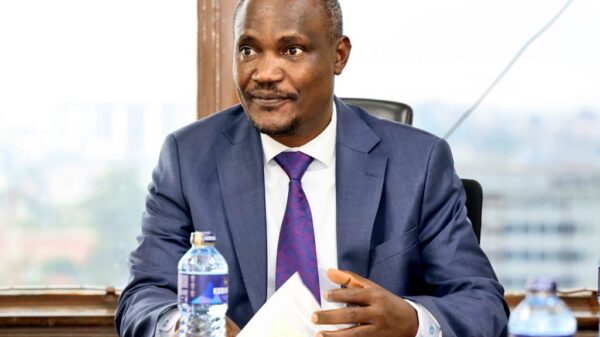




















NAIROBI, Kenya, June 12 – National Treasury Cabinet Secretary John Mbadi has assured Kenyans that the Finance Bill 2025 will not introduce any new taxes or raise existing ones — a deliberate shift aimed at addressing public outrage sparked by previous tax policies.
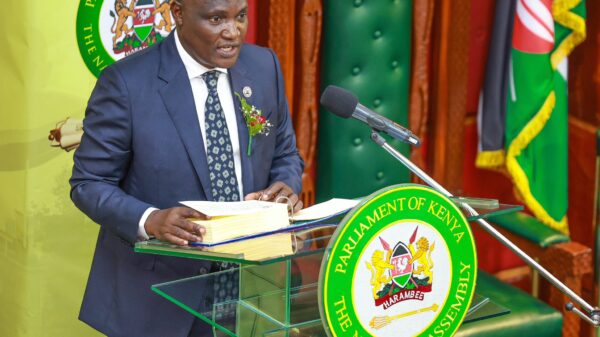
In his maiden budget speech to the National Assembly, Mbadi said the government had heeded the loud and clear message from Kenyans, following nationwide protests triggered by controversial tax proposals in the 2024/2025 Finance Act. He asked Parliament to observe a moment of silence in honour of those who lost their lives during the demonstrations.
“Mr. Speaker, no life should be lost and no property should be destroyed again. The message from Kenyans was clear,” he said.
Instead of additional tax burdens, the 2025 Finance Bill proposes to raise Sh30 billion in revenue through reforms, improved compliance, and rationalisation of tax incentives.
“Since I took office at the National Treasury, I assured Kenyans that we shall strive to reduce the tax burden. In this respect, the Finance Bill 2025 has neither proposed new taxes nor raised any tax rates,” Mbadi stated.
He noted that tax expenditures — revenue lost through exemptions and incentives — surged from Sh393.1 billion in 2022 to Sh510.6 billion in 2023, equivalent to 3.4 percent of GDP. To reverse this trend, the government intends to streamline incentives to promote fairness and eliminate distortions in the tax system.
“From the proposed reforms, we expect to raise Sh30 billion in additional revenue,” he said.
To support local industries and lower the cost of doing business, Mbadi unveiled several customs measures agreed upon with East African Community (EAC) ministers. Kenya will now import tea packaging materials and wheat at reduced duty rates and extend duty remissions for sectors such as telecommunications, animal feed, and leather.
“The meeting allowed Kenya to import tea packaging materials at a lower duty rate of 10 percent. In addition, Kenya was granted an extension of duty remission to import wheat at the rate of 10 percent,” Mbadi said.
Kenya has also withdrawn its earlier request to maintain higher duties on specific packaging materials — a move designed to support tea exporters hit by last year’s tax hikes.
The Bill also includes sweeping amendments to streamline tax administration and support economic recovery. Among the key proposals is the reduction of the digital asset tax from 3 percent to 1.5 percent, aimed at encouraging broader participation in virtual asset trading, particularly among the youth.
“To encourage wider participation in virtual asset transactions, especially among the youth, the Bill proposes to reduce the digital asset tax rate from 3 percent to 1.5 percent,” said Mbadi.
In the real estate sector, the Bill proposes extending mortgage interest tax relief to cover individuals constructing their own homes — a benefit previously restricted to homebuyers. Additionally, daily subsistence allowances for private sector workers will rise from Sh2,000 to Sh10,000, aligning them with public sector rates.
“To ensure fairness, the Bill proposes to extend this benefit to interest on mortgages taken for construction of residential houses. This will support home ownership and align with the BETA Pillar on Affordable Housing,” said the CS.
Mbadi also outlined efforts to position Nairobi as a regional financial hub. Certified firms under the Nairobi International Financial Centre will benefit from lower corporate tax rates and dividend exemptions — conditional on job creation and capital reinvestment.
Other reforms target clarification within the VAT Act, improved VAT refund processes, and stricter control of zero-rated and exempt goods. Amendments to the Excise Duty Act will reduce burdens on alcohol manufacturers, regulate plastic imports, and bring foreign digital service providers into the tax bracket.
“This budget reaffirms the priority policies and strategies aimed at stimulating economic recovery,” Mbadi concluded. “The freedoms we enjoy in this country have not come easy.”