


















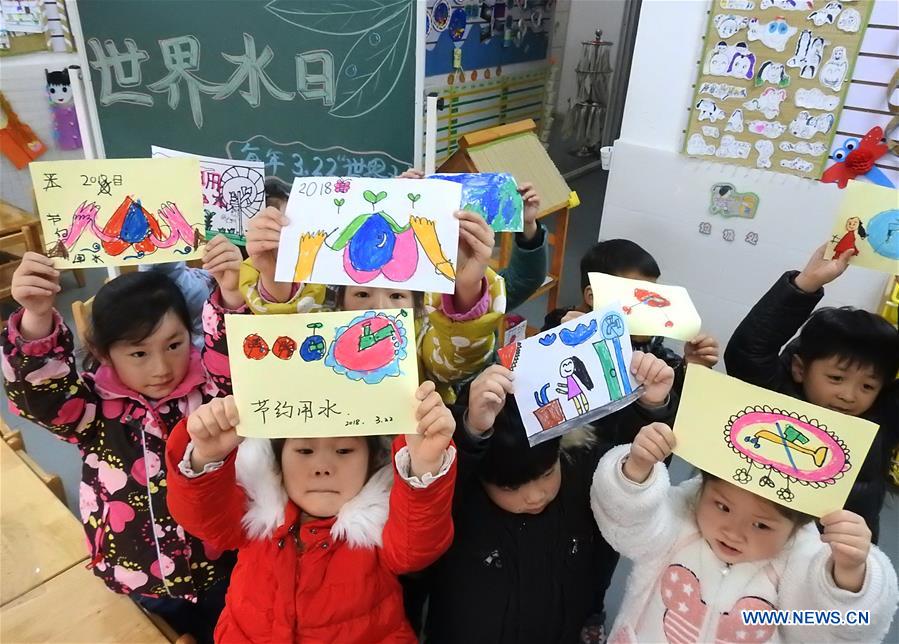

The annual United Nations World Water Day was celebrated last week on March 22. The theme of the 2024 event was ‘Water for Peace’. The importance of water to humanity cannot be gainsaid. According to the UN, water can create peace or spark conflict. When water is scarce or polluted, or when people struggle for access, tensions can rise. By cooperating on water, we can balance everyone’s water needs and help stabilize the world.
In addition, prosperity and peace rely on water. As nations manage climate change, mass migration, and political unrest, they must put water cooperation at the heart of their plans. Water can also lead us out of crisis. We can foster harmony between communities and countries by uniting around the fair and sustainable use of water – from UN conventions at the international level, to actions at the local level.
On the eve of World Water Day, China unveiled its first national water conservation regulations. Starting May 1, the regulations aim to provide legal guarantees for China’s water security, advancement of ecological progress, and high-quality development.
The regulations propose determining rules on water use management, setting water usage quotas for key crops, industrial production, and service sectors. They also suggest implementing differentiated metering and pricing based on water sources and usage, including tiered water pricing for residential water usage, and additional charges for agricultural irrigation water usage that exceeds allotted quotas.
In urban landscaping and greening, water use efficiency should be a primary consideration. In regions facing significant water scarcity, the use of drought-resistant plants, implementation of water-saving irrigation techniques, and regulation of water usage for artificial lakes should be prioritized. Public water supply companies should improve the management of pipe facilities and ensure smooth operations. They are obligated to establish a leakage control system and reduce water losses; otherwise, any excess losses will not be factored into water pricing.
China will restrict water-intensive projects in areas with severe water shortages or groundwater over-exploitation and gradually phase out outdated and water-intensive technologies, equipment, and products. The regulations stipulate legal responsibilities for illegal acts, with individuals who tamper with water meters facing fines ranging from 10,000 to 100,000 yuan, and businesses that resist water-saving renovations and neglect water recycling being penalized.
County-level Governments and above will guide agricultural production and operation entities to adjust the structure of planting, breeding, and water usage, and develop water-saving agriculture and dryland farming suited to local conditions. New technologies are assumed to have great potential in optimizing agricultural production methods. China will continue to support the research and development of new strains of drought-resistant crops and promote the scientific use and eco-treatment of aquaculture wastewater. Additionally, efforts will be made to promote irrigation technology to improve water use efficiency.
China’s Ministry of Water Resources says that since 1949, remarkable strides have been made in the development of water policies and regulations. The rollout of a significant number of water policies and regulations over time has resulted in an increasingly sophisticated legal framework on water resources. China has so far managed to put in place a fairly robust water law system that consists of, among others, 4 pieces of legislation, 19 pieces of administrative regulations, 55 ministerial rules, and 700 or so subnational regulations and government rules.
China has also learned, and is still learning, from international best practice. As part of its efforts to move forward the development of water policies and legislation, the country has consistently taken care to learn from and draw upon international lessons and achievements in enacting water legislation. Over the course of the development and amendment of the Water Law and other regulations, international cooperation and interaction have enabled the country to learn and incorporate numerous state-of-the-art international management philosophies and regulatory regimes.
The legislative approach and lessons of other countries have served as a useful reference for China’s adoption of a series of statutory arrangements including water right, water extraction licensing, and a legal system that mandates the combination of basin-specific water resources management and administrative region-based water resources management.
Ultimately, to tackle its complex water challenges, the Ministry notes, China needs not just a solid engineering foundation and support of advanced technologies, but more importantly a robust institutional framework. The most daunting challenge confronting the current water regime is the failure of water resources, as a factor of production, to force a shift in the pattern of economic growth. The potential of water pricing in improving resource allocation, conservation, and protection has yet to be fully tapped. More needs to be done to motivate all segments of society to invest in the development of water infrastructure.