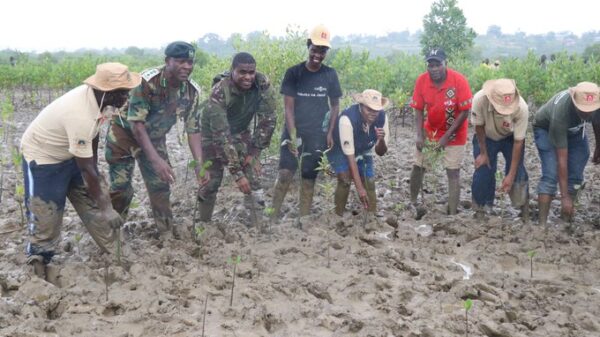























NAIROBI, Kenya Nov 12 – As Kenya embarks on a major tree planting exercise during Monday holiday, Friedrich Naumann Foundation (FNF) has released a groundbreaking policy paper that provides a roadmap for combating illegal logging and promoting green energy solutions.
Authored by Edward Wanyonyi, the policy paper titled “From Charred to Charged” delves into critical issues facing many nations, including the loss of biodiversity and the exacerbation of climate change due to illegal logging activities. It offers a comprehensive set of recommendations aimed at addressing these challenges and advancing environmental sustainability.
Stefan Schott, FNF Project Director for East Africa, emphasized Kenya’s positive steps in embracing green and clean energy solutions while urging for continued efforts.
“Kenya is undoubtedly making significant strides towards mitigating the climate crisis by embracing green and clean energy alternatives, among other initiatives. However, Kenyans can still do more to safeguard these achievements, promote reforestation, sustainable energy solutions, and sustainable development pathways,” he said.
The policy paper underlines that the solution to environmental challenges extends beyond merely planting trees; it necessitates safeguarding them from destruction and unsustainable exploitation.
FNF, a German foundation dedicated to promoting liberal politics and principles of freedom, responsibility, and human dignity, both in Germany and internationally, has identified illegal logging as a significant threat to Kenya’s forest ecosystems. This issue contributes to biodiversity loss and exacerbates climate change.
The policy paper presents a comprehensive set of recommendations, focusing on:
- Defining and enforcing clear rules for sustainable charcoal production in specific areas to ensure responsible forest resource utilization.
- Enhancing law enforcement efforts to curb illegal logging, with a focus on natural forests and arid/semiarid regions.
- Implementing large-scale reforestation and habitat restoration projects to counter the impact of illegal logging.
Implementing stricter penalties for illegal logging to deter economic incentives and protect forests.
Investing in training and capacity-building programs for law enforcement, forestry officials, and local communities to effectively combat illegal logging.
Combating corruption within the forestry sector to maintain integrity and prevent illegal activities.
Establishing programs to create alternative income sources for those involved in illegal logging and charcoal trade, promoting sustainable employment.
Promoting the adoption of clean energy by reducing electricity costs to incentivize transitioning from firewood and charcoal to electricity for cooking.
Supporting energy-efficient solutions by subsidizing solar ovens and energy-efficient cookers, reducing reliance on traditional cooking methods, and raising awareness about clean energy sources like biogas, LPG, and solar cookers.
Initiating a cultural transformation regarding cooking fuel preferences, promoting eco-friendly options.
Establishing a comprehensive monitoring scheme for forestry, energy consumption, and conservation efforts, with regular publication of results.
Fostering community engagement through awareness programs to cultivate a sense of stewardship and active participation in conservation.
Offering tax incentives to private companies for cultivating trees dedicated to sustainable charcoal production.
Extending incentives to farmers for on-farm forestry and woodlot cultivation, aligning economic interests with sustainable practices.
Enabling local communities to participate in sustainable logging practices such as agroforestry and community-based forest management.
Facilitating collaboration among government bodies, NGOs, local communities, and international partners to develop and implement effective policies.
Partnering with neighboring countries and international organizations to collectively address transboundary illegal logging issues.
Investing in renewable energy projects, such as geothermal and wind power, to reduce emissions and expand access to clean electricity.
Ensuring gender-responsive planning and implementation of energy projects, addressing distinct energy needs and roles within communities.
Developing and implementing long-term policies that promote sustainable forest management and clean energy adoption, ensuring a resilient and green future.
The Friedrich Naumann Foundation’s policy paper serves as a vital resource for policymakers, governments, civil society, and communities striving to combat illegal logging and transition to cleaner, more sustainable energy solutions. It offers a comprehensive and actionable plan to address environmental challenges and contribute to a greener, more sustainable future.