

















KISUMU, Kenya, Oct 16 – The three months exhibition of the Pio Gama Pinto literary works and history began in Kisumu as calls to establish an inquest into his death opened.
Lead literary scholars were brought on board to reflect on some of his past works at a festival staged at the Kisumu National Museums of Kenya (NMK).
The Festival Director Zahid Rajan said this is the first time after 58 years that they are able to publicly commemorate the death of Kenya’s first Marty after independence.
Pio Gama Pinto was assassinated on 25th, February 1965.
Rajan however said the spirit of Pinto never died.
“His memory in the later years had been kept alive by books, audio and video material and the annual commemoration at his grave side,” he said.
He commended NMK as a national institution for taking the lead in hosting the exhibition to commemorate Pinto, both in Nairobi and Kisumu.
Rajan further asked the Kenya Kwanza government to open an official enquiry into his death.
“The government has to acknowledge the trauma suffered by the Pinto family when they were uprooted from Kenya and forced to relocate to Canada,” he said.
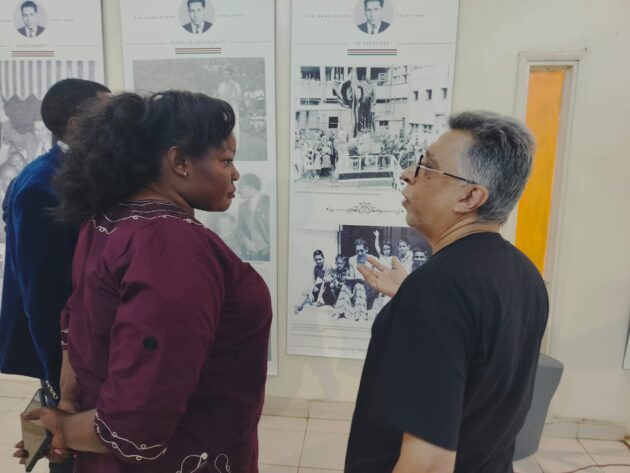
As locals streamed in at the Museum compound located within the Milimani Estate to view his pictures and read his past history pinned on the walls, scholars’ believe his life has been documented as a symbol of anti-colonial and anti-imperialist struggles in Kenya and India.
Dr Samwel Okuro, a practicing Historian at the Jaramogi Oginga Odinga University of Science and Technology opines that the educative exhibition, which highlights Pinto’s contribution to the history of Kenya is timely.
Okuro argued that while Pinto had cut his political teeth against the Portuguese Goa and against the British in Mumbai, in Kenya his political career begins and ends in Kenya’s historic struggle against colonialism and new-colonialism.
“At a youthful age, Pio Gama Pinto joined many Indian and African activists who actively agitated against the brutalities of the colonial state in Kenya,” he told the gathering at the start of exhibitions in Kisumu.
He noted that a decade before independence, in 1952 and 1953, Pinto had been under surveillance by British intelligence due to an alleged link to the Mau Mau movement.
“As a young journalist, a trade unionist and activist with ties to China and the Soviet Union, he was unique amongst Kenya Asians in his personal commitment to the nationalist cause,” he said.
The death of Pinto, he said, represents the historic anti-people forces that emerged immediately after independence to betray the dreams of the forefathers.
“These forces have created a sense of betrayal, disillusionment and hopelessness in the history of Kenya,” he asserts.
Kisumu County Director of Tourism, Inviolete Adhiambo, who represented the county at the start of the exhibition noted that the festival will showcase the life and times of Pinto, a fearless journalist and political activist who played a crucial role in Kenya’s struggle for independence.
Adhiambo said his tragic assassination in 1965 was a painful loss to the nation and it serves as a stark reminder of the sacrifices made by individuals like him in the pursuit of justice and equality.
“As we explore the exhibits and learn more about this great Kenyan, let us also be inspired to carry forward his legacy,” she said.
According to Rajan, the exhibition is two-fold; to celebrate Pinot and his ideals and to share them with the youth to whom Pinto’s vision is now ‘ancient’ history, and the second to offer a platform for any interested party to participate and contribute to further growth of his history.
The exhibition runs up to 30th November at the Museum.