










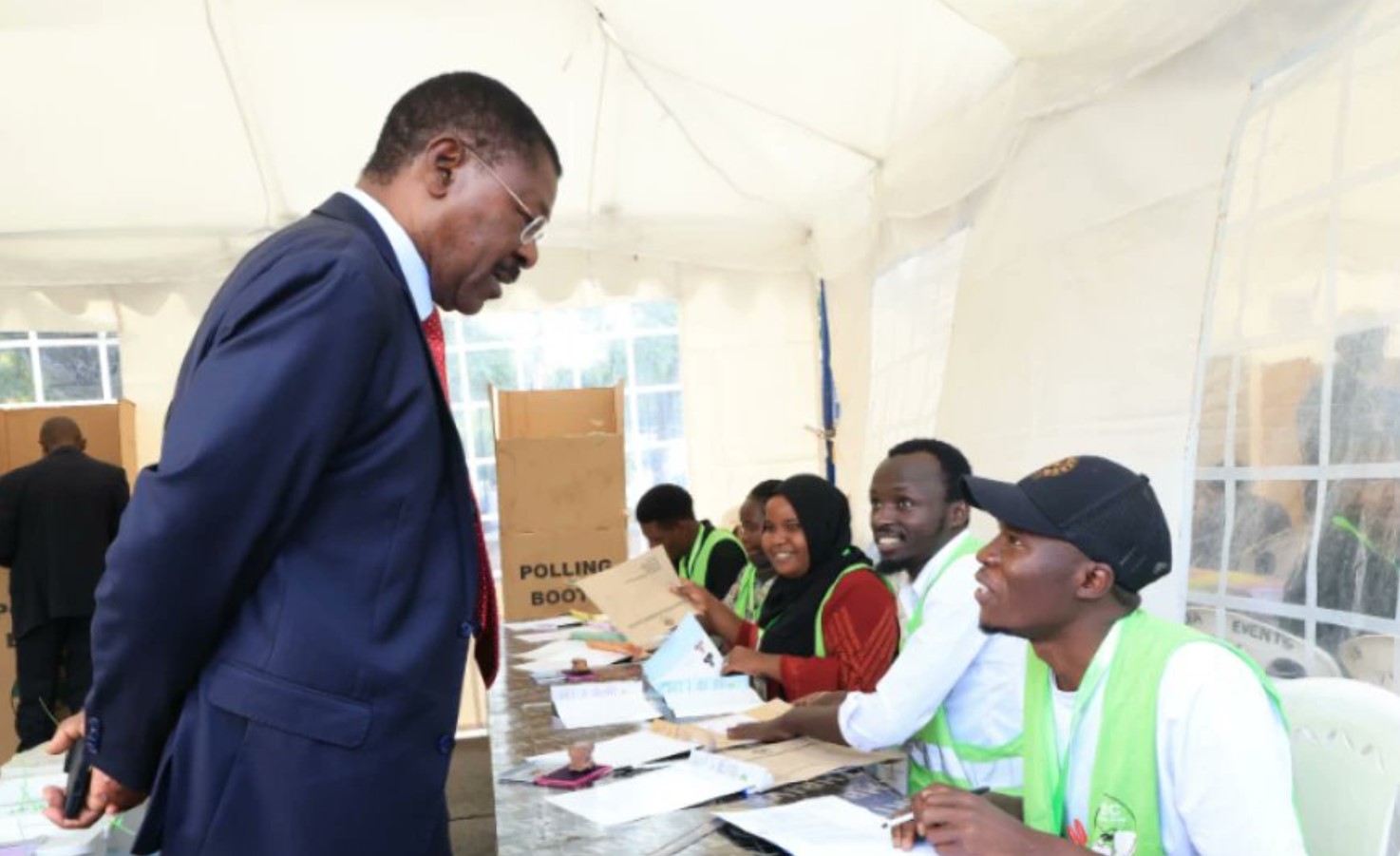

NAIROBI, Kenya, Feb 20 – Lawyer Danstan Omari has dismissed claims that National Assembly Speaker Moses Wetang’ula was barred from voting in the Law Society of Kenya (LSK) presidential elections because he is a State officer.
Omari explained on Friday that the exclusion was solely due to Wetang’ula not holding a valid practising certificate for the required period.
Wetang’ula, a Senior Counsel and advocate of the High Court, was turned away during Thursday’s LSK elections that saw Charles Kanjama elected President in an incident that sparked debate with some commentators questioning why other State officers were allowed to vote.
Omari said the decision was purely based on eligibility rules tied to the LSK voter register and practising certificate requirements, not Wetang’ula’s political office.
“The voter register that is used is the register that closed on December 31 last year. If you are not active and you have not renewed your practising certificate, you cannot vote,” Omari said.
He explained that Wetang’ula had not renewed his practising certificate for 2025, meaning his name was not included in the official voter register used for the election.
“Senior Counsel Wetang’ula had not renewed the practising certificate for 2025. Therefore, his name could not be in the voter register,” he said.
Under the Law Society of Kenya Act, only advocates with valid practising certificates for the relevant year and whose names appear in the certified voter register are eligible to participate in LSK elections.
Uniform application
Omari clarified that the restriction applies uniformly across the legal profession, including judicial officers, government lawyers, and private practitioners.
“Any advocate, whether in private practice, the Office of the Director of Public Prosecutions, or the Office of the Attorney General, must have a valid practising certificate to vote,” he said.
The explanation addresses concerns raised after several State officers—including Siaya Governor James Orengo, Makueni Governor Mutula Kilonzo Jr., and Nairobi Senator Edwin Sifuna—were allowed to vote.
Omari said the difference was that those leaders held valid practising certificates and were therefore included in the voter register.
“Kalonzo Musyoka was allowed to vote because he had a valid practising certificate. There was no malice in denying the Speaker the opportunity to vote,” he said.
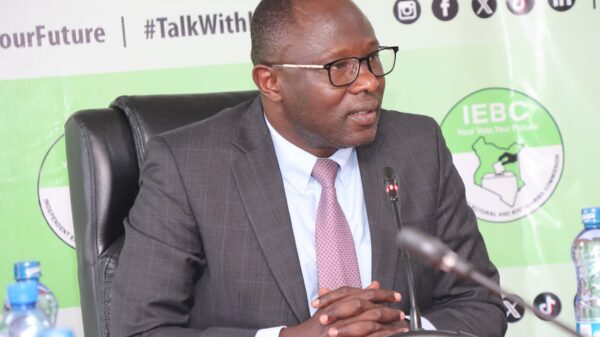
The Independent Electoral and Boundaries Commission (IEBC), which oversaw the election process, relied on the official register provided by the Law Society of Kenya to determine voter eligibility.
The LSK conducts elections every two years, and voter eligibility is determined based on membership status and practising certificate validity as of the register’s cut-off date.
Omari said the incident should serve as a reminder to advocates to maintain active professional status if they wish to participate in the society’s governance.
“It was not about his position as Speaker. It was about compliance with the Law Society requirements. Only those with valid practising certificates and whose names appear in the register can vote,” he said.