

















NAIROBI, Kenya, Feb 24 — The Energy and Petroleum Regulatory Authority (EPRA) has directed all Liquefied Petroleum Gas (LPG) wholesalers and retailers to immediately comply with strict safety requirements, warning that non-compliance will attract enforcement action, including prosecution, fines, and suspension or revocation of operating licenses.
In a public notice issued Tuesday, EPRA reminded LPG traders of their obligations under the Petroleum Act (Cap. 308) and the Petroleum (Liquefied Petroleum Gas) Regulations, 2025, emphasizing that compliance is critical to safeguarding consumers and preventing accidents linked to unsafe handling and storage of gas cylinders.
According to the regulator, all LPG traders must hold a valid EPRA operational license authorizing the retail or wholesale of LPG in cylinders.
“LPG traders must only offer for sale LPG cylinders for which they have obtained written consent from the legally registered brand owner, and such consent must be notified to EPRA,” the authority said.
In addition, traders must possess a valid fire safety certificate, maintain calibrated weighing scales, and issue receipts detailing each cylinder sold to consumers.
EPRA also directed traders to strictly comply with Kenya Standards (KS EAS 924-1:2018), which govern the safe handling, storage, and distribution of LPG in domestic, commercial, and industrial settings.
The regulator emphasized that LPG cylinders must be stored in well-ventilated, secure areas away from ignition sources and flammable materials. Full and empty cylinders must be clearly segregated to reduce safety risks.
On transportation, EPRA stated that cylinders must be transported upright and handled carefully to prevent damage or loss of critical safety markings.
The authority further limited transportation via motorcycles, allowing a maximum of six cylinders of 6kg capacity or four cylinders of 13kg capacity per trip.
“Only six LPG cylinders of 6kg capacity or four of 13kg capacity shall be permitted on each two-wheeler during transportation,” EPRA said.
Transport regulations
EPRA also outlined stacking requirements, stating that 6kg cylinders must not be stacked more than four high, while 13kg cylinders must not exceed two in a stack. All cylinders must be securely stacked and fitted with valve seals to prevent contamination.
Traders are also required to provide clear safety signage at points of sale, warning against smoking or the use of ignition sources near LPG cylinders.
Additionally, LPG dealers must maintain detailed transaction records, including cylinder brand, serial number, net weight, pricing, and deposit information.
The regulator urged the public to report suspected illegal refilling, unsafe cylinder handling, improper storage, or unlicensed LPG operations.
EPRA also cautioned against the storage or retail of LPG cylinders in residential areas, housing estates, and other undesignated premises, warning that such practices pose serious safety risks.
“EPRA hereby directs all LPG traders to promptly comply with these requirements. Failure to do so will attract enforcement action, including prosecution, fines, suspension, or revocation of operating licenses,” the authority warned.
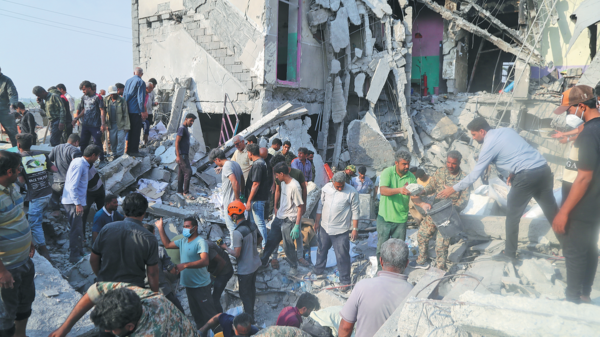
The directive comes amid growing concerns over LPG-related accidents, as authorities intensify enforcement to improve safety standards and protect consumers nationwide.