


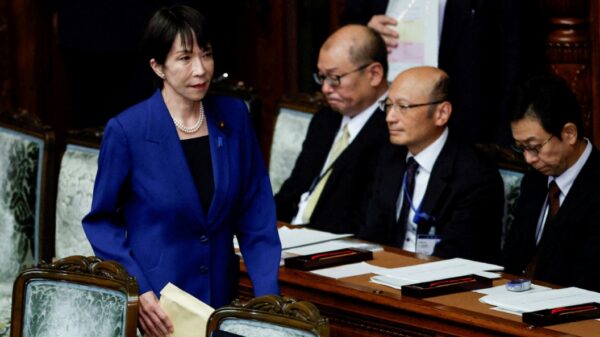














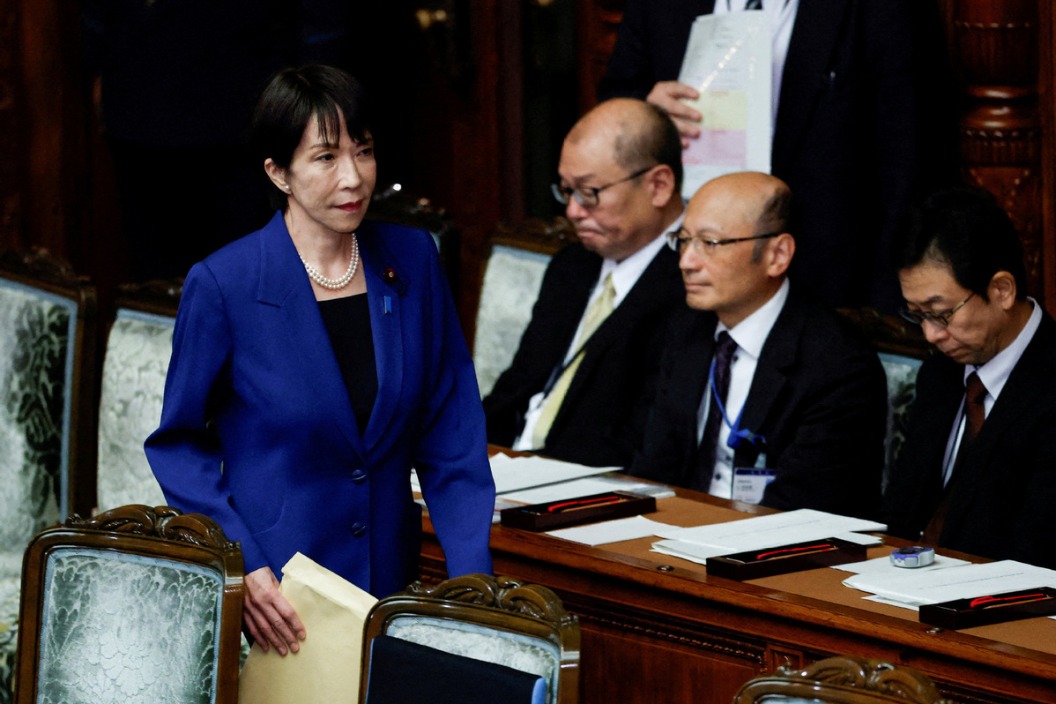

Recent developments in Japanese politics have given rise to profound concern in China, particularly regarding the trajectory of Tokyo’s security and constitutional agenda under right-leaning leadership. If Prime Minister Sanae Takaichi and allied conservative figures are indeed pressing forward with constitutional revision, the reinterpretation of long-standing defence constraints, and even an open debate on nuclear capabilities, Beijing is unlikely to see these as routine policy adjustments. Rather, they are viewed as changes that touch directly upon China’s historical experience, its strategic environment and its core national interests.
At the heart of Chinese wariness lies Japan’s pacifist Constitution, especially Article 9, which renounces war and limits the maintenance of armed forces. For decades, this provision has symbolised Japan’s post-war break with militarism. In China, that symbolic weight is not abstract. The atrocities of Japanese aggression in the twentieth century is deeply embedded in public memory, education and political discourse. Consequently, any effort to amend or dilute Article 9 is perceived through the prism of history, where vigilance against the resurgence of militarism is regarded as both prudent and necessary.
From Beijing’s perspective, the timing of such reforms further heightens suspicion. Japan’s moves to revise Japan’s key national security documents, enhance counter-strike capabilities or expand defence spending appears less like defensive modernisation and more like a steady loosening of post-war restraints. The claim by Japanese leaders that these measures are responses to a deteriorating security environment is not convincing. China has good reasons to question whether they signal a deeper ideological shift and to what extent they would destabilize the region .
The nuclear dimension is especially sensitive. Japan’s Three Non-Nuclear Principles — not possessing, not producing and not permitting the introduction of nuclear weapons — have long been seen as a cornerstone of its post-war identity. For a country that endured atomic devastation, these principles have carried both moral and political authority. Should senior officials now suggest that Japan does not rule out introducing nuclear submarines, or if influential politicians voice support for acquiring nuclear capabilities for self-defence, the implications are profound. In Beijing’s assessment, even rhetorical openness to nuclearisation marks a departure from decades of restraint.
China’s grievance here concerns the integrity of the global non-proliferation regime. Japan is a technologically advanced state with a sophisticated civilian nuclear industry and substantial plutonium stockpiles. It is frequently described as being only a short technical step away from nuclear weapons capability. If political barriers were to erode, the transition could be swift. Such a development would severely undermine the credibility of international non-proliferation norms and potentially encourage other regional actors to reconsider their own nuclear options. The result could be a destabilising cascade that increases nuclear risks not only in East Asia but globally.
Perhaps most contentious of all is Japan’s stance on Taiwan. For China, Taiwan is the core interest bound up with sovereignty and territorial integrity. Any external involvement is adamantly opposed to by China. When Japanese political figures adopt a more provocative position on Taiwan, strengthen security coordination with the United States, or frame stability in the Taiwan Strait as directly linked to Japan’s own security, Beijing interprets this as interference in what it considers an internal matter. Such actions are seen as emboldening separatist elements and complicating prospects for peaceful reunification.
In Chinese eyes, the convergence of constitutional revision, enhanced military doctrine and provocations on the Taiwan question creates an unsettling picture. It suggests a Japan that is incrementally redefining its strategic identity in ways that may align more closely with containment strategies directed at China. Perception in international politics is often as consequential as intent. Even if Tokyo claims that its policies are defensive and rules-based, China will still view them as insincere and hypocritical given the fragile trust between the two countries.
Indeed, China’s call is for responsibility and caution. It urges Japan to honour its post-war commitments, to uphold the Three Non-Nuclear Principles in both letter and spirit, and to refrain from actions that could inflame tensions over Taiwan. From Beijing’s standpoint, regional stability depends on respect for the core interests. If Japan’s rightward shift proceeds without careful regard for these sensitivities, it risks further eroding trust and heightening the risk of confrontation in an already volatile region.
Ultimately, the issue is not about Japan’s right to debate its constitutional future. It is about how Japan’s choices reverberate across East Asia and the world. For China, vigilance is a understandable response rooted in its defence of its fundamental national interests and the post World War Two international order.