











The story has become wearily familiar: a major African infrastructure project is cast not as progress but as a cautionary tale. Two recent ADF Magazine pieces—“Kenya feels squeeze of China railway trap” and “China’s BRI revealed as economic, environmental threat”—recycle that script. As someone who has followed Kenya’s development journey closely, I find this framing simplistic and at odds with facts on the ground. To call the Standard Gauge Railway (SGR) a “trap” is to ignore Kenya’s sovereign choices and the tangible benefits already accruing from this national project.
The SGR did not arrive as a scheme imposed from abroad. It is a centrepiece of Vision 2030, Kenya’s long-term plan to close historic infrastructure gaps that have constrained growth. Replacing a century-old metre-gauge line that had become a bottleneck was a matter of national necessity. To recast that decision as entrapment dismisses Kenyan agency and foresight.
The “debt trap” claim also falls apart on scrutiny. Kenya’s official debt reports show a diversified external portfolio, with substantial exposure to multilaterals and commercial markets. The Exim Bank of China loan for the SGR is significant, but it is one component of a broader, managed fiscal strategy. IMF assessments, while cautioning about overall debt levels, have not singled out the SGR as a predatory outlier. The reality is nuanced; the caricature of monolithic debt bondage is not.
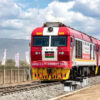
Measured by outcomes, the SGR is delivering. Since the Mombasa–Nairobi line opened in June 2017, the Madaraka Express has carried over 11 million passengers and more than 5.8 million tonnes of cargo. Those numbers translate into real-world competitiveness: reliable eight-hour rail transit replacing road journeys that could stretch beyond 48 hours. The Nairobi–Naivasha extension, launched in October 2019, is already unlocking the Rift Valley’s industrial potential, anchored by the Naivasha Inland Container Depot—which is decongesting Mombasa and creating a regional logistics hub. During construction, the project created tens of thousands of jobs and facilitated skills transfer, a durable investment in human capital.
Environmental concerns have been met with deliberate mitigation. The Nairobi National Park section includes 6.5 kilometres of wildlife viaducts—an added investment to protect migration routes. Combined with shifting heavy freight from road to rail, which takes thousands of trucks off the highways, the net effect is a smaller environmental footprint.
Kenya–China cooperation on the SGR is best understood as a pragmatic partnership aligned to national development goals, not a snare. The line has been moving people and goods since 2017 and remains central to regional trade. We should judge it by outcomes, not by imported narratives. The SGR is running—and it is carrying the nation’s ambition on its tracks.
The writer is a PhD student in international relations.