



















By Caroline Wahome
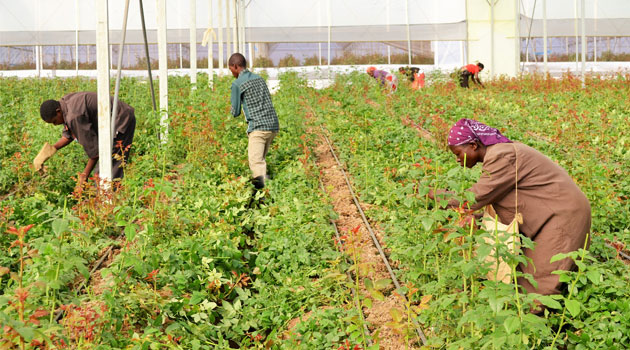
NAIROBI, Kenya May 27 – While coronavirus pandemic has impacted nearly all sectors of the economy globally, horticulture remains among the worst hit in Kenya with reduced demand for flowers which has seen several farms across the country reduce their workforce by more than 50 percent.
Some are on the brink of collapse, threatening the billion-dollar economy that is key to the country’s economy. And unless the trend is reversed in time, the livelihoods of thousands of families who depend on these flower farms to eke a living are also threatened.
Majority of the retained workers are being subjected either to unpaid leave or working on rotational schedules with little income.
A study by Hivos People Unlimited dubbed Hivos Rapid Assessment 2020 on the Impact of COVID-19 on women workers in the horticultural sector in Kenya reveals the harsh impact felt by some of these workers in the wake of coronavirus which had infected 1,348 people and killed 52 by May 26. Globally, 5.5 million people are infected, with 350 fatalities and the numbers keep increasing even as most nations now consider re-opening economies after the World Health Organisation (WHO) warned that the virus may not disappear soon.
Besides lost and reduced jobs, the workers are decrying increased frustration at home, escalating harsh working conditions and exploitation by farm companies.
The study was conducted in 12 flower farms located in the outskirts of the capital Nairobi, Rift Valley, and Mt. Kenya regions with 71 women workers out of the initial target of 100.
The majority of the flower farm workers expressed their struggles with increased prices of essential goods against diminishing wages which subjects them to anxiety and mental anguish.
One-third of the farms had retained their workers but on a two-week rotational work schedule and in one of the flower farms, workers were reduced from 500 to 180 with 100 of them sent on unpaid leave.
Commenting on the issue, Bernard Mukaisi, National Treasurer, Kenya Export Floriculture, Horticulture & Allied Workers Union (KEFHAWU) said, “We almost do not want to think about this situation. It is terrible. We are in a place where all we can think about is saving lives. We cannot even negotiate with employers, many of whom have closed their companies.”
The Chief Executive Officer of the Agricultural Employers Association, Wesley Siele, simply described the situation as ‘devastating’.
“Employers have been forced to send workers home on unpaid leave. In extreme cases, contracts will have to be terminated,” Siele said.
Devastating Impact on the Sector:
Being the third-largest foreign exchange earner having contributed Sh120 billion to the country’s GDP in 2019, Kenya was ranked the largest exporter of fresh produce and cut flowers to the European market.
Nonetheless, COVID-19 has affected the sector and according to the Kenya Flower Council, it currently operates less than 10 percent of its normal operations with the closure of European markets which usually receives 70-75 percent of the produce.
Josephine Simiyu, Compliance and Regulatory Manager at the Horticulture Crops Directorate (HCD) said the industry is faced with the challenge of the increased cost of exporting cargo owing to the presence of few cargo planes flying out due to lowered volumes of the consignments.
“This has an adverse effect on Kenya’s exports due to the competitiveness of other products from other countries,” she added.
Exploitation of workers:
While some of the retained workers may find themselves lucky, they still complain of increased exploitation. Out of the 12 farms samples assessed, 8 of them reported working more for less pay.
These workers said they would not oppose the new guidelines for fear of losing their jobs.
Most of the workers cited threats of disciplinary action for failure of non-observance of social distance and failure to wash hands when getting into greenhouses.
Increased frustration at home
83 percent of the respondents said increased expectations at home (domestic chores, child care, homeschooling) has worsened their frustration thus sabotaging their livelihoods and well-being.
They reported an increase in care-work, tension at work and a sense of financial inadequacy.
“I feel tormented both mentally and physically. It is like life has turned upside down. I am doing more than double the work I used to do. And yet when I go back home, my children need my full attention,” said one of the interviewees.
The majority of the women interviewed for this study confirmed they were household heads with an average of 2-4 children. Most live in rented single rooms.
According to the study,” this combination is straining women’s family relations as they find themselves too exhausted to properly engage after a day’s hard work. Domestic violence is a clear risk for them.”
Recommendations and Policy actions.
As part of its recommendations, the study pointed out that COVID-19 social programs instituted by the Government should be expanded to accommodate vulnerable and low-income workers who lost their jobs.
“The government needs to regulate the prices of food and other essential goods to ensure increases are only triggered by normal supply and demand forces, not price manipulation,” the study added.
And in order to prevent the spread of the virus in densely populated horticultural farms, the study also wants the government to roll out mass testing and provide Personal Protective Equipment (PPE), free quarantine services, and free healthcare for workers including psychological support.
“Their vulnerability remains significantly high as they have to make regular trips to the shops, open-air markets, and other crowded places to source for food. This comes against a backdrop of inability to stock up on food because they already cannot afford regular meals,” Hivos said in the 40-page document.