





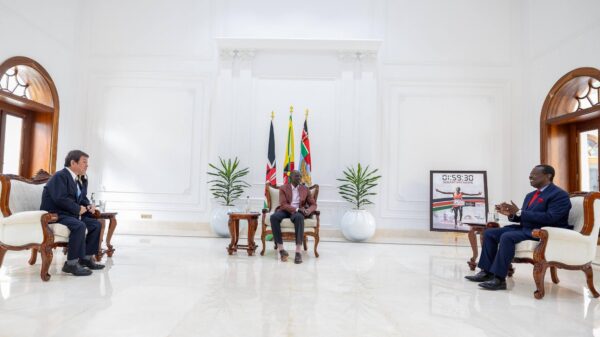



NAIROBI, Kenya, May 12 — President William Ruto has called for a win-win partnership between Africa and France built on mutual respect and shared responsibility.
The President said the Africa Forward Summit presents a unique opportunity for Africa and France to forge a forward-looking partnership that delivers shared progress while advancing Africa’s long-term economic transformation.
He said the partnership must not be built on dependency but on sovereign equality, not on aid or charity but on mutually beneficial investment, and not on extraction or exploitation but one that benefits both parties.
“The times before us demand stronger cooperation, renewed multilateralism, and partnerships grounded not in hierarchy, but in sovereign equality, mutual respect, and shared responsibility,” he said.
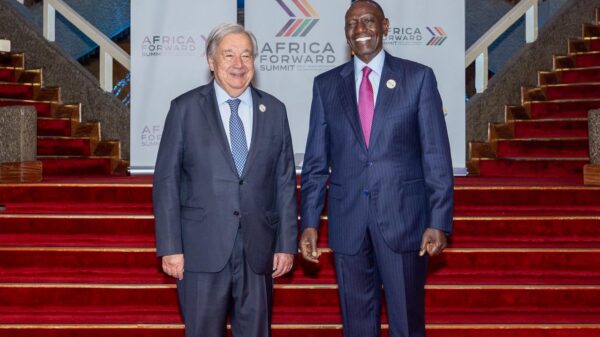
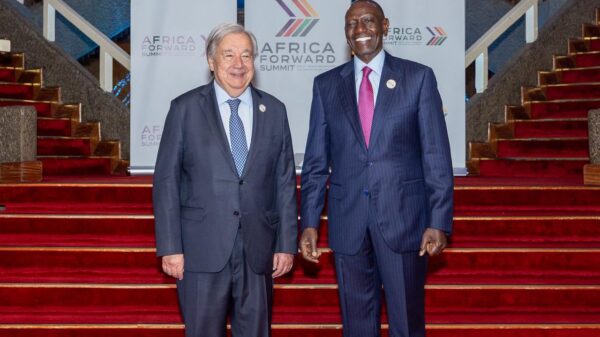
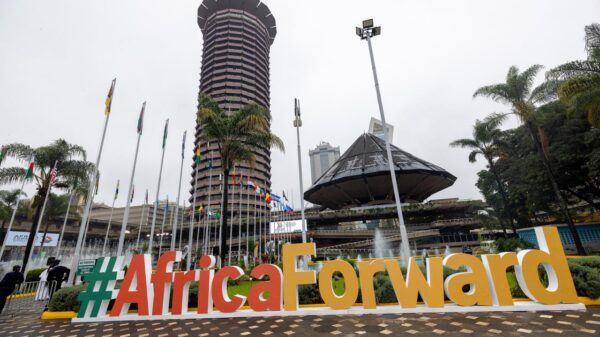
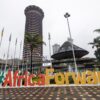
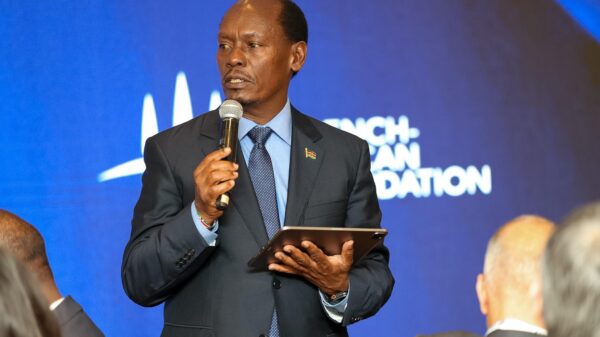
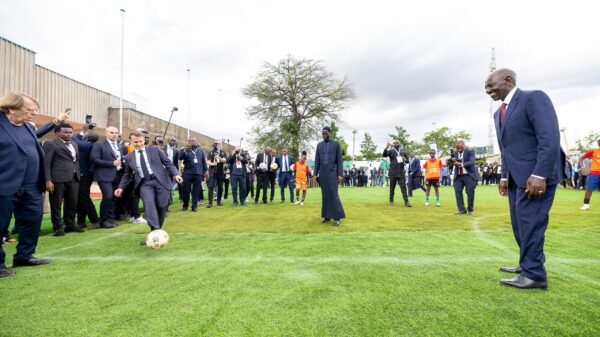
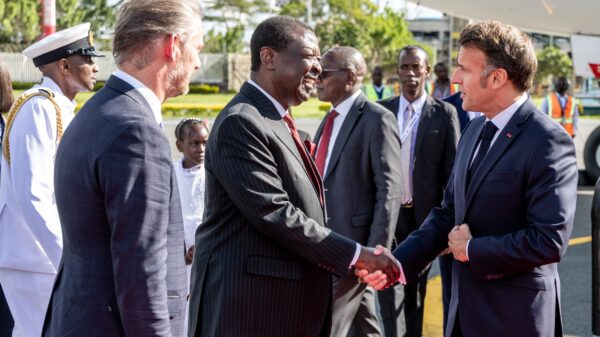
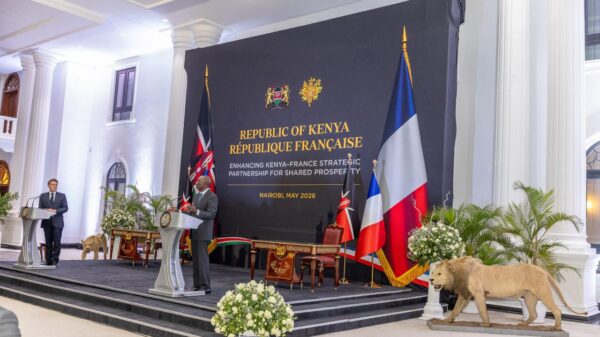
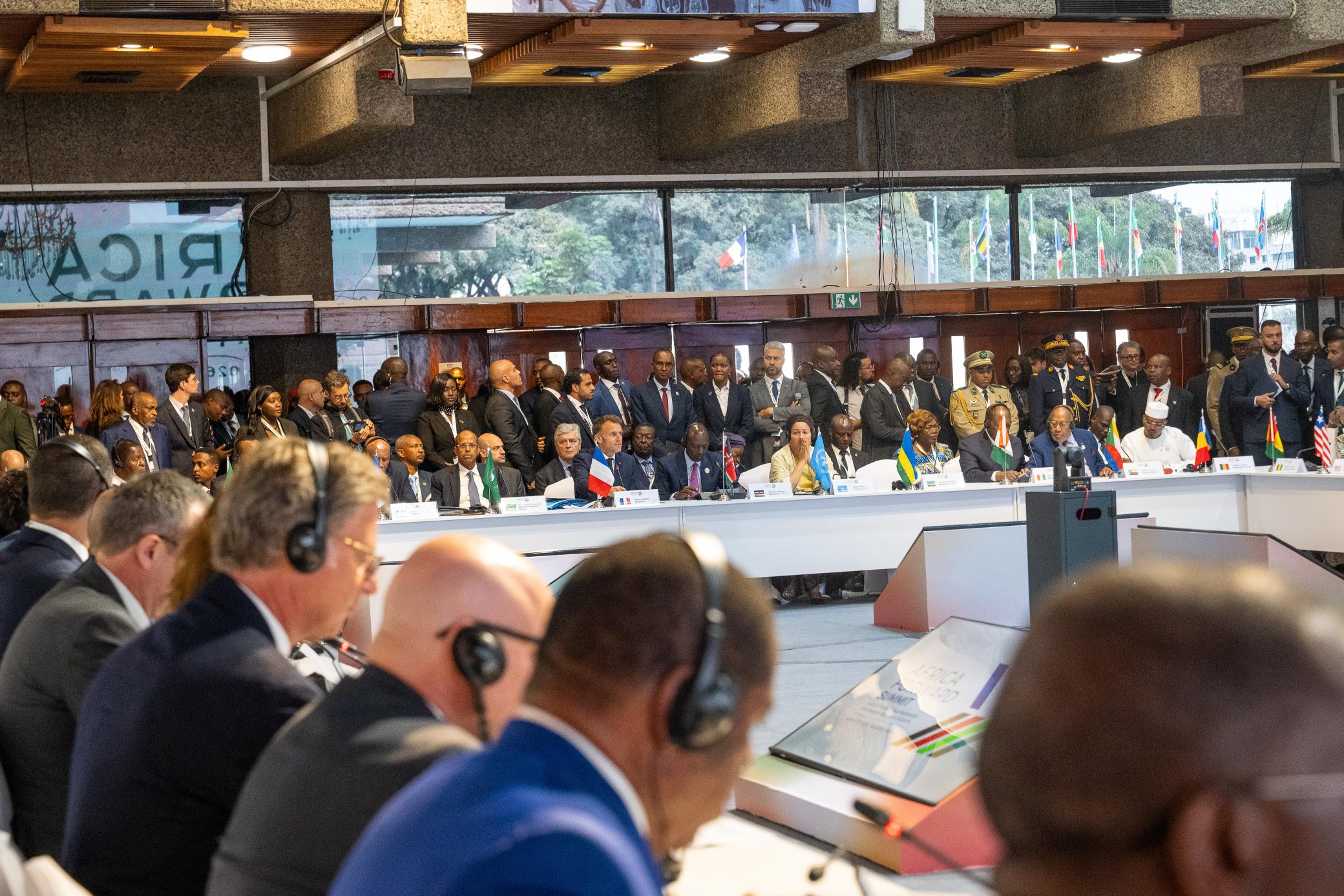
He made the remarks during the opening of the Africa Forward Summit at KICC, Nairobi, which he co-chaired with President Emmanuel Macron of France.
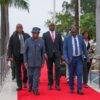
The summit was attended by 24 Presidents, five prime ministers, four vice-presidents, United Nations Secretary-General António Guterres, and African Union Commission Chairperson Mahmoud Ali, among others.
President Ruto explained that Africa’s priorities include domestic mobilisation of resources for Africa’s development at scale, reform of the international financial architecture, development of transport, logistics and connectivity infrastructure.
Others are energy transition and green industrialisation, and youth skills development to foster creativity, innovation, entrepreneurship, and AI-driven transformation.
On his part, President Macron said the renewed partnership between Africa and France will be built on respect, courage, and shared ambitions.
He said the European agenda has every interest in seeing Africa attain economic sovereignty and autonomy.
“Your success is our success,” he said.
The French leader pointed out that £23 billion in investments in the private sector in Africa, £14 billion from French firms in Africa, and £9 billion in African businesses reflect a new partnership and vision for sustainable development.
He said the challenges facing Europe and Africa are shared, noting that both continents seek peace, prosperity, and sovereignty.
He pointed out that France is keen on defending the rule of law and international law, and believes in equality in trade relations.
Mr Guterres commended Africa for taking the lead in providing solutions to global challenges, including reform of the international financial architecture and climate action.
The United Nations chief said there is need to reform the global system that was designed without Africa’s involvement and continues to operate without Africa’s participation, terming it “a century-old injustice”.
He said it was unjust for a continent with more than 1.5 billion people not to have permanent seats at the UN Security Council.
“Without the voice, representation, and decision-making power Africa deserves inside international financial institutions, it is not Africa that loses; it is the world that loses,” Mr Guterres said.
At the same time, President Ruto called on African nations to work towards African financing solutions that would drive the continent’s transformation.
“Africa today holds more than $4 trillion in long-term domestic savings, including over $1 trillion in pension and insurance assets, and more than $500 billion in central bank reserves,” he said.
The President said the era in which Africa’s development was principally framed through aid, dependency, and unsustainable borrowing must give way to a new paradigm grounded in investment, innovation, domestic resource mobilisation, and strategic partnerships built on sovereign equality and mutual benefit.
He explained that Kenya has already begun implementing this vision through the establishment of the National Infrastructure Fund, a platform designed to mobilise long-term domestic and private capital into strategic national projects.
“Already, our new Fund has mobilised about $1 billion, demonstrating the enormous potential that exists within African economies themselves,” he said.
The President said the continent possesses vast natural resources, critical minerals, fertile land, immense renewable energy potential, expanding consumer markets, dynamic entrepreneurs, and the youngest population in the world.
“What Africa requires is not charity, but investments; not extraction, but value creation; not dependency, but mutually beneficial partnerships capable of unlocking shared prosperity,” he said.
President Ruto further pointed out that the current international financial system remains structurally unequal.
He said African countries continue to face disproportionately high borrowing costs, constrained access to concessional financing, and distorted risk perceptions frequently disconnected from economic realities.
He said the bias within global credit rating systems continues to penalise African economies, increase the cost of capital, and discourage long-term investment into productive sectors.
“This imbalance is neither sustainable nor just. It is one of the principal constraints on Africa’s ability to finance infrastructure, industrialisation, climate adaptation, and economic transformation at the scale required,” he said.
That is why, he said, Africa has supported the establishment of the African Credit Rating Agency, an important step towards ensuring fairer, evidence-based, and context-sensitive assessments of African economies and investment opportunities.
“Its purpose is not to replace existing global institutions, but to correct longstanding distortions in risk perception that continue to increase the cost of capital for African countries and discourage long-term investment into productive sectors,” he said.
As government, President Ruto said, Kenya is deliberately partnering with the private sector to build confidence, reduce risk, and crowd in investment into transformative public infrastructure.
“Our objective is simple: To create credible mechanisms through which private capital can participate securely and profitably in Africa’s growth story,” he said.
President Ruto said Africa must accelerate investment in transport corridors, ports, rail systems, roads, aviation infrastructure, digital connectivity, and integrated logistics systems capable of binding Africa into one competitive economic space under the African Continental Free Trade Area.
“Africa cannot trade effectively with itself while its economies remain disconnected from one another,” he added.
He also said Africa must become a globally competitive industrial hub powered by clean energy, modern infrastructure, innovation, and strategic investment partnerships.
“Green industrialisation presents our continent with an opportunity not only to contribute meaningfully to global climate solutions, but also to create jobs, expand manufacturing capacity, strengthen exports, deepen regional value chains, and accelerate structural economic transformation,” he said.
On youth empowerment, President Ruto said Africa must equip young people not merely to seek jobs, but to create enterprises, build technologies, drive industrial transformation, and lead the next frontier of artificial intelligence and digital innovation.
He also said Africa must reaffirm collective support for African-led peace and security mechanisms, including the African Union Peace and Security Architecture, while strengthening predictable financing, institutional capacity, and international cooperation in support of lasting peace.
“Peace requires confronting the structural drivers of instability: Poverty, exclusion, unemployment, inequality, weak institutions, climate vulnerability, and the absence of economic opportunity, particularly for young people,” he said.
On global governance reforms, he said no governance architecture can credibly claim to be democratic, representative, just or fit for purpose while Africa, a continent of 54 countries, remains absent from the table where the world’s most consequential decisions are made.
He said reform of the UN Security Council is not merely an institutional adjustment, but a moral obligation and a strategic necessity indispensable to restoring trust, legitimacy, and confidence in the international order itself.
“Africa does not seek privilege, but fairness; we don’t seek exclusion, but inclusion. We don’t seek confrontation, but partnership anchored on mutual respect, shared responsibility, and shared progress,” he said.
Present were Presidents Paul Kagame (Rwanda), Alassane Ouattara (Côte d’Ivoire), Abdel Fattah el-Sisi (Egypt), Faustin-Archange Touadéra (Central African Republic), Azali Assoumani (Comoros), Mohamed Ould Ghazouani (Mauritania), Mohamed al-Menfi (Libya), and King Letsie III (Lesotho).
Others were Hakainde Hichilema (Zambia), Mamady Doumbouya (Guinea), Bola Ahmed Tinubu (Nigeria), Joseph Boakai (Liberia), Bassirou Diomaye Faye (Senegal), Mahamat Idriss Déby (Chad), Duma Boko (Botswana), Dharambeer Gokhool (Mauritius), John Dramani Mahama (Ghana), Daniel Chapo (Mozambique), and Michael Randrianirina (Madagascar), and Prime Minister Abiy Ahmed (Ethiopia).
Also at the meeting were Prime Ministers Aziz Akhannouch (Morocco), Russell Dlamini (Eswatini), Américo Ramos (São Tomé and Príncipe) Sara Zaafarani Zenzri (Tunisia), Mwigulu Nchemba (Tanzania), and African Union Commission Chairperson Mahmoud Ali Youssouf.