













NAIROBI, Kenya Jan 26 – President William Ruto’s claim that he will secure a two to three million vote victory margin in the 2027 General Election now hinges on one critical question: will the Orange Democratic Movement (ODM) deliver its traditional support base especially in Nyanza without Raila Odinga on the ballot?
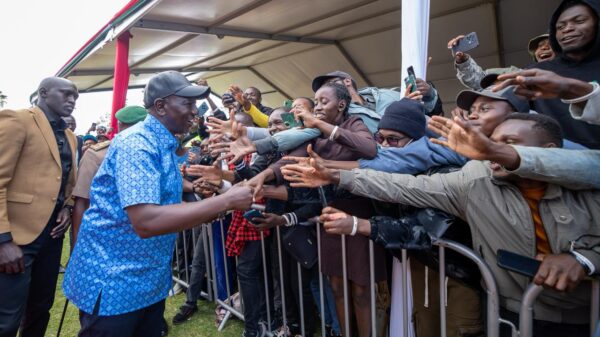
Speaking on Monday during a United Democratic Alliance (UDA) National Governing Council meeting, Ruto made it clear that his path to a landslide runs through a broad-based coalition with ODM, a party that has for decades dominated opposition politics and voter mobilisation in western Kenya and Nyanza.
President Ruto said his goal is not just to win re-election, but to win “resoundingly,” contrasting his narrow 200,000-vote victory in 2022 with the decisive margin he now wants in 2027.
“We want to consolidate the country into one,” Ruto told party leaders, arguing that Kenya has enough political space for everyone to “fit in one government.”
With Raila’s absence from the political scene, Ruto’s strategy appears to bank on ODM’s party machinery and voter loyalty holding firm particularly in Nyanza, a region that has historically voted almost uniformly against him.
– Will ODM deliver Ruto 2027 votes –
The big uncertainty, however, is whether ODM supporters will turn out in the same numbers without Raila as a presidential candidate, or whether voter enthusiasm will soften now that the party is aligned with government.
Ruto framed the UDA–ODM partnership as a cure for political instability and what he described as “mandamano politics,” positioning the coalition as a path to calm, continuity, and long-term planning.
“This election we must win by a margin of two to three million,” he said, adding that the coalition is meant to “underwrite our transformation agenda into the future and into the next generation.”
Rather than pitching 2027 as a traditional contest of ideas, Ruto is selling it as a referendum on performance, urging UDA leaders to campaign using the government’s “scorecard.”
The President cited achievements in agriculture, education, health, infrastructure, and energy, insisting the government is ready to face competitors “with facts, not insults.”
“We have been faithful to the agenda Kenyans voted for,” Ruto said. “We want competition based on who has better ideas and a better scorecard.”
A key pillar of his re-election message is development without ballooning public debt. Ruto outlined plans to finance infrastructure through privatisation and domestic savings, rather than foreign borrowing.
“When we sell one asset, we want to build five more,” he said.
Ruto defended the broad-based government as necessary for stability, arguing that Kenya’s transformation cannot be completed within a single five-year term.
“This transformation will take 10, 20, even 30 years,” he said.