





















The latest proposals submitted by the Overseas Investors Chamber of Commerce & Industry (OICCI) on Pakistan’s evolving electricity market do more than outline technical fixes. They expose a deeper crisis of confidence among foreign investors over the country’s reform trajectory.
At stake is not only the credibility of Pakistan’s transition toward a liberal power market, but also the government’s ability to deliver predictable, rules-based reforms in a sector that remains structurally fragile.
OICCI’s intervention comes at a critical juncture. Pakistan is attempting to shift from a centrally managed power system toward a Competitive Trading Bilateral Contract Market (CTBCM), alongside a power-wheeling framework that would allow large consumers to purchase electricity directly from generators, bypassing state-run distribution companies (Discos).
On paper, the shift promises efficiency and competition. In practice, its execution has unsettled investors, who point to regulatory ambiguity, institutional weakness and policy reversals that threaten the reform’s viability.
The chamber’s proposals reveal a widening gap between reform rhetoric and on-ground realities, with growing scepticism toward a process seen as rushed, opaque and poorly sequenced.
A power sector still struggling for coherence
Pakistan’s power sector has long been plagued by circular debt, inefficient Discos, politically sensitive tariffs and chronic governance failures. Reform attempts—often driven by pressure from international lenders—have yielded limited results. OICCI’s proposals warn that these unresolved structural weaknesses now risk undermining market liberalisation itself.
Central to investor concern is the lack of regulatory clarity and predictable pricing. Poorly designed liberalisation, the chamber argues, could compound existing distortions rather than correct them. Weak institutional capacity and inconsistent implementation have already eroded trust. For foreign investors reliant on long-term planning and cost certainty, these conditions are deeply unsettling.
OICCI’s call for “actionable reforms” signals frustration with cosmetic policy changes in place of genuine structural transformation. The concern is clear: liberalisation without robust market institutions risks destabilising the system rather than strengthening it.
Wheeling framework: the core fault line
At the heart of OICCI’s proposals is the demand for a transparent, cost-reflective wheeling framework. Wheeling charges—the fees paid for using transmission and distribution networks—are fundamental to a competitive electricity market. Investors argue these charges must be unbundled into clear components, including transmission, distribution, system operations and system losses.
Such transparency is essential for long-term pricing and contract certainty. Without it, buyers cannot accurately assess costs, weakening confidence in bilateral contracts under CTBCM.
OICCI has also cautioned against the premature expansion of wheeling allocations, urging a gradual rollout aligned with improvements in grid performance, regulatory readiness and settlement efficiency. Scaling too quickly, the chamber warns, could destabilise already strained Discos, whose finances remain precarious.
This exposes a broader dilemma. Pakistan’s distribution companies suffer from high losses, low recovery rates and governance failures. Allowing large consumers to bypass them without a financial stabilisation plan risks deepening their crisis—potentially triggering new surcharges and policy reversals.
Competitiveness versus financial sustainability
OICCI’s proposals highlight a fundamental tension. Wheeling charges must remain affordable to preserve industrial competitiveness, particularly for export-oriented firms, yet high enough to keep Discos financially viable.
Excessive charges would blunt competitiveness. Under-recovery, meanwhile, could widen sector deficits and invite fresh levies, further eroding investor confidence. This dilemma reflects the fragile economics of Pakistan’s power sector, long managed through cross-subsidisation and ad hoc adjustments—practices fundamentally incompatible with a liberalised, rules-based market.
For investors, unpredictability is the greatest risk. Policy reversals driven by fiscal stress could undermine contracts and distort the market. OICCI’s emphasis on price predictability reflects fear that reforms may be rolled back once political costs emerge.
Grid modernisation: the missing foundation
Another major concern is the condition of Pakistan’s electricity grid. OICCI stresses that market liberalisation cannot succeed without modern infrastructure. Transmission bottlenecks, outdated equipment and weak system monitoring limit the grid’s ability to support open-access trading.
These weaknesses are not merely technical. They affect settlement efficiency, reliability and investor confidence. Frequent outages and inconsistent supply undermine industrial productivity and discourage long-term investment.
By highlighting grid modernisation, OICCI underscores a core sequencing flaw: market liberalisation is being pushed forward without the physical and institutional foundations needed to sustain it.
Climate, trade and export competitiveness
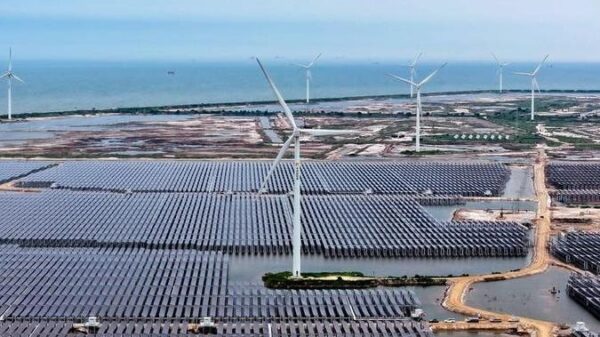
One of the most consequential aspects of OICCI’s proposals is the integration of climate and trade considerations into power sector reform. The chamber argues that enabling green bilateral contracts under CTBCM would allow exporters and foreign investors to directly access renewable electricity.
This is not a symbolic demand. Global trade is increasingly shaped by carbon standards and sustainability requirements. Exporters face mounting pressure to demonstrate lower emissions. Access to clean power has become a commercial necessity.
OICCI’s message is blunt: electricity reform is now an export survival strategy. Without credible access to renewable energy, Pakistani exporters risk losing competitiveness in key markets, particularly in Europe and North America.
Here again, the reform disconnect is evident. While Pakistan has announced ambitious renewable targets, its regulatory framework still fails to facilitate green contracting for industrial users—a missed opportunity that reinforces perceptions of policy incoherence.
Regulatory bottlenecks and institutional fragmentation
OICCI has also called for a single-window, time-bound regulatory approval framework, reflecting deep frustration with bureaucratic fragmentation. Investors often face delays, overlapping mandates and opaque processes—even where policies exist on paper.
Without streamlined approvals, the chamber warns, even well-designed reforms will falter. Administrative inertia not only raises costs but signals governance weaknesses that deter long-term capital.
This critique cuts to the heart of Pakistan’s reform challenge. Policies are announced, but execution is undermined by competing authorities, inconsistent enforcement and shifting guidelines. For investors, such uncertainty carries tangible financial risk.
A test of political will
Ultimately, OICCI’s proposals pose a direct challenge to policymakers. They force a choice between genuine, rules-based liberalisation and continued piecemeal reform that discourages investment.
Pakistan’s track record suggests partial implementation has been the norm. Announcements are followed by uneven execution, limited consultation and abrupt reversals.
By articulating its concerns publicly, OICCI signals that investor patience is wearing thin. The chamber represents multinational firms with long exposure to Pakistan’s economy. Its warnings reflect accumulated experience, not short-term anxiety.
Reform without trust
Power market reform was meant to signal a new era of competition and efficiency. Instead, it has become a mirror reflecting deeper governance failures.
Investor unease is not about liberalisation itself, but about how it is being pursued. The disconnect between stated objectives and flawed execution risks undermining the very goals policymakers claim to advance.
As Pakistan seeks foreign investment amid economic stress, the power sector has become a critical test case. The response to OICCI’s proposals will reveal whether reform is intended as a serious structural shift—or merely a compliance exercise.
For now, the message from investors is unmistakable: without clarity, predictability and credible institutions, market liberalisation may deepen uncertainty rather than resolve it.