









By Maina Kimondo
Tanzania has emerged as a key partner in China’s East African strategy, as bilateral ties between the two countries expand beyond infrastructure development to include significant military cooperation. A Beijing military base on Tanzania’s Indian Ocean coast has solidified the relationship, reflecting a deepening partnership under President Samia Suluhu Hassan’s administration.
Chinese Ambassador to Tanzania, Cheng Mingjian, recently highlighted the growing military collaboration as a cornerstone of the relationship. This cooperation marks a notable evolution in Tanzania-China relations, which have flourished since Suluhu took office in March 2021, following the death of her predecessor, John Magufuli.
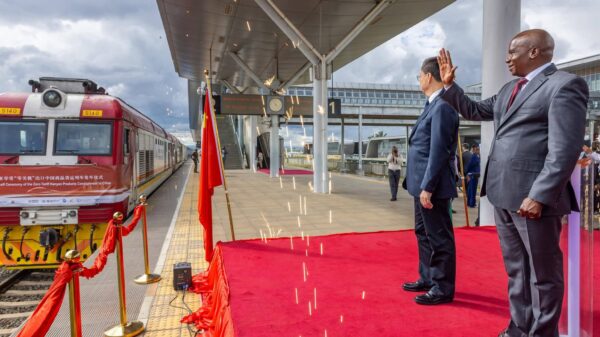
Ambassador Cheng, who began her tenure in December 2021, has played a pivotal role in fostering these ties, with China now the largest source of foreign investment in Tanzania. The bilateral engagements encompass infrastructure projects such as roads, ports, and the electric Standard Gauge Railway, all critical to Tanzania’s development. Educational exchanges and cultural programs have also grown, with more Tanzanian students receiving scholarships to study in China.
Experts in international relations point to the close rapport between President Suluhu and Ambassador Cheng as a driving force behind the accelerated cooperation. Cheng’s background as Deputy Director-General of the Department of External Security Affairs at China’s Ministry of Foreign Affairs has allowed her to swiftly implement key projects, including the establishment of a Chinese military base in Dar es Salaam. This marks the largest Chinese military footprint in Africa to date.
While Suluhu’s administration may lack the political clout of previous Tanzanian leaders, she is positioning her country to benefit from extensive infrastructure development through her “Looking East” policy. However, some Tanzanians, particularly those who remember the socialist era under Julius Nyerere, express concern that China’s growing influence could be more than economic.
Bradley Ouna, a law graduate from the University of Dar es Salaam, reflects on the nostalgia for Nyerere’s Ujamaa socialism, which emphasized collective work and reduced tribalism but at significant economic cost. Ouna suggests that China is subtly appealing to Tanzania’s socialist past to deepen its influence, drawing parallels between the intertwined roles of the state and ruling party in both nations.
Mutatina Oswald, a Tanzanian lawyer, acknowledges the benefits of Chinese investment, particularly in job creation and technology transfer in areas like Dar es Salaam’s Kariokor district. However, he cautions that the widespread Chinese presence in strategic sectors, coupled with mounting loans, could make Tanzania overly dependent on China.
China’s military presence is officially aimed at enhancing security and protecting maritime trade routes, but it has raised concerns among Tanzania’s neighbors. Some East African nations fear that Tanzania’s military clout, boosted by Chinese support, could eclipse that of other regional powers. There are also concerns about environmental impacts from the military base, including pollution and habitat destruction.
Western diplomatic observers warn that China’s growing influence in Tanzania could attract increased surveillance and competition from the United States and other global powers, wary of China’s expanding reach in Africa.
As Tanzania’s relationship with China continues to grow, only time will tell how deeply the partnership will evolve, particularly if President Suluhu secures another term in the upcoming elections.
The writer is an international studies scholar specializing in diplomatic relations.