













When on July 7, 1954, the Tanganyika African National Union (TANU) was founded in Dar es Salaam under the leadership of Mwalimu Julius Nyerere, it immediately declared the Kiswahili language as an important weapon in Africa’s struggle for liberation from colonialism.
It is therefore not by coincidence that last November, the United Nations Education, Scientific and Cultural Organisation (UNESCO) designated July 7 as the World Kiswahili Language Day.
This followed intense lobbying by African nations led by Tanzania to have the dialect recognized for its rich heritage and widespread use on the continent and globally. Kiswahili becomes the first African language to be so recognized by UNESCO.
Again, this is not accidental given that Kiswahili ranks as one of the 10 most widely spoken languages around the world with an estimated 200 million speakers, according to UNESCO.
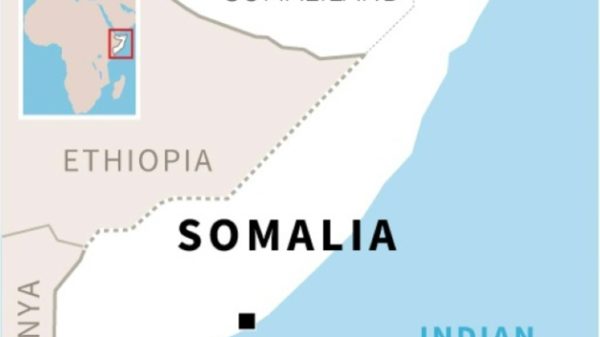
The language is widely spoken in 12 African countries: Tanzania, Kenya, Uganda, Rwanda, Burundi, Democratic Republic of the Congo (DRC), South Sudan, Somalia, Mozambique, Malawi, Zambia and Comoros.
Countries like South Africa and Botswana have introduced it in their schools while Namibia also plans to do so. It is also used in the Middle-East countries of Oman and Yemen.
Kiswahili’s credentials as the lingua franca of Africa were further cemented early this month when the African Union’s Assembly of Heads of State and Government approved its use as an official working language for the continental body.
Already, Kiswahili has been officially in use in the East African Community (EAC) and the Southern African Development Community (SADC) regional blocs. But it has taken 35 years for Kiswahili to be officially recognized as the working language of the continental organisation.
Way back in 1986, the Organisation of African Union (OAU) – the predecessor of the AU -recommended the adoption of Kiswahili as a formal language of the organisation but this never came to fruition.
Even after ex-Mozambique leader Joachim Chisano pulled a surprise move by addressing the 2004 AU Assembly in Addis Ababa in Kiswahili, sending the gathering into panic as interpreters were sought, no formal recognition at the continental level was forthcoming.
Attempts to make Kiswahili the linguistic currency of Africa can be traced to the visionary efforts of Pan-Africanists like Mwalimu Nyerere. Hailed as the foremost champion of the growth of Kiswahili as an African language, his “Swahilization’ policy saw Tanzania, a country with 120 indigenous languages, adopt Kiswahili as its national language.
However, his dream of making Kiswahili the primary language of Africa failed to materialize despite support by eminent voices like Kwame Nkrumah, Ali Mazrui and Wole Soyinka.
Incidentally, while Kiswahili had been a powerful tool for political mobilization by the anti-colonial movement, many African States still chose English as the official medium of communication after attaining independence.
Therefore, in making Kiswahili its official working language, the AU has brought the Pan-Africanist vision for the language as a liberating, empowering and unifying force across the continent closer to reality.
Most importantly, it paves the way for faster regional integration although there is still need for sustained efforts by the Swahili-speaking members of AU to push for the use of the language in key decisions by Member States.
Indeed, there have been renewed calls for Kiswahili to be recognized as the common language of Africa. Proponents of this school of thought cite its globalized nature as a compelling reason to make it the official lingua franca of the African people.
They also point to the fact that major world media like Voice of America, British Broadcasting Corporation and Deutsche Welle have regular programs aired in Kiswahili as a clear demonstration that its global influence cannot be ignored.
On its part, Kenya adopted Kiswahili as an official language in 1970 perhaps becoming among the first African countries to integrate Kiswahili in national policy decision-making. In 1974, President Jomo Kenyatta declared Kiswahili the national language.
Thirty-six years later when the country adopted a new Constitution, Kiswahili was entrenched in the supreme law. Article 7 of the Constitution of Kenya 2010 declares Kiswahili as the national language of the Republic and Article 120 makes it one of the official languages in Parliament besides English.
As countries in Africa rapidly urbanize, Kiswahili will continue to play a critical role in regional political, social, economic and cultural integration. More people on the continent will become native speakers of the language further strengthening cross-border ties.
This diffusion will only enhance the ability of countries like Kenya, that have a long history with Kiswahili, to expand their spheres of influence through trade and cross-cultural communication.
Mr. Mwachinga is an Advocate of the High Court of Kenya. Email: emwachinga@yahoo.co.uk