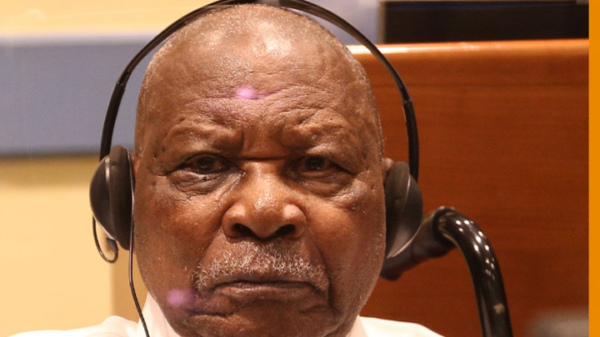















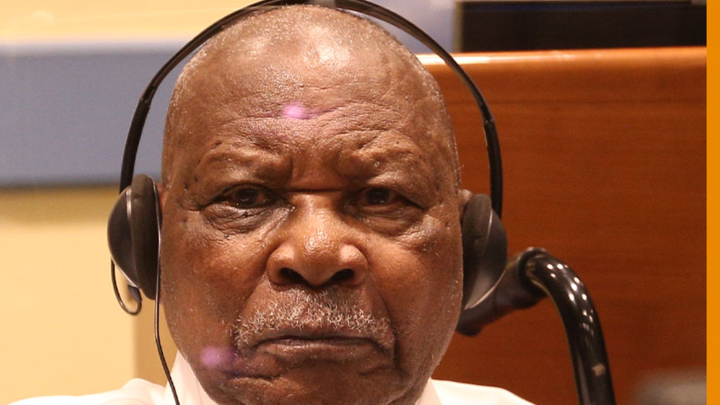

NAIROBI, Kenya May 16 – Félicien Kabuga, the Rwandan businessman accused of financing and supporting the 1994 genocide against the Tutsi in Rwanda, has died while hospitalized in The Hague, Netherlands.
The United Nations International Residual Mechanism for Criminal Tribunals confirmed Kabuga’s death on Friday, saying Dutch authorities had immediately launched the standard investigations required under national law.
The President of the Mechanism, Judge Graciela Gatti Santana, also ordered a full inquiry into the circumstances surrounding Kabuga’s death, appointing Judge Alphons Orie to conduct the investigation.
“At the time of his death, Mr. Kabuga was awaiting provisional release to a State willing to accept him on its territory,” the tribunal said in a statement.
Kabuga was among the most wanted fugitives linked to the 1994 genocide in Rwanda, during which more than 800,000 people, mainly Tutsis and moderate Hutus, were killed.
He faced charges including genocide, conspiracy to commit genocide, incitement to genocide and crimes against humanity, including persecution, extermination and murder.
An arrest warrant against him was first issued by the International Criminal Tribunal for Rwanda (ICTR) in April 2013, although he had spent decades evading capture.
Kabuga was eventually arrested in France on May 16, 2020 after years on the run and was transferred to The Hague branch of the Mechanism in October the same year.
His trial began on September 29, 2022.
However, proceedings were indefinitely suspended in September 2023 after judges ruled that Kabuga was unfit to stand trial due to his deteriorating health.
The court subsequently ordered that he remain under detention at the United Nations Detention Unit pending arrangements for provisional release.
The International Residual Mechanism for Criminal Tribunals was established by the United Nations Security Council in 2010 to continue the work of the ICTR and the International Criminal Tribunal for the former Yugoslavia (ICTY) following their closure.