













NAIROBI, Kenya May 8 – LEAP Africa has raised concerns over what it describes as the gradual erosion of democratic institutions across Africa, warning that governance failures often emerge long before any visible constitutional crisis occurs.
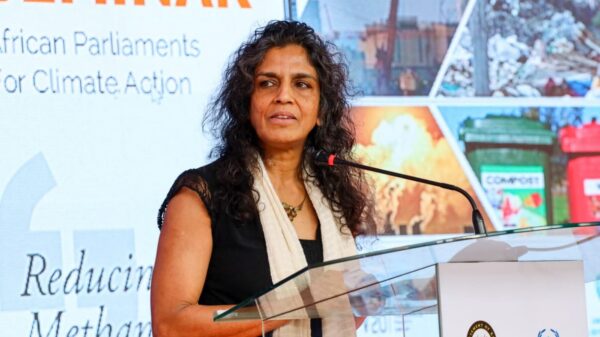
Executive Director Kehinde Ayeni, observed that democratic backsliding in many African countries increasingly takes the form of subtle institutional weakening rather than overt political upheaval.
Ayeni referenced findings from the V-Dem Institute Democracy Report, which indicates that democratic decline typically unfolds through the slow erosion of institutional independence, civic freedoms, and accountability mechanisms.
She noted growing debates in Nigeria over alleged regulatory pressure on media organisations and the use of state institutions against opposition figures, describing these as warning signs of institutional vulnerability.
According to Ayeni, similar governance patterns can be observed in several African countries where democratic safeguards are weakened incrementally over time.
The Leap Africa official argues that Africa’s challenge is not necessarily the absence of governance frameworks but the lack of sustained support for the civic structures that ensure accountability.
“The anti-corruption bodies exist, complete with gazetted mandates and annual reports,” Ayeni said. “What tends to be absent is something harder to legislate: the dense network of pressures, norms, organisations, and relationships that makes formal institutions behave the way they are supposed to behave.”
The civil society organisation also criticised persistent patronage systems that undermine merit-based political participation and discourage ethical leadership.
She lamented the limited inclusion of young people in governance processes despite repeated commitments by governments and regional institutions.
Although the African Union’s Agenda 2063 framework promotes youth participation in governance, he described implementation efforts across the continent as inconsistent.
The LEAP Africa boss urged greater support for local civil society groups, arguing that organisations with the strongest community credibility often struggle the most to access funding and influence policymaking.
She cited the 2021 elections in Anambra State as evidence that coordinated civic engagement can improve electoral accountability and transparency.
Ayeni maintained that sustained funding, long-term coalition building, and stronger regional coordination among civil society organisations remain essential to strengthening democracy across Africa.