









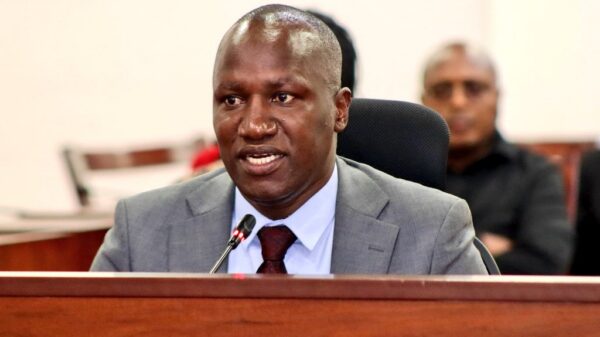


NAIROBI, Kenya, Apr 28— The Horn of Africa is facing a “dangerous crossroads” marked by interconnected conflicts and rising geopolitical competition, the Executive Secretary of the Intergovernmental Authority on Development, Workneh Gebeyehu, warned on Tuesday, calling for urgent reforms to mediation strategies as wars in the region grow more fragmented and prolonged.
Speaking at the IGAD Mediation Reflection Conference in Nairobi, Gebeyehu said the region is no longer dealing with isolated crises but rather a systemic pattern of conflict shaped by both internal tensions and external pressures.
“The Horn of Africa stands at a dangerous crossroads,” he told delegates.
“What we are witnessing is not a series of isolated crises—but the emergence of a system of conflict that is interconnected, regionalized, and deeply entangled with external dynamics. The boundaries between internal and external have blurred.”
The two-day conference, themed “Reimagining Mediation in a Fragmented World: The Challenge to African Multilateral Leadership,” brought together regional leaders, diplomats, and peace envoys to reassess the effectiveness of mediation efforts amid escalating instability across the Horn of Africa.
Mediation under strain
Gebeyehu said the traditional foundations that once sustained mediation, including shared norms, trust among states, and coordinated multilateral action, are weakening under the weight of shifting global power dynamics. He warned that mediation risks becoming reactive crisis management rather than a tool for lasting conflict resolution.
“Mediation today is under strain,” he said.
“Too often, it risks becoming crisis management rather than conflict resolution. Because mediation is not technical—it is political. It is about power, legitimacy, and ultimately building a shared future.”
He added that modern conflicts are increasingly sustained by war economies and fragmented actors, making negotiations more complex and reducing the effectiveness of conventional peace processes.
The IGAD chief singled out the ongoing war in Sudan as a stark example of mediation challenges, describing the failure to halt the fighting as a warning sign for the credibility of regional peace efforts.
“Three years into a devastating war, mediation has not stopped the carnage,” Gebeyehu said.
“If mediation cannot make a difference in Sudan, its credibility everywhere is at risk.”
Unified mediation strategies
He called for unified, politically grounded mediation strategies that are better coordinated among regional and international actors, warning that fragmented initiatives risk being overtaken by the conflicts they seek to resolve.
Also addressing the conference, Ambassador Mohamed Belaiche, Special Representative of the Chairperson of the African Union Commission in Sudan, underscored the urgency of coordinated regional and international action to end the conflict in Sudan, describing the gathering as a symbol of hope for civilians caught in the war.
“The gathering of special envoys and those concerned with Sudanese affairs represents, in itself, a message of hope at a time when suffering has intensified, the war has spread, and the humanitarian and social burdens weighing heavily on the Sudanese people have worsened,” Belaiche said.
He stressed that the central challenge facing mediators is how to bridge parallel peace initiatives and align competing diplomatic tracks into a coherent strategy capable of delivering lasting stability.
“The real challenge facing everyone today, both in Sudan and abroad, is how to bridge the disparate efforts and connect the paths that sometimes seem to run parallel and never intersect,” he said.
Belaiche reaffirmed the African Union’s commitment to safeguarding Sudan’s unity, sovereignty, and territorial integrity, warning against any political settlement that could lead to fragmentation or division of the country.
He also outlined key principles guiding the continental body’s mediation approach, including Sudanese ownership of the peace process, inclusive participation of women and youth, stronger coordination among regional actors, and accountability for war crimes.
“Despite the complexities of the crisis, it is not too late to rebuild trust among Sudanese people, nor is it too late to restore a unifying national identity that transcends polarization,” he added.

Stronger regional coordination
Kenya’s Prime Cabinet Secretary and Cabinet Secretary for Foreign and Diaspora Affairs, Musalia Mudavadi, said the region faces a dual challenge of protracted conflicts and shifting global dynamics that are testing traditional peace frameworks.
Mudavadi emphasized the need for flexible and inclusive mediation processes that involve women, youth, and local communities, while also strengthening coordination among regional institutions.
“African ownership in addressing African conflicts remains essential in ensuring legitimacy, sustainability, and long-term success,” he said, adding that member states must provide predictable financing to support IGAD’s peace initiatives.
Kenya, he noted, remains committed to supporting regional mediation efforts and strengthening IGAD’s role as the primary mechanism for peace and security in the Horn of Africa.
Delegates at the conference stressed that the growing complexity of conflicts requires political courage and strategic clarity rather than incremental responses.
Gebeyehu concluded by urging leaders to treat the moment as a turning point for regional peacebuilding.
“We cannot normalize permanent war,” he said.
“What the Horn of Africa requires is not management, but resolution. It requires political courage and strategic clarity.”