











NAIROBI, Kenya, Dec 17— The United States has issued its strongest warning yet over the escalating conflict in eastern Democratic Republic of Congo (DRC), signaling it is prepared to take enforcement action to ensure compliance with the Washington Accords, even as the M23 rebel movement announced a unilateral withdrawal from the strategic city of Uvira.
Deputy Secretary of State Christopher Landau delivered the message during a high-level meeting in Washington, DC, with DRC Foreign Minister Thérèse Kayikwamba Wagner, according to a statement from Principal Deputy Spokesperson Tommy Pigott.
“Deputy Secretary Landau conveyed that the United States expects full adherence to and implementation of the Washington Accords and is prepared to take action to enforce adherence,” the State Department said.
The talks came as the DRC prepares to assume a non-permanent seat on the United Nations Security Council, a development Landau said presents an opportunity for closer cooperation between Washington and Kinshasa.
The two sides also discussed the deteriorating security situation in eastern DRC following renewed advances by the M23 rebel group, which the United States and its allies say is backed by Rwandan forces.
Against this backdrop, the Alliance Fleuve Congo (AFC/M23) announced it would “unilaterally withdraw” its fighters from Uvira, a key commercial and transport hub on Lake Tanganyika in South Kivu province.
The group described the move as a “trust-building measure” aimed at giving renewed peace efforts a chance to succeed.
In a statement, AFC/M23 said the decision followed progress under the Doha Peace Process, including the signing of the Doha Framework Agreement on November 15, 2025, and was made at the request of United States mediators.
“Despite continued provocations and abuses by the FARDC and its allies, the Alliance Fleuve Congo has decided to initiate a unilateral trust-building measure in order to give the Doha peace process the maximum chance to succeed,” the group said.
However, M23 warned that previous withdrawals had been exploited by the Congolese army (FARDC), allied Wazalendo militias and other armed groups to reoccupy territory and target civilians perceived to be sympathetic to the rebels.
It urged guarantors of the peace process to urgently establish mechanisms to manage Uvira, including demilitarization, civilian protection, infrastructure safeguarding and ceasefire monitoring through the deployment of a neutral force.
M23 leader Corneille Nangaa also reiterated that the group would not allow armed factions hostile to Burundi to use areas under its control as rear bases for cross-border attacks, a pledge aimed at easing tensions with Bujumbura.
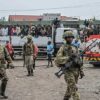
The announcement followed days of intense fighting in South Kivu. Residents reported that M23 fighters entered Uvira, triggering artillery fire and gun battles that forced thousands of civilians to flee into neighboring Burundi. Shops and schools were shuttered as families sheltered indoors, while Burundi temporarily closed its border with eastern DRC.
Congolese authorities offered conflicting accounts of the situation. While M23 claimed it had “liberated” Uvira, South Kivu Governor Jean-Jacques Purusi insisted FARDC units and allied militias remained in control of the city.
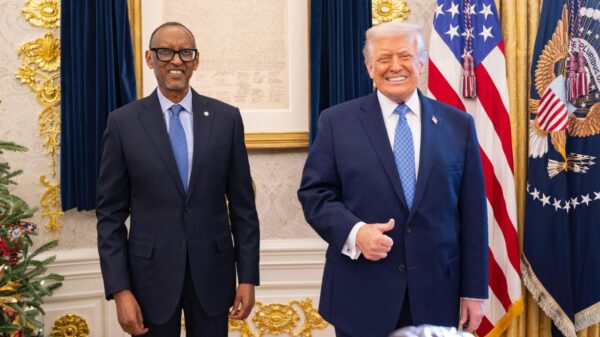
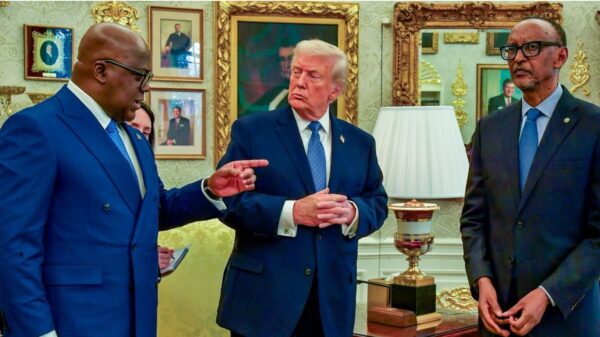
The latest escalation unfolded barely a week after a high-profile peace agreement brokered in Washington by US President Donald Trump between DRC President Félix Tshisekedi and Rwandan President Paul Kagame.
The deal — witnessed by regional leaders including Kenya’s President William Ruto — committed both countries to a permanent ceasefire, disarmament of armed groups, the return of refugees and deeper regional economic cooperation.
M23, however, is not a signatory to the Washington Accords and is pursuing parallel negotiations with the Congolese government under Qatari mediation, highlighting the fragile and fragmented nature of the peace process.
Regional diplomacy remains strained. Rwanda’s Foreign Affairs Minister Olivier Nduhungirehe has accused Western governments of selectively condemning violence while ignoring alleged ceasefire violations by FARDC, including aerial bombardments of densely populated areas.
Western governments, including the United States and the European Union, have countered by accusing Rwanda of backing the M23 offensive — allegations Kigali has repeatedly denied.
The United Nations says the renewed fighting has displaced approximately 200,000 people in recent weeks, with dozens killed or wounded. Burundi reports that tens of thousands of refugees have crossed its border from eastern DRC.