








By Philemon Yang
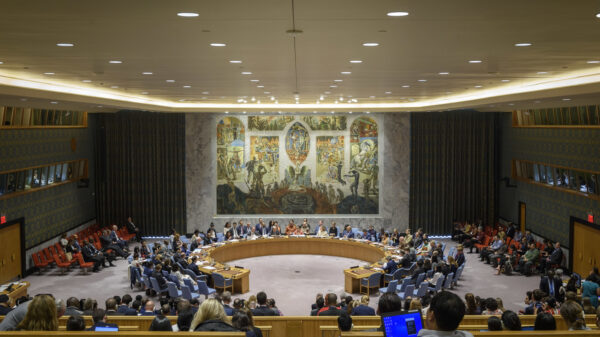
Eighty years ago this month, the Charter of the United Nations was signed in San Francisco, turning the page on decades of war and offering hope for a better future. For 80 years the United Nations has stood as the highest expression of our hopes for international cooperation, and as the fullest embodiment of our aspiration to end the “scourge of war.” Even in a world steeped in cynicism, this is a milestone worth acknowledging.
The United Nations remains the only organisation of its kind, and the only one to have endured for so long. That longevity is remarkable when we consider the context of its founding: assembled from the rubble of not one, but two global cataclysms. Its predecessor, the League of Nations, had collapsed in disgrace.
No organisation is flawless. But to paraphrase the second Secretary-General, Dag Hammarskjöld: the United Nations was created not to take humanity to heaven but to save us from hell. In that mission, it has not failed.
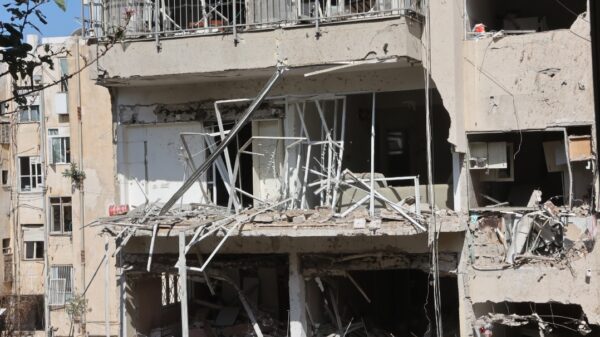
We continue to witness heart-wrenching scenes of war—in Gaza, Sudan, Ukraine and elsewhere. The recent escalation between Iran and Israel is a stark reminder of the fragility of peace particularly in the tension-prone Middle East region.
Yet amid the violence, we have managed to avert a third global war. In a nuclear age, that is an achievement we can never take for granted. It is one we must preserve with the full force of our efforts.
Over the past eight decades, much of human development also bears the direct imprint of the United Nations. Consider the success of the Millennium Development Goals, adopted in 2000 by 189 Member States and more than 20 international organisations, which gave the world a shared roadmap for action.
By 2015, compared to 1990, extreme poverty was more than halved. Child mortality had fallen by nearly 50 percent. And millions of children — especially girls who had long been denied the right — had entered school for the first time.
Now, as we strive to achieve the Sustainable Development Goals, we must build on that legacy of progress. We must continue efforts to eradicate poverty and hunger, achieve universal health coverage and produce and consume sustainably.
There is another story of progress, often overlooked: the dismantling of empire. Eighty years ago, colonialism cast its shadow over much of the world. Today, more than 80 former colonies across Asia, Africa, the Caribbean, and the Pacific have gained independence and joined the United Nations. That transition, supported and legitimised by this Organisation, reshaped the global order. It was a triumph of self-determination, a profound affirmation of the Charter’s most fundamental principle: the sovereign equality of all States.
Evolving for the future
The world has changed dramatically since 1945. Today, the Organisation faces a deepening liquidity crisis. Despite the promise of the 2030 Agenda for Sustainable Development, progress has been uneven. Gender equality continues to elude us. Our pledge to limit global temperature rise and protect our planet is slipping beyond reach.
These setbacks do not warrant diminished ambition but greater resolve. The United Nations has always shown its worth in times of crisis. Its founders had witnessed humanity at its most destructive and responded not with despair, but with boldness. We must draw on these achievements.
The spirit of San Francisco was not utopian. It was grounded in a sober understanding of what was at stake. It held that, even amid deep division, nations could still choose cooperation over conflict and action over apathy.
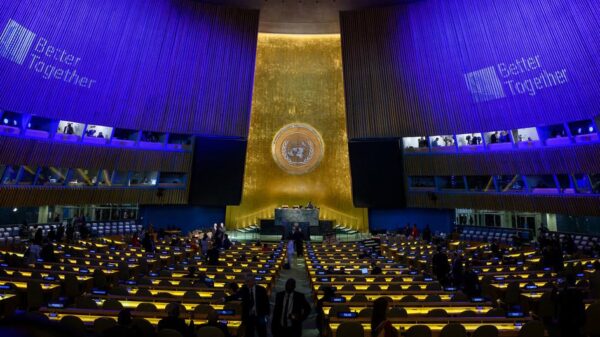
We saw that spirit last September, when world leaders gathered in New York for the Summit of the Future. After difficult negotiations, they adopted the Pact for the Future and its annexes—the Declaration on Future Generations and the Global Digital Compact—by consensus. In doing so, they pledged to renew multilateralism for a world more complex, connected, and fragile than the one imagined in 1945.
That spirit endures today. It lives in the resolve of 193 Member States, in the integrity of international civil servants, and in the quiet determination of those who believe firmly in the promise of the Charter. It is carried forward by the Secretary-General’s UN80 initiative, which calls on us to deliver better for humanity; and to look to the future with adaptability and hope.
As we mark this anniversary, we must rekindle the call for unity and solidarity that rang out from San Francisco 80 years ago.
We built a world order once, in the ruins of war. We did so with vision and urgency. Now, again, we find ourselves at a moment of consequence. The risks are high. So too is our capacity to act.
H.E. Mr. Philemon Yang, President of the 79th session of the UN General Assembly