





Tanzania’s founding father Julius Nyerere has been honoured with a statue outside the African Union headquarters in Ethiopia’s capital, Addis Ababa.
Nyerere led what is now Tanzania from independence in 1961 until 1985.
Known as Mwalimu, Swahili for teacher, he was a committed pan-Africanist and hosted independence fighters opposed to white minority rule in southern Africa.
He played a key role in the creation of the Organisation of African Unity, which later became the African Union.
Unveiling the statue at a ceremony attended by numerous African heads of state, AU Commission leader Moussa Faki Mahamat said: “The legacy of this remarkable leader encapsulates the essence of Pan Africanism, profound wisdom, and service to Africa.”
He recalled Nyerere’s own comments at the inaugural OAU summit in 1963. “Our continent is one, and we are all Africans.”
But when he became prime minister of what was then Tanganyika in 1961, his first task was to unite the new country, made up of more than 120 different ethnic groups, including Arab, Asian and European minorities.
He managed to do this, by promoting the use of Swahili as a common language and through his vision of “African Socialism” or ujamaa (familyhood).
In 1964, Tanganyika united with the Zanzibar archipelago to form Tanzania.
It later became a one-party state. Nyerere defended the absence of multi-party elections by declaring that Tanzanians had far more freedom under him than they had ever had under British rule, and that the one-party system was vital for stability.
Known for his modest lifestyle, Nyerere tried to create an egalitarian society based on co-operative agriculture – meaning farmers no longer worked their individual fields but instead worked together on communally-owned land.
He wanted Tanzania to be self-reliant, rather than depending on foreign aid and investment.
However, this largely failed and Tanzania’s economy was in dire straits when he stepped down in 1985.
Yet he oversaw a huge improvement in healthcare and literacy and remains widely revered in Tanzania.
The country’s main international airport is named after him, as are many roads, bridges and stadiums.
During the 1970s, Nyerere lobbied Western governments to take a stronger stance against white-minority rule in Rhodesia, later Zimbabwe, and South Africa, and backed armed groups fighting those regimes.
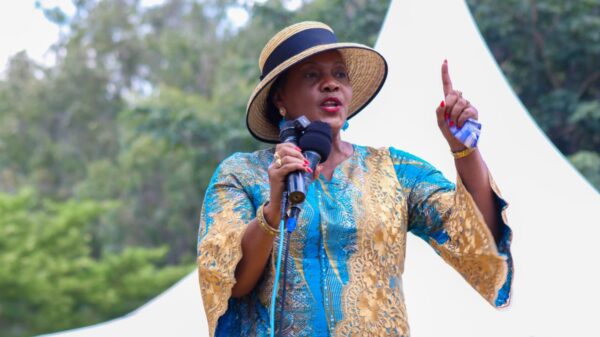
Paying her tribute to Nyerere, Tanzania’s President Samia Suluhu Hassan said: “To him, Africa’s wellbeing came first, before popular approval, personal fortune or country wellbeing.”
Nyerere was strongly opposed to the expulsion of Asians in neighbouring Uganda under Idi Amin in 1972. Relations continued to deteriorate and seven years later, Nyerere sent his army into Uganda to oust Amin.
In a post on X, Zambia’s President Hakainde Hichilema described the unveiling of the statue to “one of our continent’s iconic figures” as a “proud day”.
He was a trained teacher and became the first person from Tanganyika to study at a British university, when he went to study in Edinburgh in 1949, according to the Encyclopaedia Britannica.
He died in 1999, aged 77, and the anniversary of his death, 14 October, is a public holiday.
Nyerere is the third leader to be honoured with a statue outside the AU headquarters, after Ghana’s founding father and pan-Africanist Kwame Nkrumah, and Ethiopia’s emperor Haile Selassie, who became a symbol of African nationalism for resisting Italy’s attempts to colonise the country in the 1930s, and later agreed to host the OAU.