











KHARTOUM, Sept. 6 (Xinhua) — As the raging war between the Sudanese Armed Forces (SAF) and the paramilitary Rapid Support Forces (RSF) has lasted for nearly five months, no solution to the conflict is yet in sight amid lingering stalemates in battlefields.
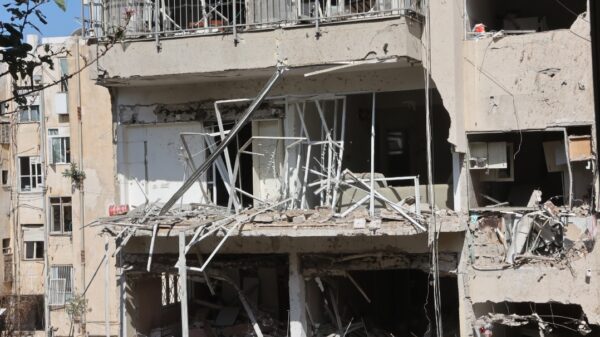
As the clashes continue in the capital Khartoum and some other cities in western Sudan, both sides of the conflict claim control over the battlefields, but territories seized by each party have remained little changed since the war broke out in mid-April. Sudanese military analyst Mohamed Al-Yaqout told Xinhua on Monday that the RSF still controls large areas in the cities of Khartoum, Bahri, and Omdurman, in addition to the military areas and sovereign institutions it seized earlier. He noted that the RSF also controls the Republican Palace and the vicinity of Nile Street in central Khartoum, where main government ministries are located, while the SAF is trying to restore control over the symbolic palace. Meanwhile, an unnamed military source said the SAF controls about 80 percent of the headquarters of the army’s General Command, while the RSF controls parts of Khartoum airport and the airport neighborhood, as well as the headquarters of General Intelligence.
Over the past two weeks, the SAF and the RSF have intensified efforts to seize each other’s command centers.In the meantime, the prolonged clashes have exacerbated the humanitarian suffering of civilians because of impeded movement and lack of food supplies.
The United Nations Office for the Coordination of Humanitarian Affairs on Monday said about 4.8 million people have been displaced inside and outside Sudan due to the conflict. Also on Monday, the United Nations High Commission for Refugees appealed for one billion U.S. dollars to provide essential aid and protection to more than 1.8 million people expected to arrive in five neighboring countries by the end of 2023, fleeing the ongoing conflict in Sudan. Efforts toward a political settlement to the crisis in Sudan are still facing major obstacles as indirect talks between the two warring parties in the Saudi Arabian port city of Jeddah were largely suspended after the SAF insisted that the RSF withdraw from civilian homes, hospitals, and other public facilities. The talks sponsored by the United States and Saudi Arabia since May have borne little fruit due to numerous cease-fire violations.
A roadmap proposed by the African Union in partnership with European groups also failed to resolve the crisis after the Sudanese government expressed reservations over the roadmap on the grounds of the suspension of Sudan’s membership in the African organization since October 2021. Abdul-Raziq Ziyada, a Sudanese political analyst, said the conflicting parties seem unenthusiastic with regional initiatives, and there was no real political desire for a peaceful solution. “The two sides are adopting a strategy of military resolution, which is still far-fetched,” Ziyada told Xinhua on Monday, adding that “the two parties also seek to strengthen their negotiating positions by achieving military gains on the ground, which prolongs the conflict.” Abdul Jalil Ismail, a Sudanese military expert, told Xinhua on Monday that “it is clear that the army’s hands are tied because RSF fighters are stationed at civilian areas where lethal force used by the army against the RSF would also lead to huge civilian losses.” However, Ismail speculated that “the two parties may eventually agree to a political settlement through a regional or international platform, most possibly through the one led by Saudi Arabia and the United States.” Sudan has been witnessing deadly armed clashes between the SAF and RSF in Khartoum and other areas since April 15, which left over 3,000 people killed and more than 6,000 injured, according to the Sudanese Health Ministry.