



















French luxury has long borrowed from African textiles, silhouettes, and craft traditions. But as a new generation of African designers reshapes the global industry, the debate is shifting from inspiration to authorship, influence, and who profits from fashion’s most enduring aesthetic codes.
French luxury likes to tell a story about itself: born in Paris ateliers, refined through couture discipline, exported to the world as the ultimate expression of taste. But look closely at the silhouettes, textures, and visual language that have shaped French fashion over the last century, and another geography emerges. Marrakech. Dakar. Bamako. Abidjan. The global luxury aesthetic, so often coded as European, has long been built in conversation with Africa.
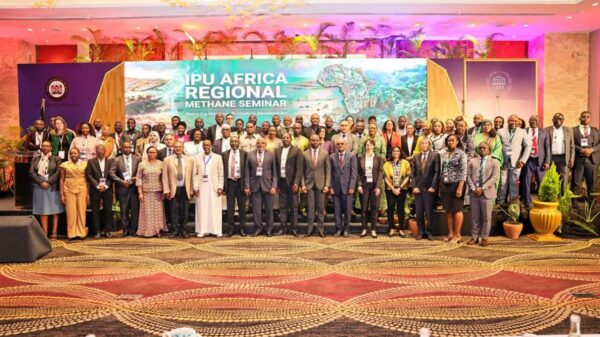
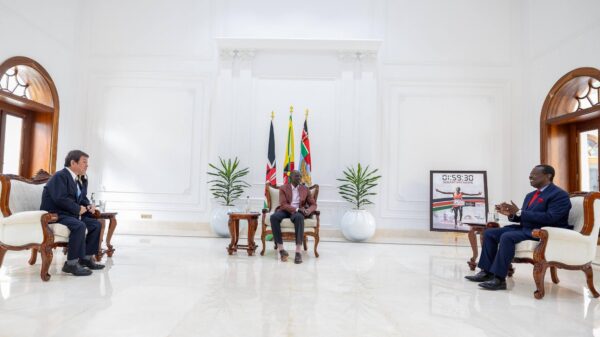
This conversation feels particularly present now, in the run-up to the Africa Forward Summit 2026 in Nairobi, a gathering jointly hosted by Kenya and France, bringing together Heads of State, investors, and cultural and economic leaders to define a new model of partnership between Africa and France. While the agenda is formally centred on infrastructure, AI, energy, and investment, it is also implicitly cultural: a reassessment of how value, including creative value, moves between continents.
Yves Saint Laurent understood this earlier than most. His relationship with Marrakech was not a passing fascination but a creative dependence. The saturated blues of Jardin Majorelle, the drama of North African tailoring, the fluidity of djellabas and caftans all found their way into collections that would later become shorthand for effortless Parisian glamour. Fashion history tends to describe this as inspiration. But inspiration is often a comfortable word for extraction.
Christian Dior repeatedly returned to African references: raffia textures, sculptural silhouettes, animal motifs, and heavily embroidered surfaces. Jean Paul Gaultier reinterpreted African body adornment through corsetry, metalwork, and exaggerated proportion, borrowing the architecture of jewellery and ceremonial dress to challenge Western ideas of structure and beauty. Even Hermès, a house synonymous with French heritage, has consistently drawn from African equestrian traditions, textile geometries, and artisanal craft languages in its prints and leatherwork.
What is striking is not the occasional reference, but how foundational African aesthetics have become to the visual vocabulary of luxury itself. Mud cloth from Mali, indigo dye traditions from West Africa, Kente weaving from Ghana: these are not fringe influences appearing once a season on a runway moodboard. They have shaped the industry’s understanding of colour, texture, and movement for generations.
Now, a new generation of African designers is reframing the conversation entirely. Designers like Imane Ayissi and Selly Raby Kane are not asking Paris for validation. They are building global fashion languages on their own terms, blending heritage textiles with sharp contemporary silhouettes, while insisting on sustainability, artisanal production, and cultural authorship.
That shift matters because the conversation around African influence in fashion can no longer stop at aesthetics. Influence without economic participation is an imbalance dressed up as admiration. The question facing the French fashion industry now is not whether Africa has shaped luxury design. It plainly has. The question is who benefits from that legacy, who receives credit, and who controls the future of the story.
As France and African nations prepare to meet again in Nairobi under the banner of the Africa Forward Summit, these questions sit quietly alongside the official agenda. Investment, trade, and innovation are being redefined in real time. Culture is part of that same system.
African design is not peripheral to global luxury. It is one of its foundations.
By Alice Broster is a journalist and content creator known for storytelling on health, culture, and lifestyle