















NAIROBI, Kenya Dec 16 – Kenya’s ambitious Sh5 trillion roadmap to transform the country into a first-world economy took a major step forward on Monday after the Cabinet approved the establishment of the National Infrastructure Fund and the Sovereign Wealth Fund, two flagship vehicles set to anchor long-term economic transformation.
The National Infrastructure Fund, approved as a limited liability company, will serve as the central engine for aligning government financial resources with national development priorities, while reducing reliance on borrowing and taxation.
Through innovative mobilisation of domestic resources, strategic monetisation of mature public assets, democratisation of ownership via capital markets, and deployment of national savings, the government aims to unlock large-scale private capital to finance priority investments.
Under the framework, all privatisation proceeds will be ring-fenced and invested strictly in public infrastructure projects that generate long-term value. Every shilling invested through the Fund is expected to crowd in up to Sh10 from long-term investors, including pension funds, sovereign partners, private equity firms and development finance institutions.
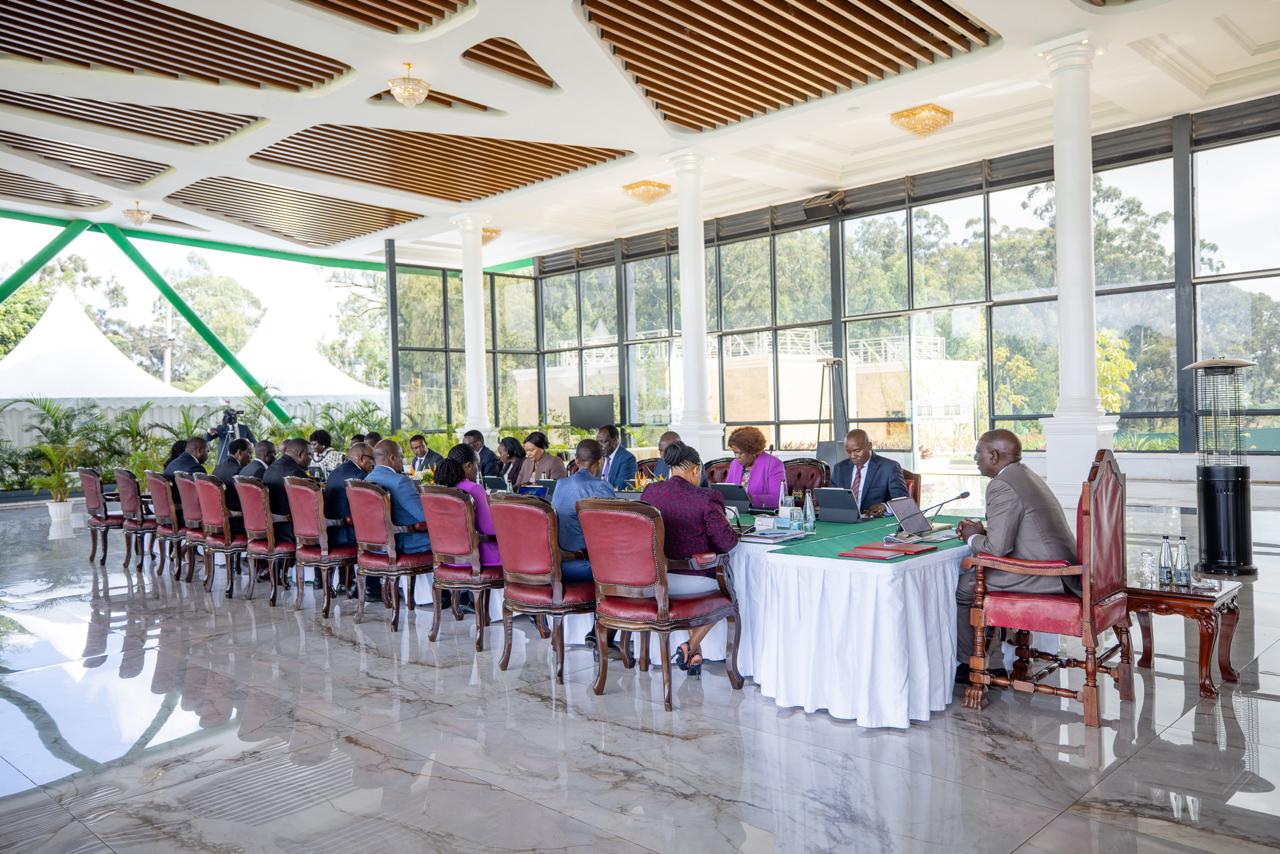
The Cabinet also approved the Sovereign Wealth Fund Policy, establishing a comprehensive framework for the prudent management of revenues from mineral and petroleum resources, dividends from public investments and a portion of privatisation proceeds.
Anchored on inter-generational savings, protection against external shocks and strategic investments with commercial returns, the Sovereign Wealth Fund will strengthen fiscal discipline, enhance economic resilience and support long-term national competitiveness, while operationalising Article 201 of the Constitution on inter-generational equity.
Transforming Key Sectors
Together, the two funds will finance Kenya’s transformation agenda across food security, transport, energy and industrialisation.
To boost food security, the government plans to construct 50 mega dams, 200 mini-dams and more than 1,000 micro-dams, bringing an additional 2.5 million acres under irrigation to support agro-industrialisation and uplift rural livelihoods.
Transport and logistics infrastructure will be expanded through the dualling of 2,500km of highways, tarmacking of 28,000km of roads, extension of the Standard Gauge Railway to Malaba, expansion of oil pipelines, and modernisation of airports and the ports of Mombasa and Lamu.
Energy generation will be scaled up with the addition of at least 10,000 megawatts over the next seven years to power manufacturing, digital expansion, e-mobility and emerging technologies, drawing on Kenya’s geothermal, hydro, solar, wind and nuclear potential.
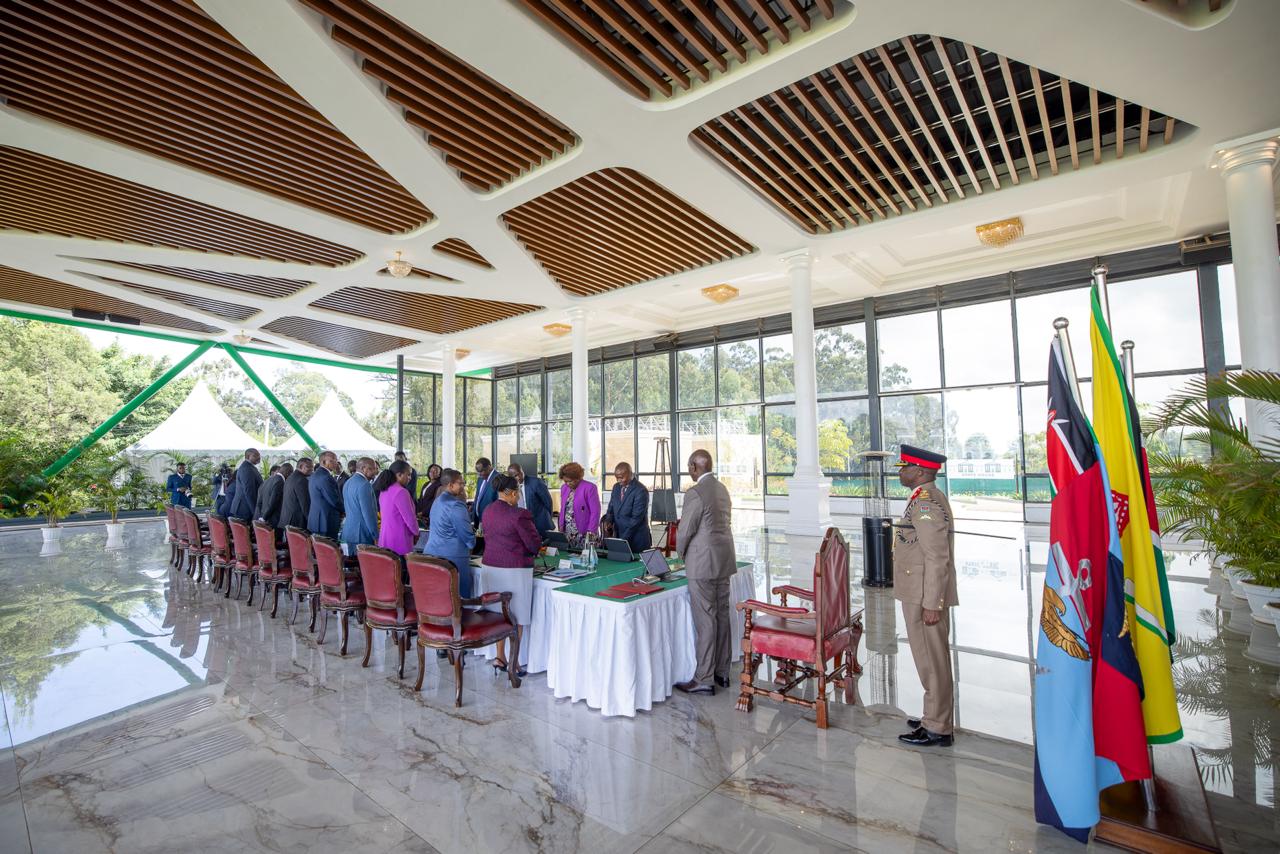
Both funds will be professionally and independently managed under strict governance, transparency and accountability frameworks. The National Infrastructure Fund will be overseen by a competitively appointed board and chief executive, while the Sovereign Wealth Fund will operate under a robust policy structure.
Additional Cabinet Decisions
In support of energy expansion, Cabinet approved the National Energy Policy to accelerate access to reliable and sustainable energy, promote renewables and strengthen private sector participation. It also endorsed the National Petroleum Policy, updating the 2004 framework to reflect constitutional requirements and recent oil discoveries.
Cabinet further approved an innovative financing model for major transport projects, including the Naivasha–Kisumu SGR Phase 2B, SGR link to Uganda, Nairobi Railway City Central Station, BRT Lines 2 and 3, commuter rail and non-motorised transport.
The government also confirmed that all pending bills for certified road works up to December 31, 2024—amounting to Sh123 billion—have been fully settled, unlocking or accelerating 875 road projects since April 2025.
Other approvals included the establishment of a National Integrated Security Command and Control System, rollout of Second-Generation Smart Driving Licences, adoption of the National Care Policy, and endorsement of preparations to host the COMESA–EAC–SADC Tripartite Summit in 2026.
The Cabinet said the new financing architecture marks a decisive shift toward a sustainable, investment-led development model aimed at securing long-term prosperity for present and future generations.