











BEIJING, China, Dec 4 — Beijing and Moscow have agreed to “resolutely uphold the outcomes of World War II victory” and “counter any attempts to revive fascism or Japanese militarism”, at a high-level meeting of their senior officials, a move that observers said sent a clear signal of solidarity in championing the postwar international order.
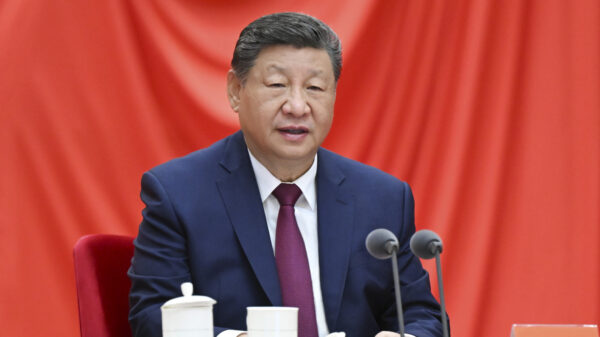
Foreign Minister Wang Yi and Sergei Shoigu, secretary of the Security Council of the Russian Federation, co-chaired the 20th round of China-Russia strategic security consultation in Moscow on Tuesday.
Japanese Prime Minister Sanae Takaichi made provocative remarks in Japan’s parliament last month, suggesting Tokyo’s possible military intervention in the event of a “Taiwan contingency”, and the country is advancing a military buildup despite its war-renouncing pacifist Constitution, triggering criticism from neighboring countries including China and Russia.
At the talks on Tuesday, Beijing and Moscow “updated each other and coordinated on issues related to Japan, reaching a high degree of consensus”, the Foreign Ministry said in a release.
“The two sides agreed to resolutely uphold the outcomes of World War II victory achieved with sacrifice and blood, firmly oppose any attempts to whitewash colonial aggression, and resolutely counter any attempts to revive fascism or Japanese militarism,” the ministry said.
The two sides agreed at the meeting that they should shoulder their shared identity as major countries and permanent members of the United Nations Security Council, safeguard world peace and security, and “champion historical truth and international justice”.
This year, the two sides have carried out a series of high-level exchanges focused on commemorating the 80th anniversary of the victory in the Chinese People’s War of Resistance Against Japanese Aggression (1931-45) and the World Anti-Fascist War, Wang said during the talks.
He called for both sides to continue making full use of their strategic security consultation mechanism, strengthen strategic communication and coordination, and jointly respond to external challenges.
Shoigu said that Russia firmly adheres to the one-China principle and strongly supports China’s positions on Taiwan, Xizang, Xinjiang and Hong Kong, adding that it is necessary for Russia and China to strengthen strategic coordination.
Last week, Russian Foreign Ministry spokeswoman Maria Zakharova said that “80 years have passed, and Japan still refuses to recognize the results of World War II, as enshrined in international law”.
“We know, regrettably, how Japanese militarism ended — what sacrifices it cost the whole world, and Japan itself,” she said, urging Japanese politicians to “remember this and understand what irresponsible statements can lead to, and refrain from making them”.
Chinese Ambassador to Russia Zhang Hanhui said recently that “China highly commends Russia for consistently adhering to the one-China principle when it comes to the Taiwan question, and for its unwavering and strong support for China”.
This “fully demonstrates the high level of the China-Russia comprehensive strategic partnership of coordination for a new era”, Zhang told TASS news agency last week when asked about the Taiwan question.
Yang Bojiang, director-general of the Institute of Japanese Studies at the Chinese Academy of Social Sciences, said Japan’s military and security developments “have for a long time drawn scrutiny from its Asian neighbors and the international community due to Japan’s history of colonialism and aggression”.
He noted that Japan has recently drawn criticism from Russia, the Democratic People’s Republic of Korea and the Republic of Korea over issues including history, territory and defense spending.
“Takaichi’s provocative remarks and actions have drawn protests and criticism from multiple neighboring countries — a phenomenon unseen since the end of the Cold War. This shows that Japan has become a primary source of risks that may undermine peace in the Asia-Pacific region,” he said.
Wang also met with Russian Foreign Minister Sergey Lavrov in Moscow on Tuesday, and the two sides agreed to resolutely oppose any retrogressive acts attempting to whitewash colonial aggression, and to call for upholding justice and fairness.
For more visit China Daily
For subscriptions on news from China Daily, or inquiries, please contact China Daily Africa Ltd on +254 20 6920900 or write to enquiries@chinadailyafrica.com