
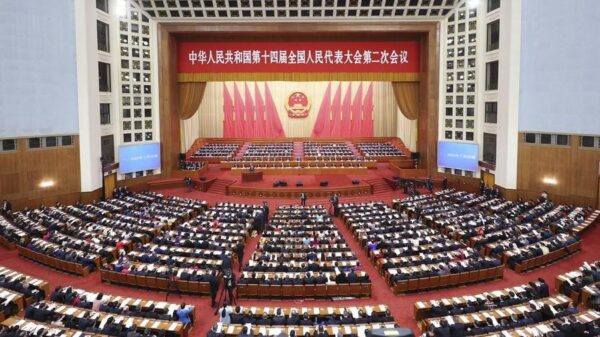




















The recently concluded Fourth Plenary Session of China’s 2025 political cycle has delivered outcomes that speak directly to Africa’s development priorities. While Beijing’s internal processes may appear distant, the decisions taken at the plenum carry concrete, actionable implications, reinforced by data that reflects the depth and evolution of China–Africa relations. Trade, investment and technology linkages are already expanding, and the plenum provides a structured framework that African governments can leverage to negotiate more strategic, targeted cooperation.
China–Africa trade reached US$295.6 billion in 2024—an increase of 4.8 percent from the previous year—cementing China’s position as Africa’s largest trading partner for the 16th consecutive year. Chinese exports to Africa stood at US$178.8 billion, while imports from Africa rose to US$116.8 billion, a 6.9 percent increase. This steady rise demonstrates a maturing partnership built on consistent engagement, not episodic transactions.
The introduction of zero-tariff treatment for least-developed African countries in late 2024 has already widened pathways for more diverse exports, including processed goods. For decades, African governments have sought to break away from raw commodity dependency. China’s tariff policy shift offers an opportunity to expand export portfolios and support value addition at home.
The plenum’s focus on high-quality, innovation-driven growth mirrors Africa’s ambitions for industrialisation and digital transformation. China’s economic turn toward advanced manufacturing, AI, green mobility, clean-tech, and digital services creates room for deeper, mutually beneficial partnerships. African countries working to modernise production, digitise public services or accelerate green transitions now have an opening to seek technology transfer, research collaboration and industry-building partnerships that strengthen local capacity rather than reinforce import dependency.
Nations such as Kenya, Rwanda, Egypt, South Africa and Ghana already have emerging digital and manufacturing ecosystems that could be scaled significantly through well-structured cooperation. The key is negotiated agreements that prioritise skills development, local assembly and long-term industrial foundations.
China’s renewed focus on global supply-chain resilience provides another strategic opening. Pandemic disruptions and geopolitical tensions have sharpened China’s interest in diversifying production bases and securing dependable logistics routes. With a young labour force and the African Continental Free Trade Area (AfCFTA) advancing, Africa is well-placed to position itself within these diversified supply chains.
Industrial parks, modernised ports, logistics corridors and manufacturing zones—many with Chinese involvement—illustrate this shift. By 2023, Chinese direct investment stock in Africa surpassed US$40 billion, and Chinese enterprises had created more than 1.1 million jobs across manufacturing, agriculture and logistics. These are not peripheral figures; they reflect Africa’s growing role in China’s global production networks. Future cooperation, however, must be better aligned with national industrial plans and regional priorities.
Green development is another area where the plenum offers immediate value. Africa faces worsening climate shocks and persistent energy deficits, while China leads in cost-effective renewable technology. Chinese companies have installed over 1.5 GW of photovoltaic capacity across Africa, and African imports of Chinese solar panels reached 15,032 MW in the year to mid-2025—a dramatic 60 percent surge. This reflects both urgency and affordability.
Beyond imports, the next step is localisation. Solar component assembly, battery manufacturing, electric mobility infrastructure and climate-resilient agriculture are areas where China’s industrial experience can support African production. Governments must negotiate for local supply chains, jobs and technology transfer.
Diplomatically, the plenum reaffirmed China’s commitment to South–South cooperation and to elevating the collective voice of developing economies. This comes at a time when Africa’s traditional partners face internal fragmentation and global governance reforms remain slow. China’s posture provides Africa with additional leverage on climate finance, debt treatment, digital governance standards and trade reform.
With coherent engagement, African regional blocs—especially AfCFTA—can use this alignment to secure fairer, more predictable outcomes. Yet the opportunities presented by the plenum hinge on Africa’s capacity for coordination, negotiation and oversight. The challenge is not China’s influence, but the risk of fragmented national strategies and weak bargaining power.
For China, delivering on its plenum commitments will require deeper consultation, greater openness and genuine alignment with African priorities. For Africa, the Fourth Plenum offers a moment to shape a more balanced, practical partnership. With clarity and ambition, African governments can leverage China’s economic pivot, supply-chain diversification and green-technology expansion to strengthen industrial bases, widen energy access, create jobs and enhance the continent’s influence in global negotiations.