


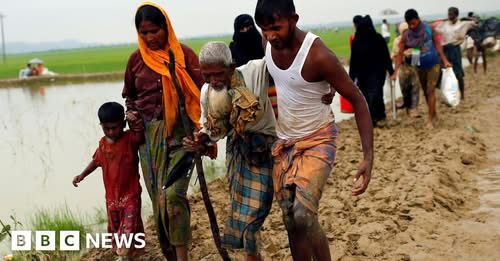


















NAIROBI, Kenya, Sep 28 – Children from disadvantaged communities are at far greater risk from waterborne diseases, hunger, and malnutrition according to a new study released by Save the Children, an aide group championing the rights and interests of children.
The data reviewed by international team of climate researchers reveals that these climate impacts risk trapping millions more children into long-term poverty and threaten to undo decades of progress in the fight against hunger and stunting.
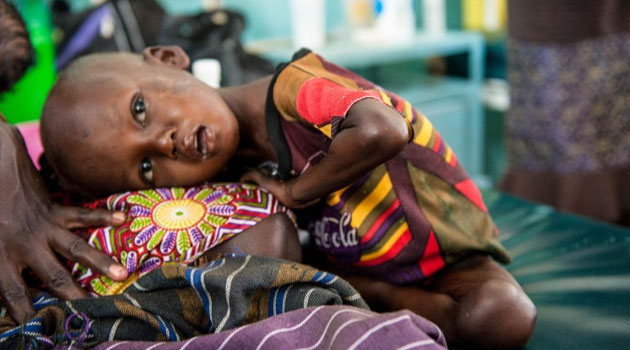
At least 652, 960 children across the country are acutely malnourished and are dependent on food from aid agencies and health services to survive.
CEO of Save the Children International, Inger Ashing, noted that in Kenya recurring drought is ruining the source of livelihood of several pastoralist families in Northern Kenya who rely on livestock and its products.
In mid August the government issued a drought alert across 12 counties, with an estimated two million people facing food shortages.
Global temperatures are projected to rise by an estimated 2.6 to 3.1 degrees above pre-industrial levels— a situation which would have an unacceptable impact on children according to the aide agency.
During medical camps conducted by the Save the Children, many children below the age of five were reported to be severely malnourished.
The agency cited a case study where a patrolist identified as Halima from Wajir County lost most of her livestock as a result of the ongoing drought in the region which decimated pasture lands.
Halima’s two-year-old was hardest hit among members of the family of eight having been diagnosed with severe acute malnutrition.
“My baby weighed just 6.3 kilograms equivalent to the weight of a five month old baby,” the aide agency report quoted Halima as saying.
“If the drought persists, then our livelihood is completely affected and we are afraid for our children’s lives. We can barely afford to have two meals in a day.”
In Turkana County, Akeru, who is expectant with her fourth child, spoke of the family skipping meals.
“My family eats one meal a day, which is dinner. Last night we had white maize only, which is what my two year old also had.”
The data is part of the organization’s new report Born into the Climate Crisis – why we must act now to secure children’s rights, which outlines the devastating impact on the climate crisis on children across the world if urgent action is not taken.
“The report shows a terrifying reality for the generation of children in Kenya if we do not act now,” Save the Children’s Country Director, Yvonne Arunga said.
“Children in poorer counties will be worst affected, but every child will feel the ravaging impact of this climate emergency.”
The report also revealed that: The impacts of climate change disrupt children’s access to healthcare and education, especially for the already disadvantaged — such as girls, children in refugee communities, children with disabilities and Indigenous children.
While children in North America and Western Europe are unlikely to suffer more crop failures, for example, newborns in sub-Saharan Africa will face 2.6 times more crop failures than their elders, and children in the Middle East and North Africa up to 4.4 times more.
“The climate crisis is a child rights crisis at its core. We need to scrap our dependency on fossil fuels, set up financial safety nets and support the hardest hit people. We can turn this around – but we need to listen to children and jump into action. If warming is limited to 1.5 degrees, there is far more hope of a bright future for children who haven’t even been born yet,” Ashing said.
In the meantime, Save the Children has appealed to the National and county governments to activate the disaster management framework as well as to quickly release funds to help mitigate the crisis.
“Action on climate change is not only a moral obligation but also a legal one for governments to act in the best interests of children,” Arunga said.
The remote counties of Turkana, Garissa, Wajir and Marsabit are the worst affected by the ongoing drought in the country.