









Interview: Collaboration with Global South partners allows Africa better representation on world stage — AU official
JOHANNESBURG, Nov. 17 (Xinhua) — Through the collaboration with China and other Global South partners, Africa can now use multilateral platforms such as the Group of Twenty (G20) to ensure that Africa’s voices are heard and its interests clearly understood, Leslie Richer, director of information and communication at the African Union (AU), has said. She made the remarks in an interview with Xinhua on the sidelines of the Global South Media and Think Tank Forum China-Africa Partnership Conference held in South Africa’s Johannesburg on Nov. 13-14.
MEDIA, THINK TANKS PLAY IMPORTANT ROLE
In African nations’ collaboration with other Global South countries, media plays an important role in ensuring people-to-people understanding, while think tanks can serve as a foundation for policy discussions, notably those between Africa and China, the AU official said.
When media and think tanks are combined, a dynamic force can be achieved to bring together people from research, academia and media, as well as policymakers to “promote understanding of what we want to do in terms of development,” Richer noted. She said the Global South Media and Think Tank Forum China-Africa Partnership Conference, jointly hosted by Xinhua News Agency, the AU and South Africa’s Independent Media, among other partners, took place at a key moment amid a shifting global landscape.
The global order is in transition with centers of economic activity emerging across the Global South, and the demands for fairer representation concerning development and global governance that reflect the realities of the 21st century are growing stronger, according to the AU official. In her opinion, the narratives that circulate globally about African countries and people are often shaped elsewhere, filtered through lenses that do not reflect the realities of the continent.
These narratives can distort understanding and limit the potential for genuine partnership. “The Global South must be partners not only in trade, infrastructure, and diplomacy, but also in storytelling. We must promote balanced narratives that reflect the dignity, diversity, and dynamism of our peoples through people-to-people and institutional exchanges, so that learning flows in both directions and brings our societies closer,” Richer noted.
GLOBAL SOUTH SHOULD BE BETTER REPRESENTED, HEARD
The G20 Leaders’ Summit is set to take place on Nov. 22 and 23 in Johannesburg. The AU was invited to join the G20 in September 2023. China was the first country to explicitly express its support for the AU’s membership in the G20 — consistent with its support for the AU in playing a greater role in global governance.
Richer highlighted that the inclusion of Africa through the AU in the G20 is not just symbolic, but also important in making sure Africa has a better representation in today’s multilateral world. Apart from G20, other collaboration mechanisms, including the Forum on China-Africa Cooperation, allow Africa to have its voices heard on the international stage. “We are now actually in the rooms, but it’s not just about being in the room.
It’s about impacting the decisions that are being made with the G20,” the AU official stressed.
Through the collaboration with China and other Global South partners, Africa can now start using these multilateral platforms to ensure that Africa’s voices are heard and that its interests are clearly understood, she said. This helps strengthen the representation of the Global South in multilateral spaces, according to her. Advocating global governance reform, she said that the majority of existing international institutions were established at a time when many Global South countries were not independent. “And even when they acquired independence, they were not adequately represented in these governance structures.”
Taking many global financial institutions, she noted that their governing rules are not designed to favor developing countries, but are actually impeding their development because “they were not designed with our interests in mind.” Richer called for building a world that is more inclusive, equitable and peaceful, with development being a right instead of a privilege. The destinies of nations should not be determined by historical inequity, but by cooperation and shared progress, she noted.
Researchers develop AI “digital twins” of patients to predict their future health
MELBOURNE, Nov. 17 (Xinhua) — A research led by Australia’s University of Melbourne has developed an artificial intelligence (AI) tool capable of creating “digital twins,” or virtual patient replicas, to predict individual health trajectories.
Researchers used three datasets containing thousands of electronic patient health records to train an existing large language model, according to a university statement released Monday. The AI model called DT-GPT, hailed as “a potential gamechanger for the clinical trial sector,” analyzed medical data of patients with either Alzheimer’s disease or non-small cell lung cancer, as well as patients admitted to intensive care units, it said.
The model created digital twins of patients and accurately forecast their health changes over time by leveraging pre-existing medical knowledge and analyzing patient histories, including lab results, diagnoses, and treatments, it added. The model wasn’t provided information on the health outcomes of the patients, allowing researchers to validate its predictions, the statement said, adding the DT-GPT model outperformed 14 other state-of-the-art machine learning models in predictive accuracy.
“This technology paves the way for a shift from reactive to predictive and personalized medicine,” said University of Melbourne Associate Professor Michael Menden, lead researcher of the study published in NPJ Digital Medicine.
“It could enable doctors to anticipate if their patient’s health will deteriorate so they can intervene earlier,” Menden said, adding it could also predict medication side effects, helping doctors customize treatments to each patient’s unique profile and improve health outcomes.
The model quickly interprets complex data and features a chatbot-like interface for users to explore its predictions, he said, adding DT-GPT uses generative AI to make “zero-shot predictions,” meaning it can make educated guesses about lab values even without prior training on them.
Scientists in Australia send “cell hotels” on space mission for microgravity study
MELBOURNE, Nov. 17 (Xinhua) — Scientists in Australia have sent two 10 cm-high “cell hotels” on an international space mission to study how the absence of gravity affects the human gut, potentially transforming health and wellbeing in space and on Earth.
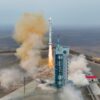
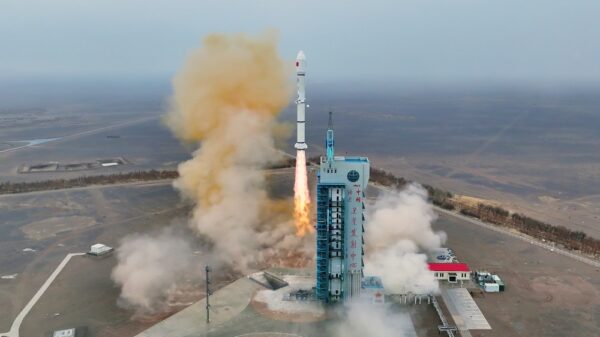
The small “hotel” cubes were among 21 international experiments weighing about 500 kg on a sounding rocket launched by the German Aerospace Center (DLR) from Sweden on Nov. 12, according to a Monday news release by Australia’s La Trobe University, which designed the miniature laboratories with Melbourne engineering firm Enable Aerospace.
La Trobe ran two mini labs on the shuttle, each containing gut cells called “Gastronauts,” studied before, during, and after the just over 6-minute zero gravity flight at nearly 270 km altitude to understand how the cells adapt in space, revealing insights into cell communication, regeneration, and cancer, said Professor Patrick Humbert, director of the La Trobe Institute for Molecular Science.
“If we remove gravity, we can discover why and how gravity is important for health,” said Humbert, also primary investigator of the Gastronauts project, adding the results could benefit astronaut health and lead to medical advances on Earth.
The small modules took a year to design and test, built to keep biological samples alive and stable while enduring vibration, radiation, launch, and re-entry extremes, researchers said, adding each cube contained a cell hotel and a microgravity microscope to capture physiological changes invisible under normal conditions. It gives scientists valuable information on human gut biology in the space environment, with each experiment compared to an identical test on the ground, they said.
This flight marked La Trobe’s third participation in DLR’s MAPHEUS (Material Physics Experiments under Microgravity) program, a high-altitude research initiative since 2009, the release said.
World Insight: Japanese PM’s ambiguous nuclear rhetoric exposes significant, negative policy shift
TOKYO, Nov. 17 (Xinhua) — Japanese Prime Minister Sanae Takaichi recently avoided stating in parliament whether her defense and security policies would adhere to the country’s long-held non-nuclear weapons principles, hinting at the possibility of abandoning them, while senior officials have even claimed that they do not rule out the introduction of nuclear submarines.
Such dangerous rhetoric by the current Takaichi administration revives Japan’s militaristic past and has raised strong concerns and dissatisfaction from the peace-loving people at home, as well as the international community.
During a recent Lower House Budget Committee hearing, Takaichi told opposition lawmakers that, as her government gears up to revise the country’s key national security documents by the end of 2026, “it is not yet at the stage” where she could “definitively state” that the wording of the Three Non-Nuclear Principles that Japanese administrations have followed for decades would remain the same.
The Three Non-Nuclear Principles, not possessing, not producing and not allowing the introduction of nuclear weapons into Japanese territory, were first declared in the Diet, Japan’s parliament, by then Japanese Prime Minister Eisaku Sato in 1967 and viewed as a national credo.
Meanwhile, in updating Japan’s three security documents, last revised in 2022, Takaichi was considering reviewing the third non-nuclear principle, which prohibits Japan from hosting nuclear weapons, according to Kyodo News. Takaichi believes that not permitting the introduction of nuclear arms could hinder port calls by U.S. nuclear-armed vessels, therefore weakening U.S. nuclear deterrence, Kyodo News reported, citing government sources.
A potential review of the principles will represent a significant and negative shift in Japan’s post-war security doctrine, which is certain to draw domestic and international backlash as it runs counter to the country’s pacifist Constitution and the efforts to pursue a world without nuclear weapons. Calling for the country’s non-nuclear weapons principles to be upheld, former Prime Minister Yoshihiko Noda said Saturday that Japan should “take the lead in spreading the idea (of nuclear abolition) to the world.”Noda, who heads the main opposition Constitutional Democratic Party of Japan, warned that there are efforts against abolishing nuclear weapons in the international community, 80 years after the atomic bombings of Hiroshima and Nagasaki.
An editorial published in the Japanese newspaper Asahi Shimbun pointed out that as a country that suffered atomic bombings, Japan has positioned the Three Non-Nuclear Principles as a national policy, which has long received widespread support from the Japanese people.
Japan must avoid changing the decades-old principles, as doing so could fuel a nuclear arms race and undermine its stance in calling for the abolition of nuclear weapons, the editorial said.Takaichi should understand that the policy of adhering to the Three Non-Nuclear Principles can not be rashly changed by the hasty judgment of the prime minister, it added.
In recent years, Japan has significantly adjusted its security policy, increasing its defense budget year by year, relaxing restrictions on arms exports, seeking to develop offensive weapons, and straying further down the wrong path of military expansion. Yet still, the National Security Strategy, one of the three security documents approved by the Cabinet in 2022, states, “The basic policy of adhering to the Three Non-Nuclear Principles will remain unchanged in the future.”
Journalist Yujin Fuse, an expert in the national security field, told Xinhua in a recent interview that Takaichi’s stance is inconsistent with Japan’s long-standing official position, which will further escalate regional tensions. He hopes the government will take measures to ease tensions as soon as possible.
Vietnam proposes waiving hospital fees for near-poor, elderly over 75
HANOI, Nov. 17 (Xinhua) — The Vietnamese government has proposed to the National Assembly (NA) waiving hospital fees for near-poor households and elderly individuals aged over 75, starting in 2027, local daily Thanh Nien reported.
Minister of Health Dao Hong Lan made the proposal at the ongoing session of the 15th NA on Monday. The government has also proposed that from 2026, citizens will be entitled to at least one free annual health check-up or screening. Funding for these periodic health check-ups will come from the health insurance fund and the state budget, according to the report.
Ex-Bangladesh PM Hasina sentenced to death in absentia for crimes against humanity
DHAKA, Nov. 17 (Xinhua) — A special tribunal in Bangladesh’s capital Dhaka Monday sentenced Bangladesh’s ousted ex-Prime Minister Sheikh Hasina in absentia to death for crimes against humanity during the country’s July uprising in 2024.
Bangladesh’s former Home Minister Asaduzzaman Khan Kamal was also awarded the death penalty, while former Inspector General of Bangladesh Police Chowdhury Abdullah Al-Mamun was sentenced to five years’ imprisonment in the case.
The three-member International Crimes Tribunal, led by Justice Md Golam Mortuza Mozumder, started reading portions of the judgment at a packed courtroom. The tribunal has ordered 78-year-old Hasina to return from India and face trial.
She is accused of ordering a violent police response to a student protest, which led to her being removed from power last year. While Kamal remains a fugitive, his co-accused Mamun, in custody, has pleaded guilty and become the tribunal’s first state witness since its establishment in 2010.