
















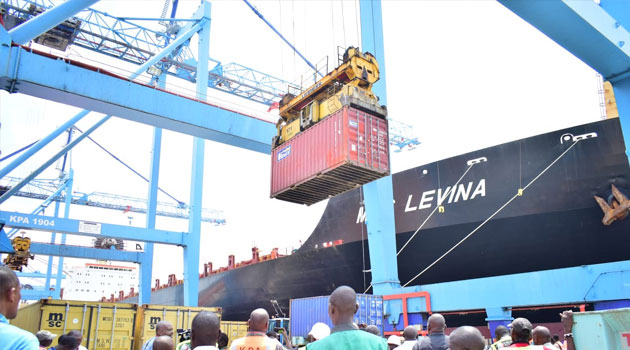

The launch and operationalisation of the Kenya Shipyard Limited by the State is not only a major leap in the country’s quest to be a shipbuilding hub but also a leading maritime economy in Africa.
While Kenya Shipyard Limited is primarily tasked with construction, repair and maintenance of shipping vessels, the agency will also be instrumental in developing local ship manufacturing, critical to achieving the Blue Economy agenda.
The global market for ship construction, estimated at USD 126 billion in 2020, is currently dominated by South Korea (40 percent), China (25 percent and Japan (15 percent). Kenya should be angling for a slice of this lucrative pie hence the need to enhance her capacity to build modern vessels to reduce reliance on foreign-built ships.
Africa’s shipping and maritime sector is largely under-developed. But according to UNCTAD, the continent’s share of world maritime exports is currently at 7 percent and growing. Investing in shipbuilding therefore has potential to transform African coastal states into maritime hubs.
Kenya is the main shipping logistics hub of Eastern and Central Africa, giving her a competitive advantage in shipbuilding and maritime engineering in the region. In the past, ship engineering in Kenya was carried out at the port of Mombasa. In September 2020, the Kenya Navy embarked on building a slipway shipyard at its Mtongwe Base, the first of its kind in East Africa.
The navy project as well as the newly launched Kisumu port demonstrate Kenya’s readiness to be a big player in maritime transport in the region. The inauguration of a marine academy in Kisumu will help boost human resource training for sustainable growth of the industry. This will create jobs and support a maritime engineering and technical ecosystem.
Ship construction in Kenya is not a futuristic concept. Already, the MV Uhuru II, the first vessel to be constructed at Kisumu port in over 70 years, is being built under a partnership between Kenya Shipyard Limited and a Dutch shipbuilding company. The project will create over 1,000 jobs. The benefits of making ships locally is already trickling down into the local economy.
This is an example of how Kenya can harness her maritime resources to propel her industrialization agenda under the Vision 2030. Improving shipping and maritime infrastructure is a key component of the economic roadmap. Why then not build our own ferries instead of importing used vessels from other countries at high cost?
Ship building is also critical in realizing Kenya’s Blue Economy agenda. The Blue Economy will require specialized vessels, for instance, deep sea fishing in the Exclusive Economic Zone where a vast amount of our untapped marine fisheries resources lie.
Securing our marine assets also requires well-equipped vessels. Here, Kenya Shipyard Limited and Kenya Coast Guard Services can partner with international firms with technical expertise in that area. Also, why not build customized vessels for cruise tourism to attract more domestic and international visitors?
Maritime transportation is the predominant mode for movement of cargo globally. In an increasingly globalized trade arena, shipping is critical to a country’s competitive advantage. Availability of skilled and relatively affordable but well-trained local manpower will also attract investors into the sector given that ship construction is highly competitive.
While shipbuilding is dominated by Asian nations, demand for ships is higher in developing economies meaning countries like Kenya can position themselves to serve this market.
Apart from providing new jobs, a national shipbuilding strategy has many multiplier impacts such as linkages to a supply ecosystem, mostly small and medium enterprises sub-contracted to provide materials for use in the shipyards. Technology transfer through partnerships with established global vessel makers is another benefit.
In a nutshell, shipbuilding is a whole new frontier for a country like Kenya seeking maritime hub status and to tap into the Blue Economy to improve the lives and livelihoods of citizens.
Mr. Murumba is CEO, Impulso Kenya Limited. Email: peterwafula@impulsokenyaltd.com