


















NAIROBI, Kenya, May 21 — Kenya is seeking to fast-track the finalisation of a major meat export agreement with China covering beef, pork, poultry and mutton as Nairobi moves to expand access to the Chinese market under the newly implemented zero-tariff framework.
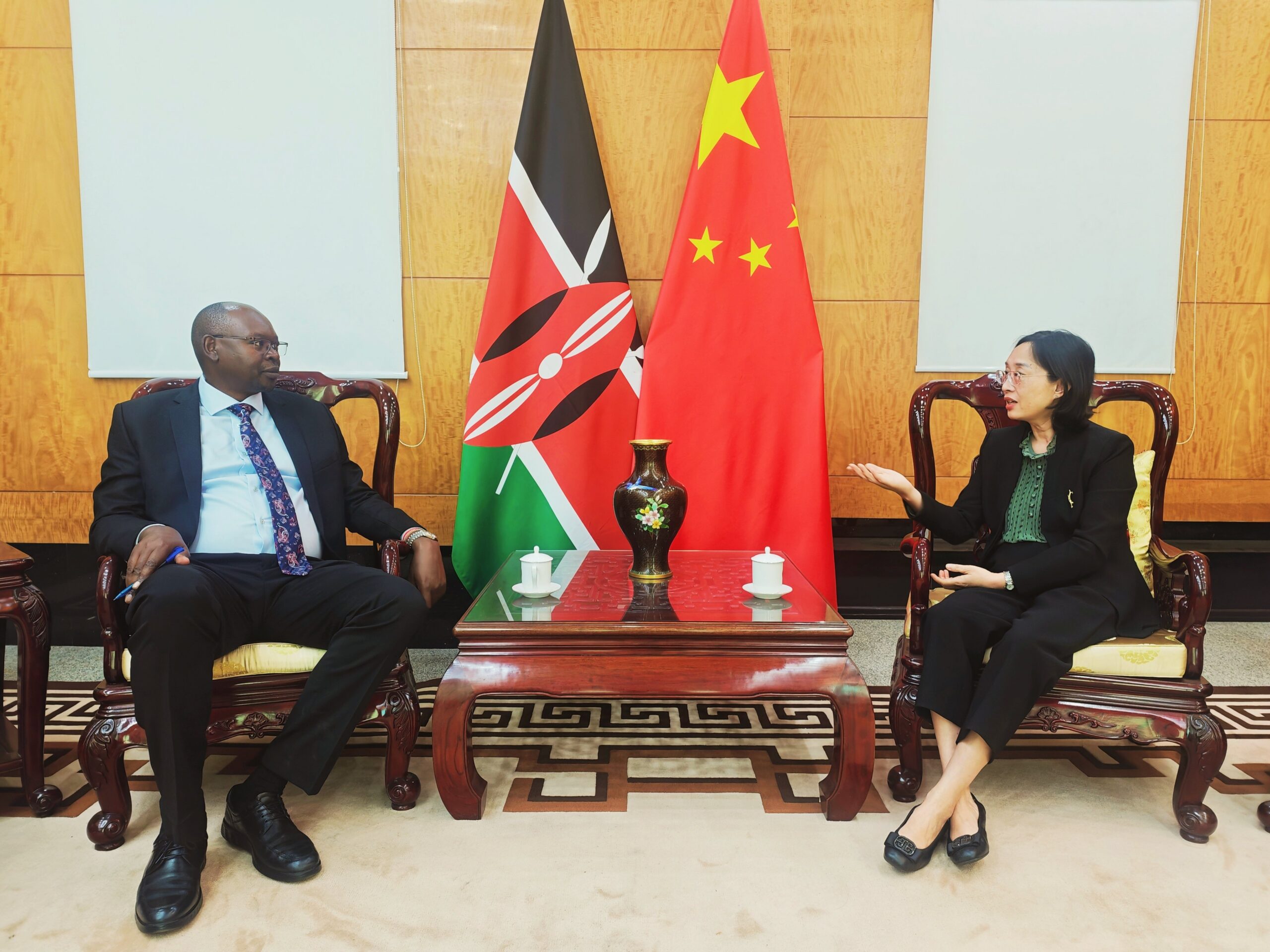
The push emerged during a meeting between officials of the Kenya National Chamber of Commerce and Industry and Chinese Ambassador to Kenya Guo Haiyan at the Embassy of the People’s Republic of China in Nairobi.
The KNCCI delegation, led by Chamber President Erick Rutto and accompanied by Chief Executive Officer K.K. Mutai and Acting Head of Membership Services Sarah Njoroge, held discussions aimed at strengthening trade and investment cooperation between Kenya and China.
According to KNCCI, Ambassador Guo accepted an invitation to participate in the Chamber@60 celebrations and pledged support in accelerating the conclusion of the meat export agreement, which is expected to open new opportunities for Kenyan livestock producers and exporters.
“The discussions also focused on enhancing collaboration in key areas, including trade promotion through expanded Kenyan exports such as coffee, tea, leather goods, avocados and macadamia to China, as well as investment facilitation by attracting Chinese investors into manufacturing, agro-processing, renewable energy, logistics and fisheries,” KNCCI said.
Both sides also discussed capacity-building initiatives targeting Kenyan SMEs, youth and county representatives, alongside policy advocacy efforts aimed at addressing market access barriers and promoting private-sector-friendly trade frameworks.
E-commerce
Digital transformation and the advancement of e-commerce and digital trade platforms for Kenyan exporters also featured prominently during the discussions.
The renewed push for expanded trade ties comes as China’s new zero-tariff policy for 53 African countries begins taking effect, presenting fresh opportunities for Kenyan exports in one of the world’s largest consumer markets.
Speaking previously during a “Zero Tariffs, Infinite Opportunities” symposium in Nairobi, Ambassador Guo described the initiative as a milestone in strengthening China-Africa economic cooperation and boosting industrialisation, job creation and market access.
Under the arrangement, nearly all products from eligible African countries, including Kenya, now enjoy duty-free access to the Chinese market.
Kenya’s private sector views the policy as a major opportunity to narrow the country’s long-standing trade imbalance with China.
According to KNCCI, Kenya currently exports goods worth approximately $237 million to China annually, compared to imports valued at about $8.8 billion.
Rutto said the zero-tariff arrangement could significantly boost export volumes if Kenyan producers increase production and meet the quality and certification standards required by the Chinese market.
“For every one container that leaves Kenya, about 37 containers come into the country. This policy gives us a chance to double or even triple exports,” he said during the symposium.
Agricultural products expected to benefit from the expanded market access include tea, coffee, avocados, flowers, macadamia nuts and fresh horticultural produce, alongside emerging opportunities in livestock products and value-added agricultural exports.
Agricultural exports
China recently confirmed that the first consignment of Kenyan agricultural exports under the new tariff-free arrangement had already arrived in the Asian market.
The shipment included 6.9 tonnes of fresh Kenyan avocados, among the first African agricultural products to enter China under the policy that officially came into effect on May 1, 2026.
Kenyan officials say the elimination of tariffs — which previously ranged between 4 and 25 percent depending on the product category — is expected to significantly improve the competitiveness of Kenyan goods in China’s market of more than 1.4 billion consumers.
Despite the optimism, stakeholders continue to cite structural challenges including high logistics costs, expensive electricity, limited access to affordable credit and regulatory bottlenecks as factors that could limit Kenya’s ability to fully capitalise on the opportunity.
Ambassador Guo has also urged Kenyan exporters to strengthen quality assurance, food safety standards, traceability systems and branding in order to compete effectively in the Chinese market.
The expanding trade engagement is expected to deepen economic ties between Kenya and China as both countries pursue broader cooperation in trade, industrialisation, technology transfer and value addition.