




















NAIROBI, Kenya May 21 – Kenya Bankers Association (KBA) has registered strong opposition to the Finance Bill’s attempt to introduce Withholding Tax (WHT) on card transaction fees (such as interchange and merchant fees paid to network giants like VISA).
The lobby pointed out that the proposal directly contradicts a December 2025 Supreme Court ruling involving ABSA Bank, which firmly established that these are operational service fees, not royalties.
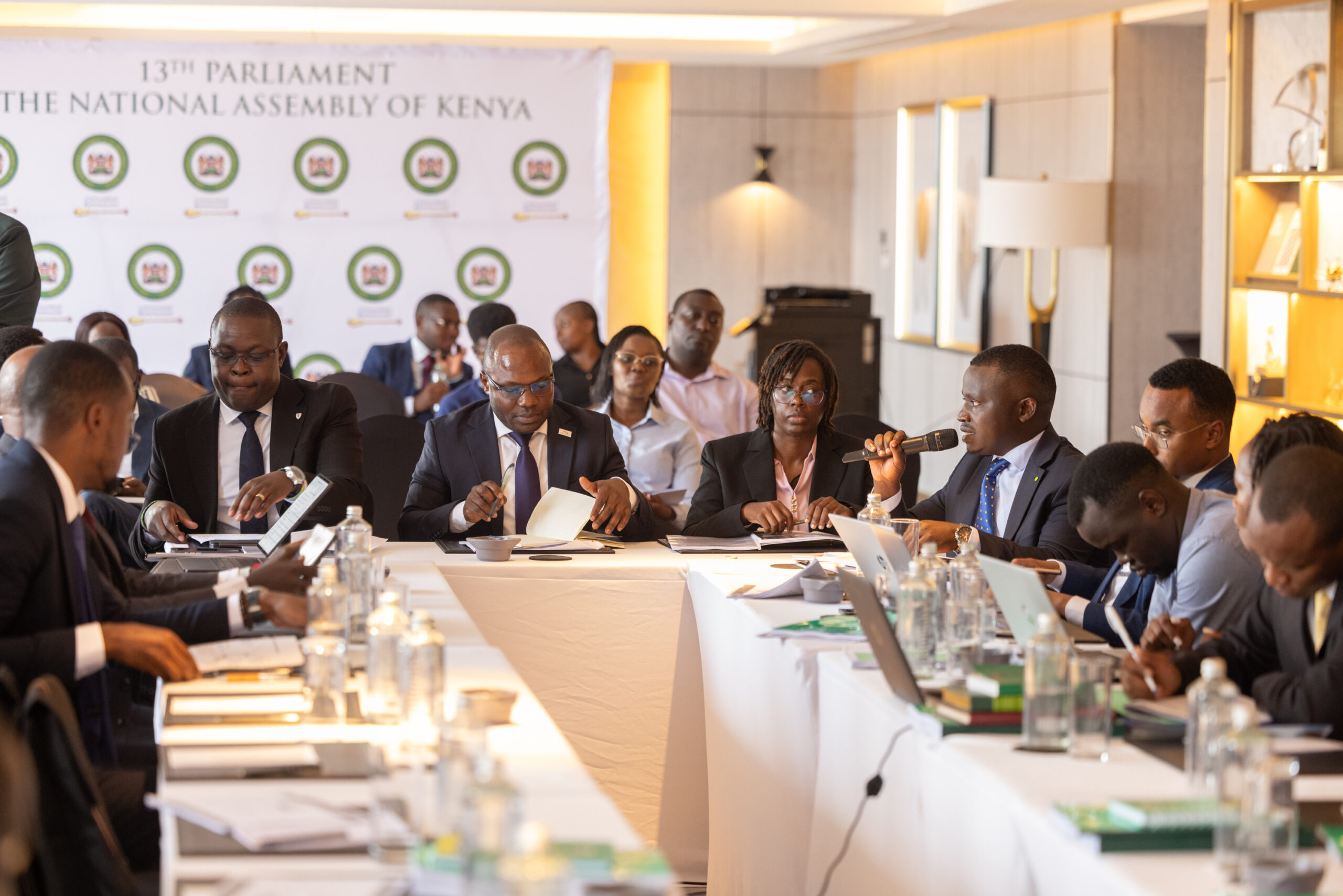
They called on the Departmental Committee on Finance and National Planning which commenced week-long stakeholder engagements on the Bill this morning, that the enactment of the proposal would reverse settled judicial authority, create uncertainty, increase costs of digital payments and risk double taxation.
“We propose the deletion of the proposed amendment. This move seeks to overturn the Supreme Court’s decision, raising concerns that such legislative reversals undermine legal certainty, predictability, and confidence in the rule of law”, the Chief Executive Officer of the Kenya Bankers Association (KBA) Raimond Molenje submitted.
KBA further cautioned against a proposed 16 per cent Value Added Tax (VAT) on digital payment processing and money transfers, warning that the compounding tax burden would inflate total digital financial transaction costs from 15 per cent to 58.4 per cent.
“Subjecting critical financial infrastructure to VAT and Withholding Tax treats vital capital flows as final consumption, which breaks basic taxation principles. If these clauses pass, they will reverse settled judicial precedents, create massive compliance confusion for everyday merchants”, KBA argued.
The Finance Bill, 2026 proposes to tax digital payment services including money transfers, payment processing, settlement, merchant acquiring, gateway or aggregation services supplied over a software or platform for a fee or a commission by a payment service provider (PSP).
KBA observed that Financial Services are not subject to VAT because they are fundamentally intermediation services that facilitate the efficient flow of capital.
“VAT on these services undermines the core principles of VAT as a tax on final consumption”, they noted.
They further observed that imposing VAT on financial services would stifle innovation as the increased would make the services unaffordable to the final consumers.
The Bankers told the Committee that increased use of digital payments improves transaction traceability, brings more economic activity into the formal sectors, and supports better tax compliance and revenue collection from other taxes.
Not convinced by this argument, Kesses MP Julius Rutto noted that bank charges currently attract VAT, and emphasized on the need for fairness and equity in taxation.
“If bank charges can attract VAT why not MPesa for equity purposes and fairness”, he asked.
The banking lobby additionally took aim at a clause giving the Kenya Revenue Authority (KRA) Commissioner the mandate to deem at least 60 per cent of a business’s undistributed income as distributed dividends, subjecting it to immediate tax.
KBA noted that over the past three years, Kenyan banks have maintained an average distribution rate of 40 per cent to intentionally preserve cash buffers for economic shocks and formal lending expansion.
“Forrcing financial institutions to deem 60 per cent of retained earnings as dividends is an unreasonably high threshold that threatens core stability. Businesses retain earnings to reinvest in growth, expand access to credit, and shield themselves from market volatilities”, they argued.
“Starving enterprises of this capital will directly impair future employment creation and ultimately shrink the long-term tax base”, added KBA.
With regard to minimum deemed dividend distribution threshold, lawmakers noted the provision may have been introduced to address instances of tax avoidance, adding that there is need to have a set threshold.
“We may need to inquire from the National Treasury the motive behind this proposal. There must be a reason why some companies are targeted under this proposal and most likely has to do with tax avoidance,” John Ariko (Turkana South), pointed out.
In their concluding remarks, KBA reminded the lawmakers that the banking sector contributed Kshs 1.1 trillion in taxes between 2018 and 2024, and urged them to carefully calibrate policy decisions to sustain credit intermediation and drive broader economic recovery. See less